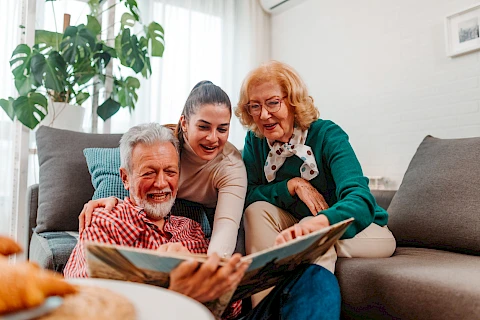
Grandparents Day in early September is the perfect time to swap stories with our elderly loved ones and capture their stories on tape or paper. Milwaukee families are lucky in that respect. So many households here carry three or four generations of memory: the summer at Bradford Beach, the Friday fish fry that everyone showed up for, and the small business that opened on Brady Street in 1958. Senior Helpers offers tips to help you preserve those cherished memories.
Where to Start Without Overwhelming Anyone
Create a warm ambience by choosing a comfortable spot and keeping the mood casual. Skip the interview format. It makes older adults nervous, as though the answers had to be correct. Instead, look through an old photo album together. Pull out a specific picture and ask about the day it was taken. Who took it? What happened before or after? Grandpa's face in a picture beats a blank page every time.
Kitchen conversations work well too. Cooking a family recipe together brings out stories almost by itself. The Library of Congress StoryCorps guide has a list of excellent questions organized by category if you want a starting point.
Simple Recording Methods That Actually Work
Your phone is the best tool most families already own. The Voice Memos app on iPhone and the Recorder app on Android both easily handle an hour of audio and save it as a shareable file. Place the phone on the table between you, not held up, so the person forgets it's there.
Videos are more graphic, making the reminiscing more fun. Grandkids will most likely be more inclined to watch a video instead of listening to an audio recording. Set the phone against a stack of books to keep it steady. Natural window light works better than overhead kitchen lights. Twenty minutes at a stretch is plenty. Do several short sessions over months rather than a long one.
Organizing Memories So They Don't Disappear
Give each recording a clear and descriptive file name. Something like "Grandma Ruth 09-14-2026 Growing Up in Bay View" beats "Voice Memo 47." Save copies in two places at minimum. A cloud folder shared with siblings works well; so does an external drive stashed at a sibling's house.
Photos benefit from the same treatment. Scan the paper ones as you go through them. A flatbed scanner from any Milwaukee library branch does the job for free if you'd rather not buy one. Label each scan with a date and a couple of names. Your future self, along with the grandchildren who will inherit the archive, will appreciate the ten seconds you spend typing now.
Getting the Grandchildren Involved
Teenagers surprise their grandparents when handed a real role. Ask a grandchild to be the tech person. They can set up the phone, run the recording, and edit down the good parts later. Younger kids can draw pictures based on stories they hear. Middle-schoolers can transcribe recordings for a school project or a family scrapbook.
Some grandchildren interview better than the adults do. Kids ask direct questions no grown child would think of. What did the outhouse smell like? Did you ever get in real trouble at school? Was Grandpa cute when you met him? Those questions get the best stories out.
Family Memory Projects That Last Across the Milwaukee Area
At Senior Helpers Greater Milwaukee, our caregivers spend real time with families and often become part of these memory-keeping projects themselves. A caregiver might sit with your parent an hour a week and gently work through old photos or record a set of questions. If that would take some pressure off your family, contact us and we'll walk through what a schedule could look like.