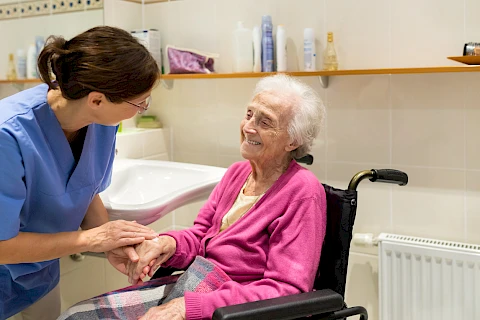
Personal care can feel awkward for everyone involved. A little planning around timing, temperature, and privacy can make senior personal care calmer for both the older adult and the family caregiver.
Slow the routine before trying to change anything else.
Leave Enough Time for the Routine
Rushing shows. Build in extra time before appointments or phone calls so the person can choose clothing, sit down when needed, and mention discomfort before it grows. A slower start helps.
Ask about the preferred time for bathing or dressing. Some people feel strongest in the morning, while others would rather wait until the afternoon. A familiar order of tasks can take some uncertainty out of a very personal part of the day. Take one step first.
Warm the Room and Protect Privacy
A chilly bathroom can spoil the whole experience. Warm the room, set out towels, test the water, and keep a robe nearby before the person comes in. Close the door.
Good lighting helps someone spot the tub edge or a wet patch on the tile. The National Institute on Aging home-safety checklist has practical ideas for reducing household hazards. A small night light can help after dark.
Reduce Strain During Bathing and Dressing
Use equipment that fits. A shower chair with rubber feet, a handheld showerhead, and securely installed grab bars can make senior personal care safer by reducing hard reaches and long periods of standing. Check the chair before use.
For dressing, choose a solid chair with arms and lay clothes out in order. A long-handled shoehorn or button hook may help when fingers or shoulders are sore. A towel rack cannot hold body weight.
Listen for What Feels Wrong
Embarrassment can hide pain, skin irritation, dizziness, or fear of slipping. Ask gently. Then wait for the answer. A new or lasting discomfort should be reported to a healthcare professional. Give it a moment.
In Milwaukee, family caregivers can look for patterns, such as skipping socks because bending hurts or avoiding a bath after a near-fall.
Those details can help during an appointment. They show what happens in the actual routine instead of leaving the provider with a general concern. Write that detail down.
Set out everything before you begin. Towels, soap, clean clothes, and grooming items should be within reach, which cuts down on chilly waits and repeated trips across the room.
Keep it simple. If a product irritates the skin or a step causes pain, stop and mention it to a healthcare professional.
Words matter during personal care. Explain what you are about to do, ask before touching, and wait for an answer whenever possible. Give real choices. A person may prefer a wash at the sink one day or a shower another day, and that preference deserves room in the plan.
Pay attention to skin as well. New redness, pressure marks, itching, or a sore area deserves a closer look and may need a call to a healthcare professional.
Check after bathing. Dry skin may need a gentle product, while a lasting change may point to something that should not wait for the next regular visit.
Personal Care With More Comfort at Home
Personal care should leave someone clean, settled, and respected. We can help with a senior personal care routine that fits your family’s needs and the person’s preferences.
Contact us to learn about in-home support in Milwaukee. We are nearby.