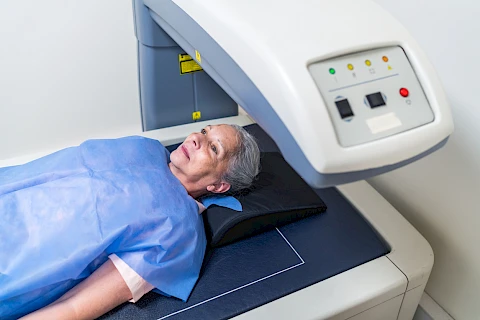
June is National Osteoporosis Month, and if you've recently had a bone density test, you may be staring at a sheet of numbers, wondering what any of it actually means. You're not alone in that feeling.
Understanding bone density results for seniors can help you know what questions to ask and have a better conversation with your doctor. The results can look clinical and confusing. Once you understand the basics, you'll be in a much better position to discuss your bone health and next steps with your doctor.
What a Bone Density Test Measures
A bone density test, called a DEXA scan, measures how dense and strong your bones are. A T-score, which compares your bone density to that of a young adult in good health, is used to report the results.
According to the National Osteoporosis Foundation, a T-score of -1.0 and above is considered normal. A score between -1.0 and -2.5 indicates low bone mass, sometimes called osteopenia. A score of -2.5 or below is the threshold for an osteoporosis diagnosis.
You might also see a Z-score on your report. Instead of comparing your bone density to the average for young adults, that figure compares it to other individuals your age and sex. A very low Z-score can prompt your doctor to look for underlying medical conditions contributing to bone loss.
What to Ask Your Doctor After Getting Results
Getting bone density results for seniors without any context can feel unsettling, especially if the numbers look concerning.
A few questions worth bringing to your next appointment:
- What does my T-score mean for my specific fracture risk?
- Should I have a follow-up DEXA scan, and if so, when?
- Are there medications, supplements, or lifestyle changes that would help my situation?
- Does my current diet provide enough calcium and vitamin D?
A FRAX score, which calculates your 10-year fracture probability based on bone density and other variables like age, weight, and smoking history, can also be performed by your physician. Treatment choices are frequently influenced more by this larger picture than by the T-score alone.
Steps That Support Bone Health Right Now
Bone density results give you a starting point, not a final verdict. Several lifestyle habits genuinely support bone strength at any age. Weight-bearing exercise, such as walking around the lakefront path or doing light resistance training, encourages bone-building activity.
Before starting any new exercise program or increasing your activity level, consult your doctor to make sure it is appropriate for your health needs and fitness level.
Getting adequate calcium (1,200 mg daily for women over 50) and vitamin D (800 to 1,000 IU daily) matters too, whether through food or supplements your doctor recommends.
Reducing fall risk is equally important. Good lighting, supportive footwear, and clearing pathways at home all help protect bones even before fracture risk is addressed medically.
If you're in Milwaukee and attending a fitness class designed for older adults, let your instructor know about your results so they can offer appropriate modifications.
Taking the Next Step Toward Stronger Bones in Milwaukee
Understanding bone density results for seniors is a meaningful act of self-care, and acting on them can genuinely lower fracture risk over the coming years. Senior Helpers of Greater Milwaukee provides in-home care support for older adults across Milwaukee who are managing health conditions or recovering from injuries.
Our caregivers also help seniors who simply need an extra hand with daily routines. Contact us to learn how our caregivers can help you stay safe, active, and comfortable at home.