Visibility in Alzheimer's and Dementia Care: Who Gets Seen? | Senior Helpers
Past main navigation Contact Us

Visibility in Alzheimer's & Dementia Care: Who Gets Seen?

Visibility in Alzheimer's & Dementia Care: Who Gets Seen?
Published on: 2 November 2026

It Started with a Shirt

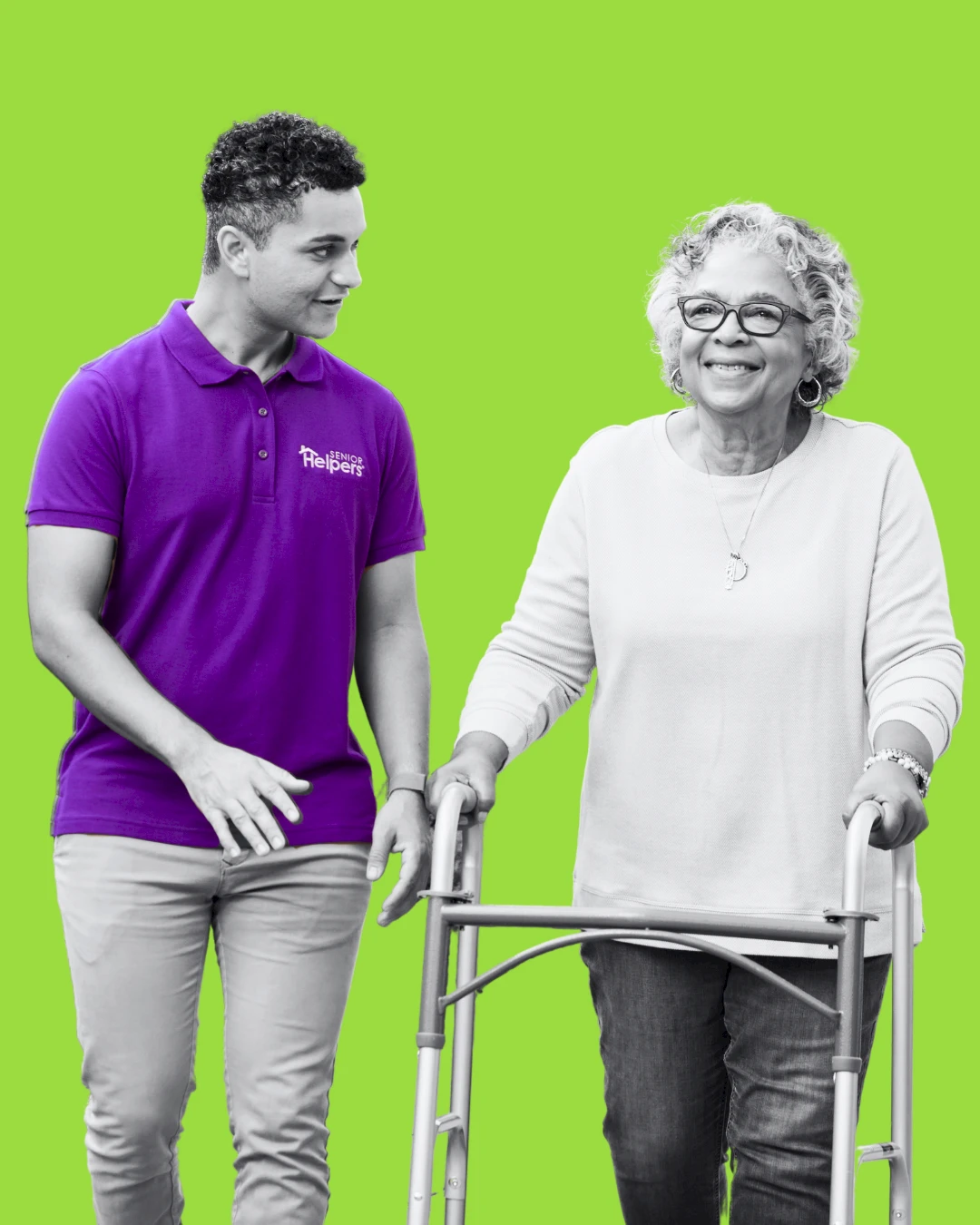
Michael Mohl's dementia care team is not hard to find. They wear bright, high-visibility green on purpose, and the reason starts with how dementia changes a person's sight.

Michael owns Senior Helpers of South Palm Beach, and the lime green is his fluorescent choice. It has grown into something more than a uniform: a statement about how his team shows up for families living with Alzheimer's and dementia. We heard that story and kept turning it over, because it pointed at a question that deserves more attention than it gets: when dementia comes into a family's life, who gets seen?

This November is both National Alzheimer's Disease Awareness Month and National Family Caregivers Month in the United States, and that question is our theme. Here's where it came from, what we mean by it, and what you can do with it.

Michael Mohl, LTCCP & PAC Certified Dementia Educator, has owned Senior Helpers of South Palm Beach with his wife, Leann, since 2008. His team serves families in Boynton Beach, Delray Beach, and the surrounding South Palm Beach communities. His commitment to home care began with watching his grandparents receive care that fell short of what they needed, and he and Leann built the agency around the attentive, compassionate service he wanted for his own family.

Dementia education is central to how he runs the agency. He is a certified trainer in Teepa Snow's Positive Approach to Care, is certified to provide the Virtual Dementia Tour through Second Wind Dreams, and has trained first responders. His caregivers go through rigorous hiring and competency standards, and the agency runs a hands-on caregiver training center. Outside the agency, he co-founded a networking group for South Florida healthcare professionals, Senior Healthcare Coordinators, and has served as board chair of the Greater Boynton Beach Chamber of Commerce.

Here's the thinking. Dementia changes how the brain processes what the eyes see. Many people living with Alzheimer's lose some color perception, often in the blue-violet range, and lose contrast sensitivity, so muted shades can blend together. That's why dementia-care guidance from the Alzheimer's Association and the Alzheimer's Foundation of America recommends bright, high-contrast colors to make important things easier to see.

Michael chose a bright, high-visibility green for the same reason: he wants his caregivers to be easy for the people they care for to see.

Over time, that green came to mean more than visibility. For Michael, it is a signal of the attention his team brings to every detail of a person's care, and of the expertise behind it. When a family sees that green, they see people who know what they are doing.

A shirt can say, quietly, "We see you, we're here to help, and we know what we're doing." That made us wonder who else deserves to be seen.

Two Meanings of Visibility

In dementia care, visibility works on two levels. Both matter.

The Literal Meaning: How a Person Sees the World

Alzheimer's is known as a memory disease, and it is. It can also change how a person makes sense of what's in front of them. The Alzheimer's Association lists trouble understanding visual images and spatial relationships among the 10 early signs: difficulty reading, judging distance, and telling color or contrast apart, which can cause problems with driving. If you notice changes like these in someone you love, a conversation with their doctor is a good next step.

In everyday life, that can mean familiar things look different. A white plate on a white tablecloth can be hard to make out. So can the edge of a step, or a dark rug that looks like a hole in the floor. Even a mirror can confuse.

What does research say about helping? Not as much as we'd like. The best-known study is small. Researchers at Boston University served meals to nine men with advanced Alzheimer's living in long-term care and found that bright, high-contrast red tableware was linked to more eating and drinking. Bright blue did too. Pastel versions made little difference. Later studies have been small, and their results mixed. So we won't promise anything. What the idea offers is a reminder that a person's surroundings can be set up to help them see.

The National Institute on Aging suggests a few low-cost changes, and we've added some everyday ones. Five worth trying:

  • Let the plate stand out. A bold plate or cup against a plainer table is easier to see than white on white.
  • Light the evenings. Night lights or automatic light sensors help. The Alzheimer's Association notes that low light can create shadows that confuse a person about what they're seeing.
  • Add contrast where it counts. The NIA suggests walls a lighter color than the floor, and a grab bar in a color that contrasts with the wall.
  • Quiet the pattern. Busy patterns can be hard to read. Plainer surfaces are easier.
  • Think twice about mirrors. Mirror images may confuse a person with Alzheimer's.

Every person is different, so talk with their doctor or an occupational therapist about what fits.

The Figurative Meaning: Who Get's Noticed

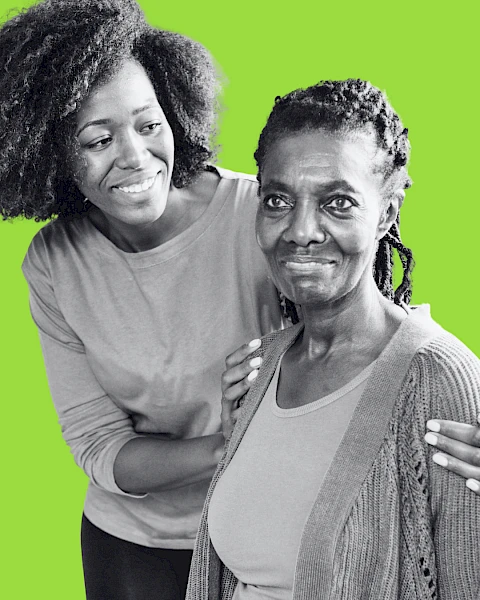
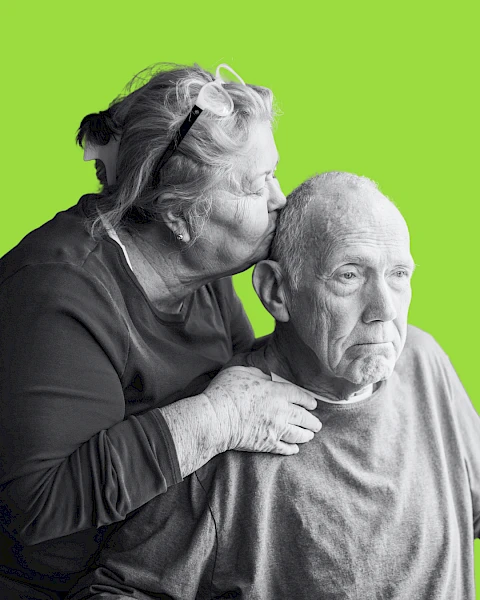
Visibility is also about attention. In a family living with dementia, most of it goes to the diagnosis, the appointments, and the safety checklist. While all of that happens, two people can slip out of view: the person living with Alzheimer's, and the person caring for them.


See the Person with Alzheimer's or Dementia

An estimated 7.4 million Americans age 65 and older are living with Alzheimer's in 2026, according to the Alzheimer's Association. Every one of them has a history, a sense of humor, a favorite song. A diagnosis changes a lot. It doesn't erase the person.

The Alzheimer's Association's communication guidance is simple: don't make assumptions about what someone can do because of a diagnosis, speak to the person directly instead of to the person beside them, give them time to respond, and ask what they're still comfortable doing.

If you're wondering how to stay connected with someone after a diagnosis, three things go a long way:

  • Talk with them, not about them. Speak directly to your loved one, give them time to respond, and ask what they are still comfortable doing.
  • Keep doing what you both enjoy. A diagnosis doesn't mean giving up favorite activities. Invite them in, and adapt as needed.
  • Connect beyond words. Listen to music together or look through a photo album.

Family Caregivers: Those We Don't See Enough

Most dementia care happens at home. The CDC reports that about 80% of adults with Alzheimer's and related dementias receive care in their homes, and much of it comes from family and friends. The Alzheimer's Association reports that nearly 13 million of them provided more than 19 billion hours of unpaid care in 2025. That's a lot of meals, medications, and sleepless nights.

It takes a toll. The Association reports that 59% of dementia caregivers experience high levels of emotional stress, and many feel isolated or alone. The CDC says caregivers of people with Alzheimer's are at greater risk for anxiety, depression, and a poorer quality of life than other caregivers. A research summary from RTI International found that over 40% of dementia caregivers experience at least moderate loneliness and social isolation.

So what helps? Start by being specific. The Alzheimer's Association points out that a concrete offer, like "I'm heading to the store, what do you need?", often helps more than "let me know if I can do anything." Check in on the caregiver, not only the person with dementia. Offer a few hours so they can see a friend, keep their own doctor's appointment, or just sit down.

For families who want that kind of relief on a regular basis, respite care is built for it. A trained caregiver comes to the home, and the person who has been carrying the load gets a real break.

And if you're the caregiver reading this: you are seen. The Alzheimer's Association's 24/7 Helpline is available at 800.272.3900, any hour.

How Senior Helpers Fits Into View

Everything above is true whether or not a family ever calls us. But seeing people well is also what we are built to do, so here is where we fit.

Senior Gems®: Seeing the Human that Still Shines

Our approach to Alzheimer's and Dementia Care is called Senior Gems®, created by Senior Helpers. The idea at its center is the one we have been describing all along: focus on what a person can still do, not only on what has been lost, and on what is precious and unique about each person. Senior Gems® helps our caregivers recognize the stage a person is in and adjust how they connect, so a good day is more within reach.

LIFE Profile™: Seeing the Risks Before They Happen

We also look closely at the home and the whole picture of a person's life through our LIFE Profile™ assessment. It is a data-driven tool, based on more than 20 years of research, that helps spot the risks that lead to falls and hospital stays, from the layout of a room to who checks in and how often. In a peer-reviewed study in the Journal of Aging Life Care, Senior Helpers reported that LIFE Profile™ helped lower a senior's risk of an unsafe event or hospitalization by more than 70%.* It is the difference between reacting to a crisis and seeing it coming.

Seeing a Path Forward: Walking So No Family Walks Alone

Our commitment goes beyond the homes we serve. Senior Helpers is a proud Walk to End Alzheimer's National Team, forming teams and raising funds for Walks across the country to support the care, support, and research of the Alzheimer's Association. We walk for our clients, and for every family affected by this disease. If you would like to walk or donate with us, we would be glad to have you.

What we're asking of ourselves

Visibility isn't something we're putting up for a month and taking down on December 1. It's a question we'd like to keep asking, in our own offices and in the homes we walk into: who in this family hasn't been seen lately?

If you're caring for someone with Alzheimer's or dementia, you don't have to figure it out alone. Senior Helpers provides non-medical in-home care for older adults, including Alzheimer's and Dementia Care, companion care, personal care, and respite care. Your local office can talk you through what would help most. You can also take our short "Is Home Care Right for Me?" quiz or learn more about our memory care services.

Find an Office

Frequently asked questions

What does "visibility" mean in Alzheimer's and Dementia Care?

We use it two ways. The literal meaning is how a person with Alzheimer's sees and makes sense of their surroundings, and how contrast and lighting can help. The wider meaning is who gets noticed: the person living with the disease, and the family and professional caregivers beside them.

Why do some Senior Helpers of South Palm Beach caregivers wear lime green?

It's the practice of franchise owner Michael Mohl. Bright lime green is a high-visibility color that makes his dementia care team easy to spot, and over time it has come to stand for the care and attention his team brings to families. It is not a medical treatment, and no study has tested caregiver clothing color.

Can high contrast really help someone with Alzheimer's?

The evidence is limited. One study found that bright, high-contrast tableware was linked to more eating and drinking in people with advanced Alzheimer's, and later studies have been small and mixed. Contrast and lighting changes are inexpensive and easy to try, so many families do, ideally with guidance from a doctor or occupational therapist.

Does Alzheimer's affect vision?

It can change how a person makes sense of what they see. The Alzheimer's Association lists trouble understanding visual images and spatial relationships among the early signs. If you notice changes, talk with a doctor. Only a doctor can diagnose.

How can I support a family caregiver?

Be specific, and be consistent. Offer something concrete, like a trip to the store or a few hours of company, and check in on the caregiver themselves, not only the person with dementia. For regular relief, respite care can help.

When is National Family Caregivers Month?

November, the same month as National Alzheimer's Disease Awareness Month.