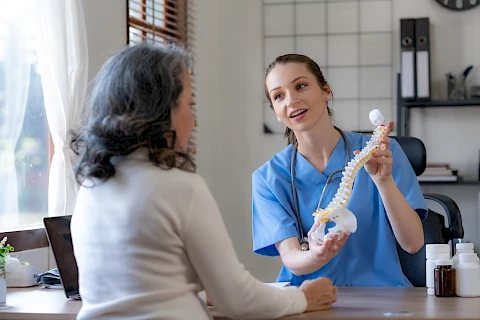
Bone strength decreases with age, but women often experience bone loss earlier and faster than men. This makes osteoporosis in senior women an important concern for families and caregivers. Even a senior who walks steadily can have fragile bones that break after a minor fall or sudden movement. Understanding the risks can help families ask informed questions during medical appointments and make simple changes at home to reduce the chance of falls and fractures.
Why Women Start With Less Bone to Lose
The body constantly breaks down old bone and replaces it with new bone. Most people reach their peak bone mass in young adulthood, after which bone strength depends on how well the body maintains this balance.
The National Institute of Arthritis and Musculoskeletal and Skin Diseases explains that women generally have lower peak bone mass and smaller bones than men. As age-related bone loss begins, senior women have less bone mass in reserve, which raises their risk of developing osteoporosis.
Body size also plays a role. According to NIAMS, people with smaller frames and thinner bones tend to have less bone mass, which can increase their risk of developing osteoporosis as they age.
The Role of Estrogen and Menopause
Estrogen helps maintain bone strength, but levels drop during menopause, which can speed up bone loss.
NIAMS notes that bone loss can begin in the years leading up to menopause. Lower estrogen levels after menopause further increase the risk of osteoporosis. For women in their seventies and eighties, these hormonal changes began decades ago, and bone loss may have continued over time.
Osteoporosis often develops without noticeable symptoms until a fracture occurs. Even senior women who have never broken a bone may still be at risk. Recognizing these changes can help senior women understand osteoporosis risks and take steps to protect their bone health as they age.
Other Factors to Know About
Several other things can raise the risk of osteoporosis in senior women. Caregivers can learn these signs and share relevant details with the doctor's office.
- Age. Bone loss speeds up, and new bone growth slows as people get older.
- Family history. A parent with osteoporosis or a hip fracture may point to higher risk.
- Ethnic background. NIAMS reports that white and Asian women are at highest risk, though women of every background can develop the condition.
- Certain medications. Long-term use of some medicines can affect bone. Ask the doctor or pharmacist before assuming anything.
- Lifestyle. Smoking, heavy drinking, and inactivity are also linked with weaker bones.
Talking With a Doctor
To better understand osteoporosis in senior women, caregivers can ask the doctor about bone health and ways to reduce fracture risk. They can ask whether a bone density test is appropriate, how often testing should take place, and whether changes to calcium, vitamin D, or exercise routines are advisable. The doctor can recommend options based on the senior's health needs. The Bone Health & Osteoporosis Foundation also provides educational materials that families can review before an appointment.
A small notebook can help caregivers record the doctor's answers and recommendations. Medical appointments can pass quickly, so written notes make it easier to remember important details afterward.
We Can Help Improve Your Loved One's Health
Osteoporosis-related fractures often happen after a fall. Keeping walkways clear, improving lighting, and offering a steady arm during errands can help seniors stay safe. Senior Helpers Norman offers light housekeeping, meal preparation, medication reminders, companionship, and rides to appointments when family members cannot be there. We serve families in Norman, Pauls Valley, Newcastle, Lindsay, and Washington. Contact us to learn more about our in-home care services.