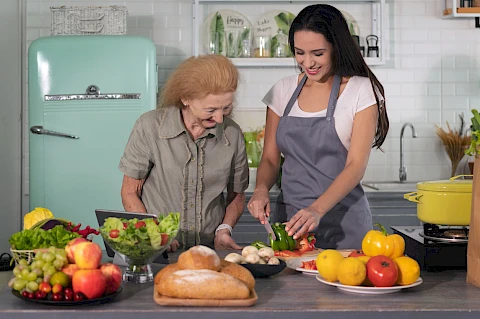
Oklahoma cools off slowly, but by mid-September the evenings finally soften and appetite for warm cooking comes back. If you're a caregiver preparing meals for a parent in Norman, Purcell, or one of the surrounding towns, this is the moment to shift the menu. Heavier soups, roasted vegetables, and one-dish dinners are easier on you and more satisfying for them. And they reheat beautifully across three or four days.
Meals That Reheat Well Without Losing Their Soul
Braises are the caregiver's best friend. A pork loin cooked slowly with apples, onions, and a splash of cider tastes better on day two than day one. Beef stew with plenty of carrots, potatoes, and celery does the same. Both can be frozen in meal-size portions for later.
Casseroles hold up, too. A shepherd's pie with lean ground beef, peas, and a mashed potato top warms up to nearly the original texture in a low oven. A baked pasta with turkey, tomato, and a light layer of cheese portions neatly for individual servings. The U.S. Department of Agriculture food safety guide has clear reheating temperatures worth checking if you're new to batch cooking. USDA recommends reheating leftovers to 165°F.
Handling Common Dietary Restrictions
If your parent's healthcare team has recommended limiting sodium for high blood pressure or another condition, start by checking labels on broth, canned foods, sauces, and seasoning blends.
Blood pressure medication usually means watching sodium. Skip the salted broth. Use fresh or dried herbs, garlic, onion, a splash of vinegar, or lemon juice to build flavor. Rosemary and thyme carry a roast without any salt at all. If your parent uses a salt shaker at the table, that's fine; you're building meals that don't need it in the pot.
Diabetes calls for steady carbohydrates and more protein. Swap white rice for barley or wild rice in soups. Add beans or lentils to stretch a stew. For heart-friendly meals, choose lean cuts, trim visible fat, and skip cream-based sauces. A yogurt-based topping stands in for sour cream on chili or baked potatoes without losing the tang.
Chewing and swallowing issues need softer textures. Slow-cook meats until they shred with a fork. Puree part of a soup for smoother consistency. Cut vegetables small before cooking, and cook them fifteen minutes longer than a recipe suggests. If your parent has been told they're at risk of aspiration, ask their doctor about the right texture level before you cook.
Comfort Foods That Feel Like Home
Chicken and dumplings. Beef with barley. Corn chowder with a bit of ham. Roast chicken with root vegetables. Green chile stew, which shows up on plenty of Oklahoma tables this time of year. Meatloaf with mashed sweet potatoes. Baked apples with cinnamon for dessert, no crust needed.
Cook what your parent grew up eating when you can. A familiar smell in the kitchen brings back appetite in a way a new recipe often doesn't. Ask about the dishes their mother made. You'll get more stories than recipes, and both are worth having.
Portioning and Storing for the Week
Use clean, food-safe containers in portions that make sense for one meal. Label the top with masking tape and a marker: what's inside and the date. “Fridge” holds meals safely for three to four days. “Freezer” is good for two months at proper temperature.
Most cooked leftovers should be used within three to four days in the refrigerator or frozen for longer storage.
Cool cooked food quickly before refrigerating. A big pot cooling on the counter drops through the danger zone slowly; pour into shallow containers first. Reheat once, not twice. And always to steaming, not just warm.
Warm Kitchens Across Cleveland and McClain Counties
At Senior Helpers Norman, our caregivers cook alongside families across Norman, Purcell, Newcastle, Lindsay, and Washington. If preparing a week of meals for your parent would help take one thing off your plate, contact us to talk about what kind of mealtime support would fit their routine.