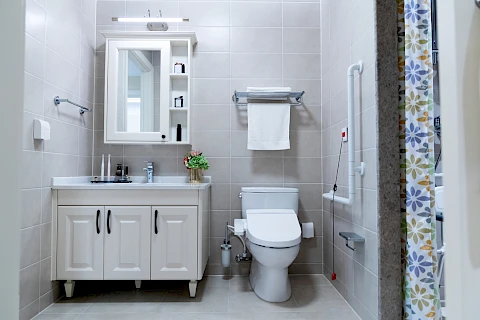
More home falls happen in the bathroom than any other room. Wet floors, hard surfaces, and small spaces are a difficult mix, and getting up from a low toilet at 3 a.m. is exactly when most trouble starts. September is Fall Prevention Awareness Month, so it's an apt moment to walk through your bathroom the way a safety professional would. The changes are surprisingly affordable, and many of them can be done in a single Saturday.
What to Look at First
Stand in your bathroom doorway and picture your usual morning. Where do you reach? Where does the floor get wet? Is there anything you grab that isn't meant to hold you, like a towel bar or the shower curtain rod? That's your first list.
Towel bars are not grab bars. They come loose. A properly installed grab bar is designed to support weight, while a towel bar may pull away from the wall when someone grabs it suddenly. Installation matters just as much as the bar itself, so it needs to be secured to suitable structural support according to the manufacturer's instructions. Real grab bars are ADA-rated and mounted into wall studs, which is why they hold up to 250 pounds without moving. If you own your home, this is the single best $150 you can spend.
The CDC's home safety checklist covers bathroom hazards in detail and prints on one page. Take it with you.
Simple Additions Under $100
You don't have to remodel to start. A non-slip mat inside the tub or shower, a rubber-backed rug outside it, and a plug-in nightlight in the wall socket cost about $40 combined. Do that this weekend.
Add a shower chair or a folding bench. Sitting to bathe cuts fall risk sharply and saves the legs for the rest of the day. Choose one with rubber tips and a back if balance is unsteady.
Get a handheld showerhead. It attaches in ten minutes with a wrench, and it means the water goes where you need it. No twisting. No leaning.
Swap the round drawer knobs for D-shaped pulls. Arthritic hands will thank you a hundred times a week.
Mid-Range Changes That Pay Off
For $200 to $600, a licensed handyman in Norman or Chickasha can install a pair of proper grab bars beside the toilet and inside the shower, plus a raised toilet seat with side arms. The higher seat matters. Getting up from a low bowl is when knees give, and hips slip.
Consider a curbless shower entry if you're already replacing a tub. Barrier-free shower pans cost more up front but remove the tallest tripping edge in the room forever.
Better lighting is cheap and works. Add a bright LED fixture over the shower, another over the mirror, and a motion-activated night light near the toilet.
Non-slip flooring makes a difference too. If tiles are polished and slick, a coat of clear non-slip floor treatment applied by a pro adds grip without changing the look.
When to Bring in a Bigger Project
If a family member uses a walker or wheelchair, the bathroom may need a real remodel. Doorway width, turning space, toilet placement, and shower access should be planned around the person's actual mobility equipment rather than using one universal measurement. Reinforcing walls during a renovation can also make future grab-bar installation easier. Choose a comfort-height toilet, a low or curbless shower, and a floor with rated slip resistance.
Ask your primary care doctor for a home safety referral. Occupational therapists visit the home, walk through the space with you, and write a short report of recommendations that insurance sometimes helps cover.
Steady Days for Central Oklahoma Families
Our team at Senior Helpers Norman works with families across Chickasha, Pauls Valley, Newcastle, Lindsay, and Washington on bathroom safety walk-throughs and the daily help that keeps bath and bedtime routines steady. If you'd like a set of eyes on your home, contact us any weekday to talk about the support that would fit best.