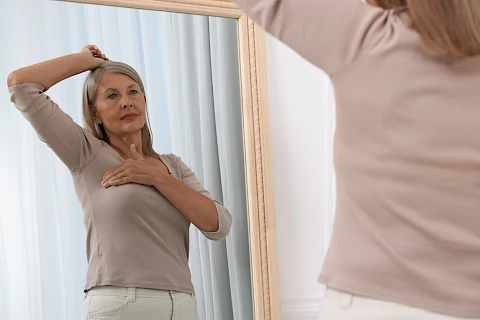
Breast self-exams can be confusing, especially if the advice you learned years ago no longer matches current recommendations. For women over 65, breast health still matters, but checking for changes doesn’t have to involve a complicated monthly routine. Our work with older adults at Senior Helpers has shown us how important it is to make health information easier to understand. Knowing the basics of breast self-awareness can help you recognize changes and decide when to contact your doctor.
What Breast Self-Awareness Looks Like
Breast self-awareness is all about knowing how your breasts normally look and feel to ensure early detection. Unlike traditional breast self-exams, it doesn't require a specific schedule or a set pattern of movements. Everyday activities, such as getting dressed or bathing, offer opportunities to notice what looks and feels normal for you. The goal is to become familiar with your body rather than search for problems every month.
Making Breast Self-Exams Part of Your Routine
After menopause, breast tissue often becomes less dense and contains more fatty tissue. As a result, your breasts may feel softer or sit lower than they did when you were younger. It's also normal for one breast to be slightly larger than the other.
What matters most is noticing changes that are new for you. You might find it helpful to pay attention to your breasts while changing clothes or showering. There is no need to set aside a special time for a lengthy examination. The aim is to recognize what's normal for your body, not to follow a strict monthly routine.
Changes That Warrant a Call to Your Doctor
Contact your doctor if you notice a new or unusual change. Watch for signs such as:
- A new lump or hard area in the breast or underarm.
- Dimpling, puckering, redness, or scaling of the skin.
- A nipple that turns inward or changes appearance.
- Unusual nipple discharge, especially if it contains blood.
- Swelling near the armpit or collarbone.
Many changes are caused by conditions other than cancer, but it's still important to have them checked. Your doctor may recommend a physical exam and diagnostic imaging, such as a mammogram or ultrasound, to determine what's causing the change.
Staying Up to Date with Breast Cancer Screening
Breast self-exams complement routine screening but don't replace it. Mammograms can detect changes before they become noticeable. As such, it's worth discussing your screening schedule with your doctor. Whether you should continue screening after age 74 depends on your overall health, personal preferences, and medical history. Your doctor can help you weigh the benefits and potential risks.
If you’re unsure about scheduling an appointment, consider asking a family member or friend to help arrange it or accompany you. Having someone along can make it easier to remember questions and discuss the next steps afterward.
Make Health Appointments Easier with Senior Helpers
Keeping up with medical appointments can be challenging when transportation or everyday tasks get in the way. Senior Helpers Northern Queens provides in-home support for older adults in Astoria, Long Island City, Woodside, Elmhurst, and Corona, including assistance with appointment reminders, transportation, companionship, and daily routines. Contact us to learn more about available services.