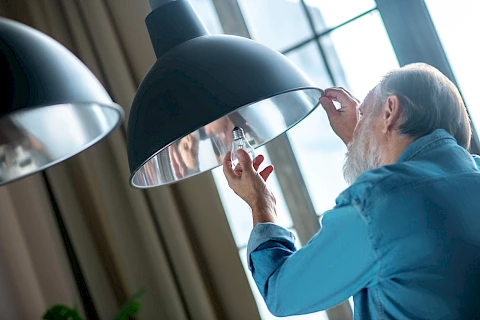
September is Fall Prevention Awareness Month, making it a good time to take a closer look at the lighting in your home. As you get older, changes in your vision can make it harder to see stairs, furniture, and other obstacles, especially in dim areas. Good lighting can make it easier to see where you are going and move around your home with greater confidence.
Why Lighting Matters More with Age
Your eyes change with age. It can take longer to adjust when you move between bright and dark areas, and you may need more light to see details clearly. Cataracts can also cause glare, which can make some lighting feel uncomfortable without actually making it easier to see. This can make dim hallways, dark stairs, and poorly lit bathrooms harder to navigate safely. Taking a closer look at your home's lighting can help you spot areas that need improvement.
Check the Lighting in Each Room
Walk through your home and pay attention to areas where you have trouble seeing clearly. Stairs should be well lit from top to bottom, with light switches at both ends when possible. If the edges of the steps are hard to see, a contrasting strip can make them easier to spot.
Hallways and entryways must be bright enough to see the full walkway. Good lighting near the door can also make shoes, bags, steps, and uneven surfaces easier to spot.
Bathrooms need good lighting around the toilet, sink, tub, and shower. A nightlight can make nighttime trips easier. Choose one designed for damp areas and follow the manufacturer's instructions.
Make sure light switches are easy to reach. If you have to walk through a dark area to turn on a light, consider adding another switch or a lamp that you can turn on before entering.
Add Nightlights Where You Need Them
Nightlights can make it easier to get around after dark without turning on bright overhead lights. Place them along the route you usually take at night, such as between your bedroom and bathroom. Choose nightlights that give off enough light to see the floor and nearby obstacles. A plug-in model can work well in a hallway or bathroom.
Consider Motion Sensor Lights
Motion-sensor lights can be useful in places where you may not want to reach for a switch. They can turn on when you enter a hallway, stairway, bathroom, or other dark area. They are especially handy at night. When installing, always check the placement and sensitivity so the light comes on when you need it.
Choose the Right Light Bulbs
LED bulbs can provide plenty of light while using less energy than traditional incandescent bulbs. When shopping for bulbs, look at lumens rather than wattage. For general room lighting, around 800 to 1,100 lumens can be a useful starting point. The right amount depends on the room, fixture, and your own vision needs.
Stay Safe at Home with Tailored Support From Senior Helpers
Good lighting is one part of making it easier to move around your home safely. Having support with everyday routines can also make it easier to stay comfortable and independent at home. Senior Helpers Northern Queens provides in-home care for seniors in Astoria, Long Island City, Oakland Gardens, Little Neck, and Fresh Meadows. If your loved one could use some extra support at home, contact us to discuss care options that fit your family's needs.