Families often tell me the same thing.
“Nothing dramatic has happened…something just doesn't feel the same anymore.”
A parent who once moved confidently around the house now hesitates before using the stairs. Everyday tasks seem to take a little longer, meals have become simpler, or driving is limited to familiar places. There may not have been a fall or hospitalization. Instead, it's often a collection of subtle changes that leaves families asking, “Is home still the safest place?”
After more than 25 years as an Occupational Therapist working with older adults, I've learned that this question rarely has a simple yes-or-no answer. A professional Home Assessment looks beyond hazards. It considers how an older adult functions within the home, how the environment supports everyday life, and what practical recommendations may help someone remain safe, confident, and independent.
Many people assume a Home Assessment is simply a checklist of things that need to be fixed. In reality, it is much more personalized because it begins with the individual—not just the house.
For one person, maintaining independence may mean preparing meals each day. For another, it may mean gardening, attending church, or spending time with grandchildren. A meaningful Home Assessment begins by understanding what matters most to the individual and identifying ways to help them continue doing those things safely.
If you're exploring ways to help a loved one remain safely at home, our guide **Aging in Place: Helping Seniors Live Safely at Home** explains why planning ahead often provides families with more choices before a crisis occurs.
There Isn't a 'Perfect' Home
There isn't a perfect home for aging. What matters most is whether the home continues to support the person's abilities, routines, priorities, and changing needs.
A professional Home Assessment looks beyond the physical house. It asks whether the home is still supporting the person who lives there and what changes may help them continue living safely and independently.
Sometimes the answer is a different way of completing an activity. Other times it may involve a home modification, an assistive device, appropriate technology, or additional support. The right recommendation depends on the individual—not on a generic checklist.
If you've started noticing changes but aren't sure what they mean, our article **How Do I Know My Parent Needs Help?** discusses many of the early signs families often recognize before a crisis occurs.
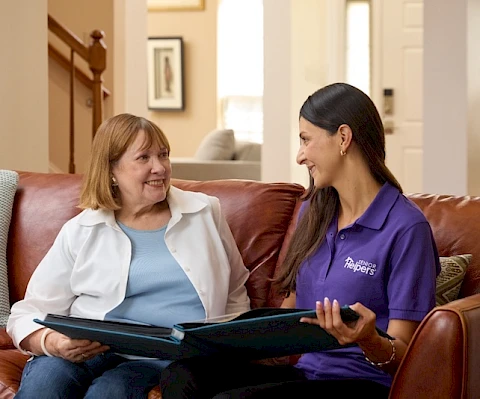
So, What Happens During a Home Assessment?
A Home Assessment is much more than an inspection of the house. It evaluates how the individual and the home work together.
There isn't a score at the end and there isn't a pass or fail. The goal is not to determine whether someone can remain at home. The goal is to identify practical ways to help them continue living there as safely, confidently, and independently as possible.
Common areas include mobility, daily routines, the home environment, health and cognitive changes, and family priorities. Recommendations may include changes to routines, home modifications, assistive devices, technology, or discussions with other healthcare professionals.
A Home Assessment doesn't always lead to in-home care. Sometimes education, a simple change in routine, or a home modification is all that's needed. When additional support becomes beneficial, families have more options because they started planning early.
Families caring for someone experiencing memory or cognitive changes may also find our article **Dementia Care at Home: How to Keep Someone Safe, Comfortable, and Engaged** helpful, where we discuss practical ways to create a supportive home environment while maintaining dignity and independence.
Sometimes the Smallest Changes Matter Most
One of the most challenging parts of aging is that change rarely happens all at once.
More often, it happens gradually.
A favorite chair becomes the place where someone spends most of the day. Grocery shopping becomes more tiring. Meals become simpler. Driving is limited to familiar places. Certain household chores quietly stop getting done, or activities that once brought joy are no longer part of the daily routine.
Individually, none of these changes may seem particularly concerning.
Together, however, they often tell a much bigger story.
One of the greatest benefits of a professional Home Assessment is that it looks beyond a single concern and considers how these small changes may be affecting everyday life. Rather than asking, "What's wrong?" the focus becomes, "What has changed, and how can we best support this individual moving forward?"
Sometimes the recommendations are surprisingly simple. A different way of completing a task, a minor home modification, an assistive device, or an adjustment to a daily routine may be enough to improve safety and make everyday activities easier.
Other times, these subtle changes help families begin important conversations before everyday challenges become emergencies. Planning ahead often provides more opportunities to make thoughtful decisions, explore available resources, and put the right supports in place while the older adult is still actively involved in those decisions.
Recognizing change early isn't about taking away independence. It's about finding ways to preserve it.
If your loved one is experiencing memory changes or you've begun noticing subtle differences in thinking, behavior, or daily routines, our article **Supporting Families Living with Alzheimer's** offers practical strategies for supporting independence, safety, and quality of life at home.
Technology Can Be Part of the Solution
When most people think about helping an older adult remain safely at home, they often think about home modifications or bringing in additional help. While those are certainly important, technology has become another valuable tool that can support independence and provide added peace of mind for both older adults and their families.
Depending on an individual's needs, recommendations may include medication reminders, motion sensors, fall detection devices, voice-activated assistants such as Alexa, smart lighting, video doorbells, security cameras, or other technologies that can make everyday life safer and more convenient.
Technology should complement—not replace—family involvement, quality caregiving, or professional guidance. The best technology is the technology that fits the individual's abilities, daily routines, goals, and comfort level.
Because this is such an important and rapidly changing topic, a future article will take a deeper look at technology that supports aging in place and how to determine which solutions are most appropriate for your loved one.
Planning Ahead Means More Choices
One of the biggest misconceptions about aging is that families should wait until after a fall, hospitalization, or another emergency before asking for guidance.
In reality, some of the most valuable conversations happen long before a crisis occurs.
If you've started noticing subtle changes, don't ignore them. Guidance from an Occupational Therapist, Physician, Physical Therapist, Speech-Language Pathologist, Registered Nurse, Case Manager, or another qualified professional can help families better understand their options and make informed decisions with confidence.
Families planning ahead financially may also benefit from our article **Can Long-Term Care Insurance Pay for Home Care?**, which explains how many long-term care insurance policies can help offset the cost of in-home care.
Closing
Every family hopes their loved one can remain safely at home for as long as possible.
One of the most important lessons I've learned after more than 25 years as an Occupational Therapist is that successful aging in place isn't about finding the perfect home. It's about helping the home continue to support the person who lives there.
Sometimes that involves education, a home modification, appropriate technology, or additional support. More often than not, it begins with recognizing change early and asking questions before a crisis forces difficult decisions.
A Home Assessment isn't about determining whether someone can continue living at home. It's about identifying practical ways to help them continue living there as safely, confidently, and independently as possible.
No two individuals are exactly alike, and neither are their homes. Recommendations should reflect the person's abilities, priorities, routines, and the life they want to continue living.
If you're beginning to notice changes in a loved one, don't be afraid to seek guidance. Asking questions early often provides more choices and more opportunities to preserve independence.
The best time to begin planning isn't when independence is lost.
It's while there are still choices to help preserve it.