Technology for Aging in Place: Creating a Safer, Smarter Home
How AI, Smart Home Technology and Human Care Can Help Older Adults Stay Safer and More Independent
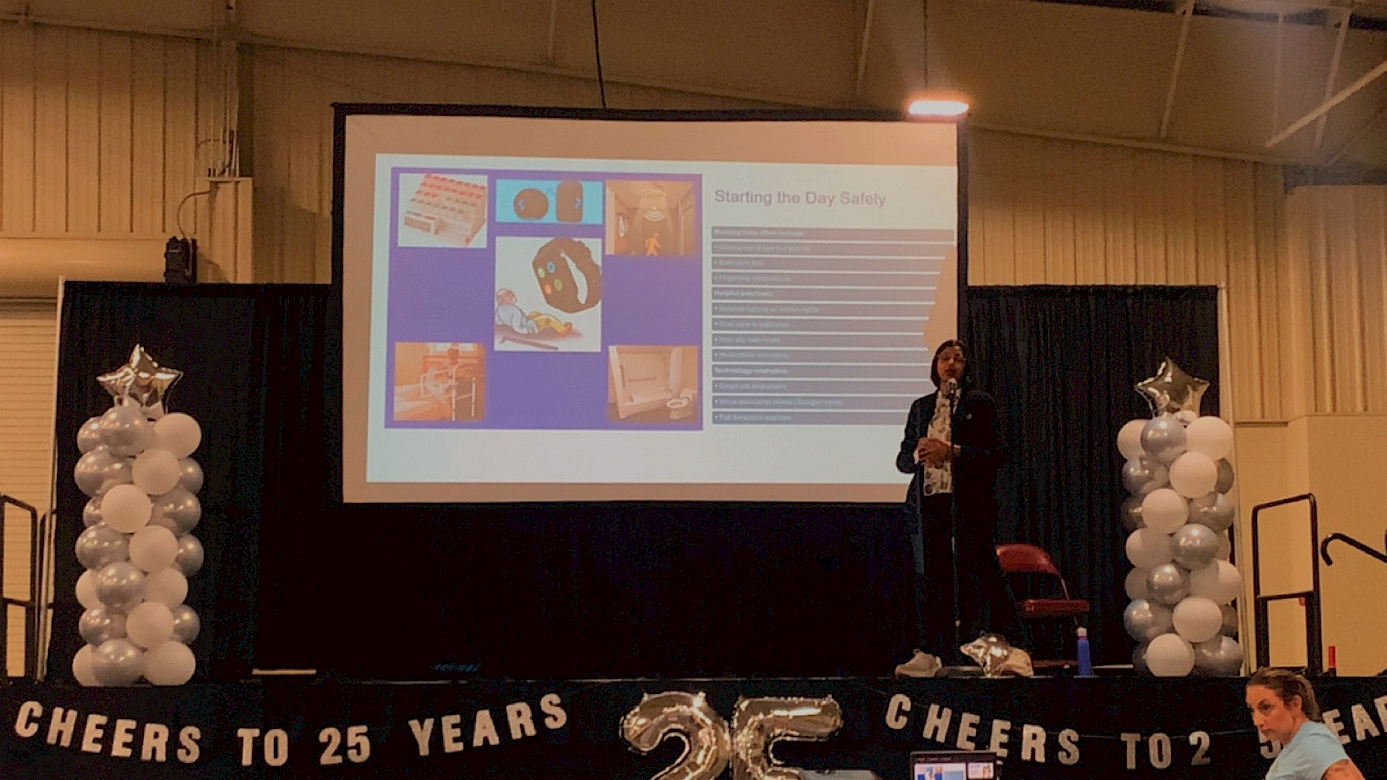
In March, I gave a presentation called “A Day in the Life of a Safe, Smart Home” at the 2026 Active Living & Wellness Expo in Cabarrus County. We walked through a typical day for an older adult—from getting out of bed in the morning to safely navigating the home at night—and looked at how simple changes and technology could support independence.
At the time, I talked about motion-activated lighting, medication reminders, voice assistants, fall-detection watches, smart doorbells, emergency-alert systems, and home sensors. Many of those tools remain valuable today.
But technology continues to evolve.
As an Occupational Therapist with more than 25 years of experience, I find myself learning too. With the rapid growth of artificial intelligence (AI), passive sensors, and smart-home technology, we now have tools that can do more than respond after something happens. Some can help us recognize changes in a person’s normal patterns that might otherwise go unnoticed.
That creates an important new question: Can technology help us recognize a change before it becomes a crisis?
Start With the Person, Not the Technology
Technology should never be the starting point. Before recommending a device, I want to understand the person: how they move around the home, what they can do independently, whether there have been falls or near-falls, what their normal day looks like, whether there are changes in memory or cognition, and what concerns the family.
This is why a Home Assessment can be valuable. The goal is not to fill someone’s house with technology. It is to identify a need and determine whether the best solution is a change to the environment, technology, caregiver assistance—or a combination.
From Fall Detection to Recognizing Changes
Traditional safety technology has often been reactive: a fall happens, an alert is generated, and someone responds. That remains extremely valuable.
Newer privacy-preserving sensor technology can monitor movement and activity without requiring cameras or, in some cases, wearable devices. When combined with increasingly sophisticated software and AI-driven pattern recognition, these systems may help establish what is normal for an individual and identify meaningful changes.
- Increased nighttime activity or bed exits
- Changes in bathroom frequency
- Reduced activity around the home
- Spending more time in bed
- Changes in mobility
- Changes in sleep and wake routines
- Falls or unusual movement
- Other significant deviations from a person’s baseline
The technology does not need to know why something changed to help us recognize that something is different.
Sometimes a Small Change Tells Us Something
Imagine someone who normally gets out of bed once during the night but suddenly begins making repeated trips to the bathroom.
Technology cannot diagnose a urinary tract infection. But identifying a significant change in bathroom or nighttime activity could prompt a family member or caregiver to communicate that information to a Physician, Registered Nurse, or another qualified healthcare professional. Further evaluation may identify a UTI—or something entirely different.
The value is not in technology making a diagnosis. The value is recognizing a change from the person’s normal baseline sooner.
Could Earlier Recognition Help Prevent a Crisis?
Families often tell me they did not realize how much had changed until something happened—a fall, sudden confusion, an emergency department visit, or hospitalization.
AI and home-monitoring technology cannot prevent every emergency or hospitalization. But earlier recognition of meaningful changes may give families, caregivers, and healthcare professionals an opportunity to ask questions and respond sooner.
For someone returning home after a hospital or rehabilitation stay, this additional information may support a safer transition and efforts to reduce avoidable emergency visits or rehospitalization. But we should not have to wait for hospitalization to start paying attention. These tools can also be useful for someone who is currently living independently and wants to continue doing so.
Technology Does Not Replace a Caregiver
This may be the most important point: technology supplements human care. It does not replace it.
A sensor can recognize movement, but it cannot prepare a meal, assist with bathing, provide companionship, redirect someone who is confused, or notice every subtle emotional or functional change.
What technology can do is help us better understand when support may be needed.
For one person, monitoring may provide reassurance during periods when they are safely independent and may help a family use caregiver hours more strategically. For another person, the information may show that more support is needed.
Perhaps Mom appears to sleep through the night, but activity patterns show that she is actually getting out of bed repeatedly at 1:00, 2:00, and 3:00 a.m. For someone living with dementia, that information may help the family and care team better understand nighttime behaviors and consider whether caregiver support would be more valuable at night than during additional daytime hours.
The goal is not automatically more care or less care. It is the right care, at the right time, with the right amount of support.
Understanding Behavior With Better Information
For someone living with dementia, behavior is often communication. Changes in nighttime activity, sleep patterns, movement, bathroom routines, or overall activity may provide information even when the person cannot clearly explain what they are experiencing.
Technology cannot tell us why a behavior is happening, but patterns can help us ask better questions. Is Mom awake at approximately the same time every night? Is she sleeping more during the day? Did her activity change after a medication or health change? Are frequent bathroom trips disrupting sleep?
Combined with caregiver observations and family input, this information may help us better understand the person and adjust the care plan when appropriate. This can be particularly useful when supporting someone living with Alzheimer’s or another form of dementia.
Technology + People = Better Information
One of the messages from my earlier smart-home presentation remains just as important today: Technology is helpful—but people matter most.
A sensor might show that Dad is moving much less than usual. His caregiver may also notice that he is not eating normally and seems weaker. His daughter may say that he sounded unusually tired on the phone. Together, those observations tell a much more meaningful story than any single data point.
Technology provides information. People provide context, judgment, connection, and care.
Matching Care to Changing Needs
Care should evolve as the person’s needs change. For some families, Companion Care may support meals, routines, activity, and social connection. Others may need Personal Care for more hands-on assistance.
Following hospitalization, surgery, or rehabilitation, temporary additional support through Return Home Transitional Care may help families navigate the transition while the older adult regains strength and establishes a new routine.
The Smart Home Is Still Evolving
Technology has changed tremendously during my years as an Occupational Therapist—and with the growth of AI, I expect that change to accelerate. That means healthcare professionals, caregivers, families, and those of us working with older adults have to keep learning too.
But the goal has not changed. We want older adults to remain safe, independent, connected, and engaged in their own homes for as long as possible.
Sometimes the solution is a grab bar. Sometimes it is a caregiver. Sometimes it is technology quietly working in the background. And often, the best solution is a thoughtful combination of all three.
Because the best time to recognize a change isn’t after it becomes a crisis. It’s while there is still an opportunity to do something about it.
Senior Helpers of Waxhaw-Monroe supports older adults and families throughout Union, Cabarrus, Rowan, and Stanly Counties with in-home care designed around each person’s needs, routines, abilities, and goals.
More From Our Resource Library
For families who want to learn more about planning ahead, home safety, dementia care, and paying for care, explore these related resources:
- Aging in Place: Helping Seniors Live Safely at Home
- What Is a Home Assessment? An Occupational Therapist Explains
- How Do I Know My Parent Needs Help?
- Dementia Care at Home: How to Keep Someone Safe and Comfortable
- Supporting Families Living with Alzheimer’s
- Can Long-Term Care Insurance Pay for Home Care?