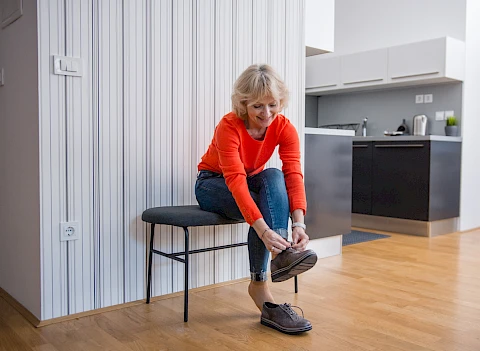
The floors get slick in Bel Air about the time the maples turn. September is Fall Prevention Awareness Month, and one of the simplest changes you can make this week has nothing to do with grab bars or rugs. It has to do with what's on your feet. A good pair of shoes is a piece of safety equipment.
Why Shoes Matter More Than Most People Think
According to the Centers for Disease Control and Prevention, one in four adults 65 and older falls each year in the United States. Footwear is one of the everyday factors worth paying attention to. Going barefoot or wearing socks on smooth floors, along with backless or slippery shoes, can make footing less secure.
Feet also change with age. Arches may flatten, ankles may lose some flexibility, and sensation in the feet can change. That means a supportive, well-fitting shoe becomes even more important for comfort and stability.
What to Look For When You Try On a Pair
Start with the sole. You want a rubber tread with a real pattern, not a smooth dress-shoe bottom. Bend the shoe in your hands. It should flex at the ball of the foot and stay firm through the arch. If the whole shoe twists like a dishrag, put it back. A secure fit, good tread, and a reasonably firm sole are all useful features to look for.
Check the heel. A low, wide, cupped heel is what you want. High heels tip you forward. Thick, cushy platform heels hide the ground from your ankle.
Look at the closure. Laces, hook-and-loop straps, or a stretchy elastic that actually holds the foot in place. A shoe that slides around inside is a shoe you can trip in. And make sure the toe box is roomy enough that your longest toe has a thumb's width of space at the end.
Styles to Avoid or Rework
Flip-flops. Slides. Backless clogs. Ballet flats with no support. Loose slippers. Old sneakers whose treads have worn smooth. Slippers with a slick synthetic sole. Backless shoes, high heels, and smooth soles are all worth reconsidering when fall risk is a concern.
Slippers are the sneaky one. Most people put them on at 6 a.m. and forget they're wearing them. Swap them for a house shoe with a rubber sole, a firm back, and a closure. Havre de Grace winters are damp; a proper indoor shoe also handles a cold kitchen floor.
If a favorite pair no longer grips, don't retire them yet. Take them to a shoe repair shop and ask about a resole. Many older adults in Forest Hill and Fallston keep a beloved walking shoe going for years that way.
Fit, Fitting, and When to Replace
Shop for shoes in the late afternoon. Feet swell during the day, and a fit that works at 4 p.m. will still work at 9 a.m. Wear the socks you actually walk in. If one foot is larger, fit that one.
Replace walking shoes every 400 to 500 miles, or once a year for daily wearers. Look at the outsole from underneath. If the tread is smooth in the heel or ball, it's time.
Steady Footing Across Harford County
Senior Helpers Bel Air works with families across Joppa, Perryville, Port Deposit, Rising Run, Charlestown, and surrounding areas. A caregiver can go along on a fitting, help clear tripping hazards at home, and remind a parent to swap the slippers for house shoes. If a fall risk is on your mind, contact us, and we'll talk through a few practical ways to make everyday movement feel more secure.