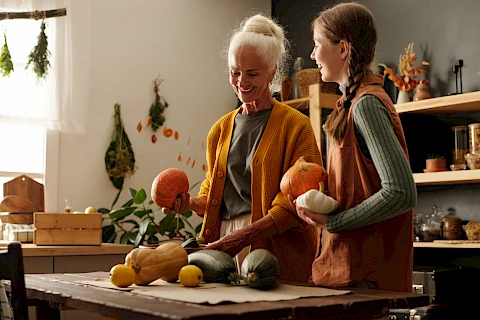
Pumpkins and butternut squash are lining up at every farm stand from Delafield to New Berlin, and the smell of roasted squash from a Sunday oven is one of the honest pleasures of a Wisconsin fall. There's a catch, though. The thick rinds and slippery shapes that give squash their long shelf life also make them tricky to cut, especially with hands that don't grip the way they used to. A few small adjustments keep the enjoyment and reduce the risk.
1. Roast Them Whole
Put a small pumpkin or delicata squash in the oven whole at 400 degrees, with a few holes poked through the skin with a fork. Forty-five minutes to an hour later, the whole thing is soft enough to cut with a butter knife.
You lose nothing in flavor. This is the single best way most seniors can enjoy squashes and pumpkins in a fall kitchen.
2. Buy Canned or Frozen
Canned pumpkin (100 percent pumpkin, not pie filling) makes excellent soup, muffins, and oatmeal. Frozen cubed butternut roasts in 25 minutes with olive oil and salt. Frozen produce holds most of its nutrients because it is often frozen within hours and preserved at its peak, which locks in its vitamins and minerals, sometimes more than fresh produce that has traveled a week and sat on grocery store shelves.
Convenience is safety here. Use it.
3. Choose the Smaller Varieties
Big pumpkins are for jack-o'-lanterns and Instagram. In the kitchen, smaller squashes with thinner skin are your friends. Delicata (edible skin), acorn (easier to halve), and small sugar pie pumpkins are much more manageable than a full Hubbard or blue Kabocha.
Farm stands around Pewaukee often carry the smaller varieties by mid-September.
4. Soften Before Cutting
If you must cut a squash, microwave it for two to three minutes first. This softens the rind enough that a sharp knife can pass through with much less force. Rest a hand towel folded under the squash so it doesn't roll.
Wear a cut-resistant kitchen glove on the hand holding the squash.
5. Keep Your Knife Sharp
A dull knife is more dangerous than a sharp one because it needs more force. Have your kitchen knives sharpened once a year; many hardware stores will do it, and some grocery stores offer the service too.
If you have arthritis, look at a Santoku-style knife with a bigger handle. Easier to hold, less likely to slip.
6. Let the Slow Cooker Do the Work
A whole small pumpkin fits in a six-quart slow cooker with an inch of water on low for six hours. It comes out soft, warm, and ready to scoop.
Same idea for butternut soup. Put the peeled and cubed squash (or the frozen from a bag) in with broth, onion, and a bit of ginger, and let it run all afternoon. Blend at the end.
7. A Helping Hand for the Hardest Steps
There is no shame in outsourcing the sketchy part. A grandchild, a neighbor, or a caregiver can do the cutting while you handle the flavors. Some grocery stores also sell pre-cut squash in the produce section from September through November.
Enjoy Fall Squash Safely
Senior Helpers Waukesha supports older adults across Delafield, Elm Grove, New Berlin, North Prairie, and Wales, with the small parts of daily life that used to feel automatic and now take a bit more thought. Meal prep, a hand in the kitchen, company during a Sunday roast. If a caregiver in the kitchen once a week would make fall cooking easier and safer, contact us.