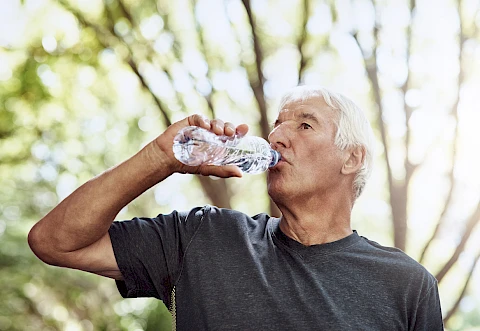
August afternoons can be misleading. Air-conditioned rooms can make it easy to forget how warm it is outside, and older adults may not always feel thirsty as quickly as they once did. A steady drinking routine can help prevent dehydration and the health concerns that can come with it.
Hot Days Can Catch Seniors Off Guard
Older adults may not notice thirst as readily as they did when they were younger. Certain medications and health conditions can also affect fluid balance. Add gardening, errands, or time spent outdoors, and dehydration can develop faster than you might expect.
Pay attention to changes. Dry mouth, dark urine, headache, dizziness, fatigue, muscle cramps, and new confusion can have several causes, but they are worth taking seriously when the weather is hot. The Centers for Disease Control and Prevention offers heat safety advice for people who may be more vulnerable during periods of extreme heat.
If someone faints, has chest pain, experiences sudden confusion, or shows signs of serious illness, seek emergency medical help by calling 911.
Put Drinks Where They Get Used
A full bottle of water does little good if it is sitting in another room. Keep water within easy reach by a favorite chair, on the kitchen counter, and in the car when heading out. Offering a drink with breakfast, lunch, dinner, and medication reminders can help make hydration part of the daily routine.
Small sips throughout the day count. Cold water, decaffeinated tea, milk, broth, and fruits with a high water content can all contribute to daily fluid intake. Someone in Brookfield may enjoy adding berries to a glass of water, while a senior in Waukesha may look forward to a cool cup of tea after an afternoon walk.
A simple routine can include:
- Keeping a filled water bottle or pitcher within easy reach
- Offering drinks with meals and regular daily activities
- Choosing water-rich foods such as watermelon, berries, oranges, and cucumbers
- Bringing water along for walks, errands, and appointments
- Checking in regularly with a senior who may not recognize thirst
If a senior has been told to restrict fluids, follow their clinician's instructions and ask before making changes to their usual drinking routine.
Change Outdoor Plans With the Forecast
Hot weather does not always mean outdoor activities have to stop. Instead, consider adjusting the timing and pace of the day.
Schedule walks, gardening, and errands for earlier in the morning or later in the afternoon when temperatures are lower. Choose shaded areas, wear a hat, and take breaks before fatigue sets in. When the heat is especially high, an indoor walk at a shopping center or community center can be a comfortable alternative.
For an outing in Delafield or Pewaukee, keep water close and avoid waiting in a parked car. Temperatures inside a vehicle can rise quickly, even when the weather outside does not seem extreme.
Choose the easier route when possible. A shaded entrance, a nearby place to sit, or a shorter walk may be a better choice than trying to complete every item on the day's errand list.
Check In With Someone Who Lives Alone
A phone call or visit can give family members an opportunity to ask how a senior is feeling and whether they have had enough to drink. You might leave a pitcher of water in the refrigerator, set out washed fruit, or prepare a light soup before heading home.
These small actions can make a hot day easier to manage, especially for someone who lives alone.
Keep check-ins friendly and consistent. During a heat alert, consider arranging for a neighbor or family member to stop by or make a quick call. A regular check-in can help identify changes in how someone is feeling before they become more serious.
It is also worth asking about swallowing. If a senior has developed difficulty swallowing, talk with a clinician or speech-language professional rather than changing drinks or food textures on your own.
Plan Ahead for Hot Weather
During a heat alert, move nonurgent errands to another day when possible and make sure the home has a comfortable, cool place to sit. Several hot days in a row can be harder on the body than a single warm afternoon.
Check the forecast regularly and plan around the hottest part of the day. A family member can bring cold water, refill a pitcher, arrange a ride to an air-conditioned location, or simply make a phone call before temperatures climb.
Small preparations can make a difference. Place a filled water bottle near the front door before heading out, along with anything else you will need for the day. When keys, bags, sunscreen, and an errand list are competing for attention, having water ready to go makes it less likely to be forgotten.
Hydration Support for Waukesha County Families
Hot summer days are easier to manage when hydration becomes part of the everyday routine rather than something to remember only when the temperature rises.
For families in Brookfield, Butler, Delafield, Elm Grove, New Berlin, North Prairie, Pewaukee, Wales, and Waukesha, Senior Helpers Waukesha can provide support with meals, companionship, reminders, and other daily routines that help seniors remain comfortable and supported at home.
If you are looking for a little extra help caring for an aging loved one this summer, Senior Helpers Waukesha is here to help. Contact us today to learn more about personalized in-home senior care and how we can support your family throughout Waukesha County.