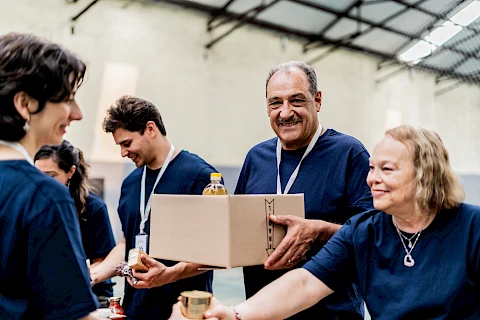
A cool, gray morning over Puget Sound is a good excuse to check what your local senior center has on its fall calendar. If you've retired but still like the feeling of a Tuesday morning where somebody is expecting you, local volunteering opportunities for seniors are easier to find. Senior Helpers knows that it beats another morning scrolling through your phone at home.
What Kinds of Roles Actually Exist
Senior centers rely on volunteer help more than most people realize. The Edmonds Waterfront Center runs a full lunch program, a lending library, a tax help desk in the spring, and a dozen classes every week, and every one of those needs somebody on the volunteer end.
Front-desk greeters welcome visitors and sign people in, and kitchen helpers plate meals for the Monday-through-Friday lunch. Drivers deliver Meals on Wheels to homebound neighbors. Instructors lead everything from watercolor to Mandarin, tai chi to intro-to-Zoom. If you've spent decades doing something you're good at, there's likely a class in it.
Committee roles fit people who like planning. Trip committees pick day trips to Mukilteo and Whidbey Island. In contrast, membership committees welcome new members and help them get settled in.
Why It's Worth Your Time
The health research behind local volunteering opportunities for seniors is real. According to the National Institute on Aging, older adults who regularly give their time to charity report better mood, lower depression scores, and stronger cognitive function than those who don't. A weekly commitment beats an occasional big one, because it builds routine and relationships.
There's also a practical side: volunteers get to know staff who can help them later, when their own needs shift, and they often hear about resources before flyers hit the bulletin board. The lunch discounts and free coffee are a nice bonus, too.
And there's a more personal piece for some people. For anyone navigating a recent loss, an empty house, or long stretches between phone calls from family, having somewhere to show up on a schedule can genuinely help, even something as simple as seeing the same familiar faces every Thursday.
Finding a Fit in Snohomish and King County
Local volunteering opportunities for seniors are easy to get started with. You just walk into one of the following local centers and ask for the coordinator:
- Edmonds Waterfront Center
- Lynnwood Senior Center
- Mountlake Terrace Center
When you arrive, you'll usually receive a form, a tour, and a cup of coffee. Bring your calendar to schedule a commitment. Try a role for a month before deciding if it's the right fit; if one task isn't for you, feel free to switch to another. Look out for the fall volunteer fair in September or early October, where you can meet coordinators from various programs.
Getting Started With Local Volunteering Opportunities for Seniors This Fall
Senior Helpers Edmonds cheers on any older adult finding a fresh purpose this season. We support families across Edmonds, Lynnwood, Mountlake Terrace, and Mukilteo by providing a little help at home that makes volunteering possible. If you or a parent could use companionship, transportation, or care support to stay active in the community, please contact us. We'll help you plan the fall.