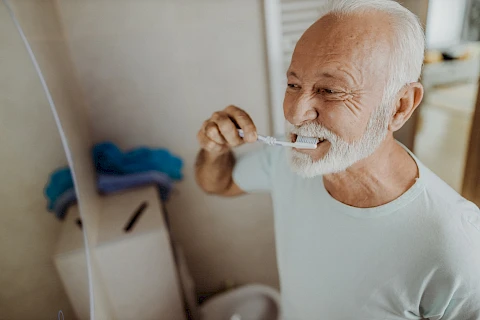
Good oral health contributes to comfort, nutrition, communication, and quality of life as people age. However, changes associated with aging may make daily oral hygiene more difficult for some seniors. Tooth pain, gum irritation, or poorly fitting dentures may also affect eating and comfort. Regular oral hygiene and dental care can address concerns before they interfere with everyday life.
Make Daily Brushing Easier
Daily mouth care should be part of a senior's regular routine. Brushing twice a day helps remove plaque and food particles that contribute to tooth decay and gum problems. Keep a soft-bristled toothbrush and fluoride toothpaste within easy reach. A caregiver may remind the senior to brush, set out supplies, or stay nearby while they brush. If dexterity or memory makes brushing difficult, provide more assistance while letting the senior handle the parts of the routine they can manage.
Clean Between the Teeth
Brushing does not reach every area of the mouth. Flossing once daily helps remove plaque and food particles. For seniors with arthritis or limited dexterity, a floss holder, interdental brush, or water flosser may be easier to use than traditional floss. Ask the dentist or dental hygienist to demonstrate an option that fits the senior's needs.
Keep Dentures Clean and Comfortable
Clean dentures daily with a denture brush and recommended cleaning product, avoiding regular toothpaste, which may scratch them. The gums, tongue, and roof of the mouth still need gentle cleaning even when a senior has no natural teeth.
Watch for sore spots in the mouth, dentures that slip out of place, or clicking while eating, which may indicate a poor fit. Do not try to reshape or repair them at home. Have a dental professional handle adjustments or repairs.
Address Dry Mouth
Dry mouth may result from medications, health conditions, or other factors and could increase tooth decay. Encourage regular water intake unless fluid restrictions apply. Sugar-free gum or lozenges may help stimulate saliva, but ask a dentist or doctor whether they are appropriate.
Tell the dental team about persistent dry mouth. They may recommend products or changes based on the senior's medications and health needs. Do not stop or change a prescribed medication because of dry mouth without first speaking with the prescribing clinician.
Prepare for Regular Dental Visits
Regular dental visits allow the dentist to check the teeth, gums, dentures, and other areas of the mouth. Ask how often visits are appropriate based on the senior’s needs. Before an appointment, gather a list of medications, observations on recent health changes, any dental concerns, and questions. Arrange transportation and consider accompanying the senior to help communicate concerns and remember instructions. Contact the dental office sooner if you notice persistent pain, swelling, bleeding, or other oral changes.
Watch for Changes That Affect Eating
Changes in eating habits may indicate an oral health problem. Watch for chewing on one side, avoiding certain foods, taking longer to eat, or leaving food untouched. Note persistent changes and share them with the dental team, particularly when pain, missing teeth, poorly fitting dentures, or dry mouth affect eating.
Helping Seniors Keep Up With Oral Hygiene
Regular brushing, flossing, denture care, and dental visits may be easier to manage with help from a caregiver. Senior Helpers Edmonds provides personalized in-home care that may include reminders, preparing oral hygiene supplies, and assistance with daily routines while allowing seniors to remain as independent as possible. Contact us to learn how we could help your loved one in Edmonds, Lynnwood, Mountlake Terrace, and Seattle.