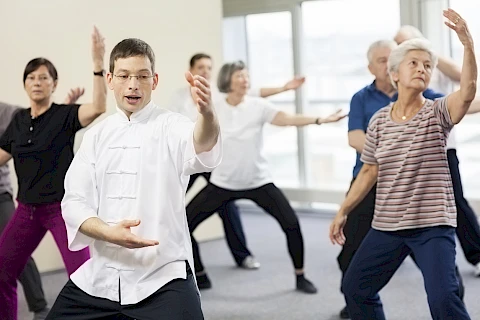
September brings Fall Prevention Awareness Month, and if you're a caregiver for an older parent in the Puget Sound area, you've probably wondered what actually works for balance. Tai chi for seniors keeps coming up in the research, and for good reason. It's gentle, low-cost, and something a lot of older adults actually enjoy sticking with.
Why Tai Chi Shows Up in the Fall Prevention Research
Tai chi is a Chinese practice built around slow, weight-shifting movements and controlled breathing, and for older adults, the payoff is real. Studies compiled by the CDC have found that regular tai chi for seniors can meaningfully reduce fall risk by improving balance, leg strength, and body awareness.
Part of what makes it work is repetition. Shifting weight from one foot to the other, hundreds of times per class, retrains the small stabilizing muscles that tend to weaken with age. It's also low-impact, so joints don't take a beating.
For your parent, the appeal is often the pace. There's no jumping, no mirrors, just a group moving together.
What to Look For in Tai Chi for Seniors
Not every tai chi class is set up for older beginners. When you're helping a relative find one, ask a few questions before signing up.
- Check the instructor's experience with older adults. Programs like Tai Chi for Arthritis and Fall Prevention are tailored for this age group, and trained instructors can modify moves for those with knee issues, dizziness, or limited mobility.
- Class size matters, too. Groups of eight to fifteen let the instructor actually watch each person, much larger than that, and individual attention drops off fast.
Helping a Relative Actually Get There
Signing up is only half the work. Getting to class regularly is where most good intentions fall apart, and that's usually where you come in.
Offer to drive the first two or three times; new settings feel less strange with a familiar person in the car. If your schedule doesn't allow it, look at community shuttle services in the area, or split rides with another family. Community centers, senior centers, and some parks departments in Snohomish County also list free or low-cost classes worth checking.
Follow up gently after each session and ask which movement they liked, rather than just whether they went. That question opens up more real conversation than a yes-or-no check-in.
Building Balance Across South Snohomish County
Tai chi for seniors adds up over weeks, not days. Encourage your relative to give any class a month before deciding whether it fits, and if the first one isn't the right match, try another; instructors and styles vary widely.
Senior Helpers Edmonds supports families across Edmonds, Seattle, Clinton, and Mukilteo with transportation to appointments and community programs, as well as companion care that helps older adults stay active and engaged. If you'd like help getting your relative to class this fall, please contact us, and we'll figure out a plan together.