Episode Transcript:
David Chandler:
Bob, one of the things that I — and I’m sitting here getting teary-eyed as well — I swear, if somebody is listening to this and you’re able to listen to it without having any feeling as you hear Bob share his passion… I mean, we’ve just heard two stories out of a book of stories and I’m sure hundreds of others that aren’t even in the book.
But one of the things that I was thinking about is this: there’s a statistic out there that when it comes to hospice, people are asked — when they’re younger — “Where would you want to pass away?” Inevitably, we’re all going to face that. And 70 to 80 percent of people, maybe more, say that they want to pass away at home.
Bob Nations:
Absolutely.
David Chandler:
The sad truth and reality is that 70 to 80 percent of people end up passing away in a hospital or in a rehab facility. Hearing these stories, I also think from a care standpoint — for those who provide care to seniors — there are so many times that I wish we had…
And this, Christina, could be a whole other episode on hospice. But I wish that people would respect and honor the wishes of their loved ones to help them achieve that — to pass away at home, as they wanted. Inevitably, we’re all going to reach that point, and being there as an advocate — helping people accomplish that even in their final days — is so powerful. Sitting there by somebody’s bedside...
Christina Chartrand:
Yeah.
David Chandler:
Crying with them and hearing them say, “Nobody’s ever cried for me before.” My gosh, I have no words.
Christina Chartrand:
Yeah, no, it’s true. It’s really true.
Bob Nations:
Well, that’s one of the rewarding parts. I know this is going to sound crazy, but being able to make that happen for them is really important to me. That’s why I get such a reward from what I do — being in this industry, for sure.
Christina Chartrand:
You know, at Senior Helpers, more and more of our offices are becoming Age-Friendly Care Certified. And that big question, “What matters most?” — Bob, I think you’ve been asking that question to your clients and families probably longer than anybody else, before Age-Friendly Care was even a thing. You’ve really been part of it.
David Chandler:
Way before, yeah.
Bob Nations:
Because it’s important to me. One of the first things I ask in an assessment — and I’ve always done this — is, “What is your goal here? What do you want to get done, and how can I help you do that?”
It’s not a story in my book, but I had a man tell me one day that he had cancer and he knew his days were numbered. I asked what he wanted to do, and he said, “I want to take my family to a resort near the ocean and spend one last time with them.” And darn if we didn’t make it happen for him! It was really special. That was early on, and I just saw his son this weekend — he still remembers that conversation and how we worked together to help his dad get to the beach.
David Chandler:
That’s beautiful.
David Chandler:
So, Bob, another one of my favorite stories was about Mr. B.
Christina Chartrand:
No!
Bob Nations:
Yeah, that was an interesting one too, because he was someone we’d started care with, but I hadn’t actually been involved at first. I was doing more of the financial side. One day I was told, “Hey, can you go check on this Mr. B? He’s not paying his invoices.”
I went up to see him — he lived in a small low-income apartment complex — and he just didn’t have a lot going on in his life. He mostly sat there. We’d had a really great caregiver visiting him, and as I started diving into it, I discovered that he had worked in the wine industry — not in a high-profile job, but hands-on, cleaning vats and doing the tough work.
He’d actually earned a pension back in the day when the wine industry still had those, so he had an okay income. He had moved here from Idaho, where his family were potato farmers, but he’d been rejected by them. In fact, he told me once that his mother had even tried to smother him with a pillow. That really broke my heart.
So, I kind of stepped in and started managing his life a bit. I found out that he had bought a car that was sitting out on the street — and not only was he not paying us, he wasn’t making his car payment either. So I grabbed the payment book, took it to the office, handed it to Kevin, and said, “Hey, you need to make these payments.”
We started making them and used his car to transport him. As time went on, though, his health started to fail. At one point, he was in the hospital and due to come home, but I was really concerned about his living situation — it wasn’t clean or healthy. He had smoked for years, and the walls were yellow and reeked of smoke.
A couple of days before he was scheduled to come home, I rented a U-Haul truck, went in, and cleaned out his entire apartment. I scrubbed the walls down with cleaner, got him a lift chair from a nonprofit I work with, and secured a hospital bed. Because he didn’t have Medicare coverage, he wasn’t entitled to all the equipment benefits, so I had to find a way to make it work. I got everything set up so he’d come home to a cleaner, healthier environment.
He had no family, so I sort of became his surrogate son, managing him through all the ups and downs. Eventually, it got to the point where we were moving him into an assisted living facility.
One of the things that really stood out to me was that he had never celebrated his birthday with anyone before. So one morning, he and I went out to breakfast. I’ll never forget helping him out of the car — he wasn’t very ambulatory — and untangling his urine bag to make sure we didn’t have a problem. We got him inside, had a really nice breakfast, and he just lit up.
Eventually, he moved into assisted living. One day they called me to say that he had gotten up, had breakfast, sat down in his chair, and peacefully passed away.
I felt good knowing I’d done everything I could to set him up for success — to give him a clean, dignified home and then a safe assisted-living space he could afford. The sad part was that he had arranged for a pine box and a “potter’s burial,” where you’re placed in an unmarked grave. I couldn’t let that happen. I worked with a funeral home to have a marker put in place. I stood by as they lowered him into the ground — I was the only one there.
It was an opportunity to really bond with him, to help make the last years of his life as meaningful as possible.
The funny part of the story? Remember that car I mentioned earlier? Well, we had finally paid it off, but now I had a car in another man’s name who had passed away. I called the public guardian I knew and explained the situation. He walked me through how to transfer the car into the company’s name.
For years, we drove that car around with “Senior Helpers” on the windows, in his honor. We even nicknamed the car after him. Every time I drove it, I thought about Mr. B and the time we shared. It was something really special.
Christina Chartrand:
Such great stories — really great stories. I love it. You know, it’s so interesting. I think about how we all have stories like that — being a neighbor, a friend, or part of someone’s family in that way. Hearing it from your perspective is powerful, but imagine hearing it from the client’s perspective — what they’d say about Bob!
Bob Nations:
Right, right, right.
David Chandler:
Exactly.
Bob Nations:
You know, Christina, I think you and I grew up in a time where people helped their neighbors. That’s really where I come from — when my neighbor needs something, I want to be there. That mentality carries into my work at Senior Helpers. Everyone’s my neighbor on some level, and that’s how I approach it.
Christina Chartrand:
So, there’s some advice you give at the end of your book — I think it’s about four pillars. Tell me a little bit about that. I found it really intriguing. It’s simple advice, but good advice.
David Chandler:
Yes!
Bob Nations:
Well, that was something that evolved over time. When I first started the business, as you know, we do meal prep for people in their homes. I began thinking about how to make sure my caregivers knew how to prepare meals. So, I started a program to educate them on cooking.
It turned into this whole initiative — I used a commercial kitchen at Whole Foods and did caregiver “cuisine training” there. Then, after doing a radio interview about improving memory, I realized that the things I’d learned — about exercise, diet, and brain health — could be organized into something bigger.
That’s when I developed what I call the Four Pillars. Over time, I’ve added a fifth one. But those original four were about how to live a longer, healthier, more fulfilling life.
They were:
-
Eat right — or as I called it, “Let’s Eat.”
-
Think — use your brain for stimulating activity every day.
-
Move — get your body going, even if it’s just moving your arms while sitting in a chair.
-
Socialize — don’t underestimate how important social interaction is.
I created a whole marketing strategy around these pillars. I’d host workshops throughout the community, sometimes cooking meals on-site to show how easy it could be to make a healthy meal in 10 minutes — affordable, tasty, and geared toward older adults.
Our dietary needs change as we age, and I spent a lot of time researching that. So, part of my hourlong talks focused on nutrition — things like why different food colors matter and which nutrients support brain and heart health.
Then I’d segue into brain stimulation, where we’d play games together. One of my favorites was the “ABC Game.” You take a subject — say, girls’ names — and make a list A through Z, finding a name for each letter. It’s easy, fun, and gets the mind going.
For movement, I always reminded people that you don’t need a gym membership. Walk around the house, stretch while watching TV, stand up ten times from your chair, take the long route when shopping. I even tell people, when I go shopping at Target, Whole Foods, and Trader Joe’s, I return my cart each time before going to the next store — adds steps without even thinking about it!
And then there’s socialization, which I think is the one that often gets missed. As we age, people start isolating — sometimes because of health or memory changes — but it’s the opposite of what we need. Staying socially connected keeps us mentally and emotionally healthy. That could be talking to someone on the phone, having lunch with friends, or playing cards with neighbors.
The great thing was that all these ideas became part of my care plans. When I’d do an assessment and see that someone was showing signs of memory loss, I’d put games in their care binder and tell caregivers, “This is part of your job — play with them!” I even created easy meal menus for caregivers to use, plus exercise suggestions.
Christina Chartrand:
Yeah!
Bob Nations:
And just the fact that caregivers sat and played games with clients created social interaction in itself. Later on, I added a fifth pillar — spirituality — because I think that’s an important component too.
So now I talk about the Five Pillars. But for years, those first four really defined how I approached care — and life.
Christina Chartrand:
I love how you incorporated that mindset into your care staff, because that’s where it starts. If we can get caregivers thinking that way, it naturally spreads to clients.
Bob Nations:
Exactly. I built it into everything — it became a marketing approach, a community education effort, and part of my daily care plans. Even our trade show giveaways aligned with it.
We found these little baskets that looked like sink strainers — they actually fit over a can to strain out excess sodium from canned foods. I’d hand them out at events, and people always came over asking, “What is this?” It was the perfect conversation starter about healthy eating and who we are as a company.
It all tied together — community engagement, caregiver training, and client care — under the same philosophy.
Christina Chartrand:
That’s great. Well, I live by those now five pillars! I think they’re so important. Now that I’ve turned 60, I’m 100 percent on board.
Bob Nations:
Yeah, so am I, so am I.
David Chandler:
David, you need to listen to us wise people!
Christina Chartrand:
I know!
David Chandler:
So, Bob, I’m curious. A lot of our listeners are family caregivers. We recently had our national conference at Senior Helpers, and one interesting trend we’ve noticed over the last few years is a shift in who is seeking care.
It used to be that most often it was the daughter — usually the oldest — who was tasked with finding or arranging care for her loved one. But now, it’s nearly 50–50. Sons are really stepping up. I think the stats were something like 48–46, so it’s almost even.
Bob Nations:
Yeah, that’s true. It’s pretty balanced now.
David Chandler:
For those listening — whether they’re exploring care for a loved one or already providing it — what advice would you give?
Bob Nations:
That’s a big question, David — we could spend an entire podcast on it!
When it’s a spouse looking for care, it can be especially hard. They often feel like they’re “giving up,” or that bringing in help means they’ve failed somehow. But you can’t be a hero. Statistically, the caregiving spouse often declines faster than the person they’re caring for, simply from exhaustion.
It’s crucial that they get some kind of respite — even if it’s just a few hours away while someone else helps at home.
And when it’s adult children involved — say, Mom is caring for Dad — you have to realize Mom needs care too. They may be the same age, and even if Mom seems to be doing fine, she might be struggling quietly. So it’s important to support both of them.
Another key piece of advice: hire a professional agency. Private caregivers can seem cheaper, but it often comes back to haunt families. I just heard from a friend whose parents hired privately and are now being sued because they didn’t follow California wage laws. It’s costing them far more in the long run.
There’s also liability to consider — if a private caregiver gets injured in your home, you could be responsible for their medical expenses. I’ve seen that happen. A caregiver once fell and hit her head on a driveway, and the family was held liable.
So yes, it might seem like you’re saving money, but you’re taking big risks. Be safe — this is your mom or dad we’re talking about. They deserve the best possible care.
And not to sound like a commercial, but here at Senior Helpers, we really do take pride in providing the best. From our caregiver training, to our LIFE Profile™ assessment that helps identify where your loved one is today and how to improve their wellbeing, to even using AI technology for home monitoring — everything we do is about safety, quality, and peace of mind.
I’ve seen our technology literally save lives. We once had a client fall on the floor on a hot day — her apartment reached 98 degrees — and no one would have known for hours if our monitoring system hadn’t alerted us.
So my advice is this: don’t be cheap with care. You don’t go to Walmart to take care of your mom — you go to Nordstrom. Your mom raised you and invested so much in you; it’s time to invest in her. That’s how I see it.
Christina Chartrand:
That’s great. So, how can people find your book?
David Chandler:
Yes — tell us!
Bob Nations:
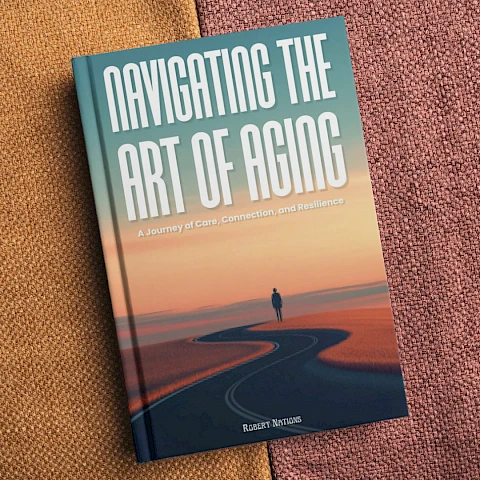
It’s available on Amazon.com — just type in Navigating the Art of Aging. You can also find it online through Barnes & Noble.
Christina Chartrand:
Perfect! We’ll include a link to it with this podcast episode so our listeners can easily find it.
Bob Nations:
This was fun.
Christina Chartrand:
It really was. Thank you so much for joining us, Bob — your stories are incredible.
David Chandler:
Yes, thank you. My gosh, we’ve only scratched the surface. We could talk for hours about your experiences.
Bob Nations:
Well, I’m honored that you invited me. Thank you for including me.
Christina Chartrand:
We’re so glad we did.
Bob Nations:
Of course.
Christina Chartrand:
Thank you!
Bob Nations:
All right, see you all soon.
David Chandler:
All right — we’ll see everyone next time on LIFE Conversations with Senior Helpers. Take care.