

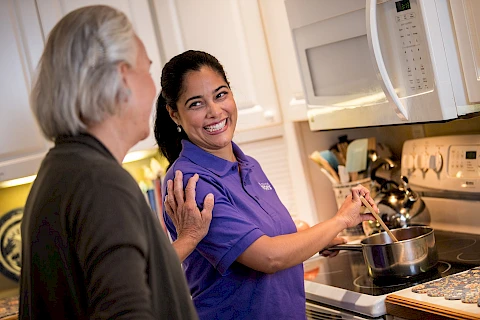
The most important caregiver skills are patience, empathy, communication, flexibility, and time management, and they're the same skills employers in nearly every field look for. Caregivers practice them every shift, often in situations that test them hard, like a client with dementia who refuses a bath or a family member who disagrees with a care plan. That daily practice builds strengths that last long after any one job, for caregivers who stay in the field and for those who move on to nursing or another career.
1. Patience
The people caregivers support may face memory loss, limited mobility, hearing loss, or chronic pain, all of which can slow down conversations and daily tasks. Patience means slowing down to work at the client's pace, repeating instructions calmly, and letting go of personal frustration to get the task done well. It's one of the top qualities families look for in a caregiver, and it carries over to every relationship and workplace.
2. Empathy
Empathy is the ability to understand and share another person's feelings. Caregivers use it to recognize when a client is scared, embarrassed, or lonely, and to respond with kindness rather than judgment. It also helps caregivers support families who are dealing with stress and grief. Strong empathy builds trust quickly, which makes care go more smoothly for everyone.
3. Communication
Caregivers communicate with clients, families, nurses, and office staff throughout the day. That means explaining things clearly, listening closely, reading body language when a client can't express what they need in words, and reporting changes in a client's health accurately. Learning to adjust communication for someone with hearing loss or dementia builds skills that help in any customer-facing role.
4. Flexibility
No two days in caregiving are exactly alike. A client may feel well one morning and need extra help the next, and plans can change quickly when a health issue comes up. Caregivers learn to adapt without losing their composure, solve problems on the spot, and keep the client's safety and comfort first.
5. Time Management
Caregivers often handle personal care, meals, medication reminders, light housekeeping, and errands within a single shift. Organizing those tasks so nothing gets missed, while still leaving time for conversation and companionship, builds strong time management and prioritization skills.
How Caregiving Prepares You for Other Careers
Many people use caregiving as a first step toward a career in healthcare. Hands-on experience with personal care, mobility support, and observing changes in a client's condition gives a strong foundation for nursing school, therapy programs, and medical assistant roles. Outside healthcare, the patience, communication, and problem-solving skills caregivers use every day transfer well to customer service, teaching, social work, and management. Caregiving experience also shows employers that a candidate is dependable and can handle responsibility for another person's well-being.
Caregiver Skills for a Resume
When applying for caregiving jobs, list both people skills and practical skills. Soft skills include patience, compassion, communication, dependability, and problem-solving. Hands-on skills include assistance with bathing, dressing, and grooming, safe transfers and mobility support, meal preparation, medication reminders, light housekeeping, and companionship. Certifications such as CPR, first aid, and CNA or HHA training are worth listing too, along with experience caring for people with dementia, Parkinson's disease, or other conditions. Specific examples, like helping a client with dementia stick to a daily routine, make a resume stand out.
Qualities of a Good Caregiver
Beyond specific skills, the best caregivers share a few core qualities. They're reliable and show up on time, they respect each client's dignity and independence, they stay calm under pressure, and they genuinely enjoy helping people. Many caregivers say the relationships they build with clients and families are the most rewarding part of the job.
Start a Rewarding Caregiving Career With Senior Helpers
Senior Helpers caregivers help older adults live safely and independently at home while building skills that last a lifetime. Senior Helpers provides training, including specialized programs for Alzheimer's and dementia care and Parkinson's care, so new caregivers can grow with confidence. Explore caregiving careers and apply today.