

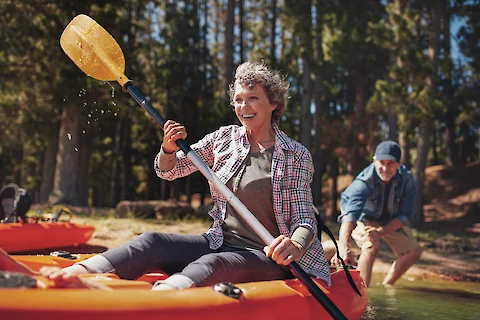
Water supports the body's weight and adds gentle resistance, which makes water sports a good way for older adults to stay active without straining their joints. Water aerobics and swimming build strength and endurance in a pool, while kayaking and stand-up paddleboarding offer time outdoors on calm lakes and rivers. With the right equipment and a few safety habits, many seniors can enjoy all four well into their 70s and 80s.
1. Water Aerobics
Water aerobics is one of the most popular activities for older adults. Classes combine walking, jogging, arm movements, and light resistance work in waist- or chest-deep water, which builds heart health, strength, and flexibility with little impact on the knees and hips. Most community pools and gyms offer classes designed for seniors, and many are taught in warm water that's comfortable for people with arthritis.
Seniors can start at a low intensity and build up gradually. Non-swimmers can stay in shallow water, and a flotation belt adds support in deeper areas.
2. Swimming
Swimming works nearly every muscle group and improves cardiovascular fitness without the pounding of running or walking on pavement. Laps can be done at any pace, and strokes like the backstroke and sidestroke are easier on the neck and shoulders than freestyle. For seniors who aren't strong swimmers, a lesson or two can build confidence and technique.
Swim with a buddy or in a lifeguarded area, and stay in shallower water until comfortable.
3. Kayaking
Kayaking builds upper-body and core strength while getting seniors out on calm lakes, slow rivers, and protected bays. For older paddlers, the best kayak is usually a sit-on-top model, which is stable, easy to get in and out of, and simple to climb back onto. Look for one that's lightweight, around 35 to 50 pounds, with a comfortable seat with back support. A 10-foot kayak tracks straighter and glides more easily, while an 8-foot kayak is lighter to carry and easier to turn.
The easiest way to get into a kayak is from shallow water. Place the kayak parallel to shore, sit down in the middle of the seat, then swing the legs in. A kayak launch dock or a helper holding the boat steady makes it even easier. Many paddlers follow the 120 rule: if the air and water temperatures add up to less than 120 degrees Fahrenheit, dress for falling into cold water. Always wear a life jacket, start on calm water close to shore, and paddle with a partner.
4. Stand-Up Paddleboarding
Stand-up paddleboarding challenges balance and core strength and can be surprisingly relaxing on calm water. Seniors can start by kneeling or sitting on the board, then stand once they feel steady. Wider, longer boards are more stable for beginners, and a lesson on flat water helps build skills quickly. Wear a life jacket and a leash that attaches the board to an ankle so it stays close after a fall.
Getting Started Safely
Talk with a doctor before starting a new activity, especially with heart disease, balance problems, or recent surgery. Drink water before and after, since it's easy to get dehydrated in and around water. Wear sunscreen and a hat outdoors, and choose calm, warm days for open-water sports. Begin with short sessions and build up over several weeks.
Healthy Lifestyle Support From Senior Helpers
Staying active is easier with a little help getting there. Senior Helpers companion care caregivers can provide rides to the pool or lake, help with getting ready, and offer company and encouragement along the way. Find a Senior Helpers office near you to learn more.