

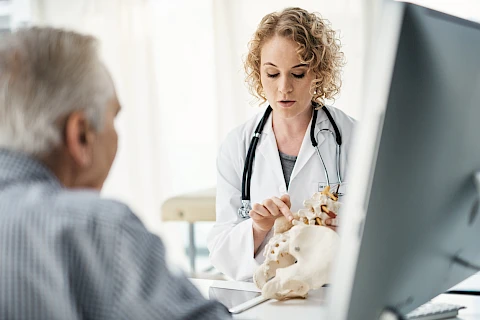
Osteoporosis conversations tend to center on women, and there's a reason for that: women do lose bone density faster after menopause. But if your father, husband, or senior loved one is a man, his bones deserve the same attention. June is National Osteoporosis Month, and it's worth taking a few minutes to understand what osteoporosis looks like in senior men and how you can help.
Why Osteoporosis Is Often Missed in Senior Men
Men typically have larger, denser bones to start, which gives them a later onset of significant bone loss. That built-in advantage can actually work against them, because it often means their osteoporosis goes undetected longer. By the time a fracture happens, the condition may be well advanced.
Several factors raise the risk of osteoporosis in senior men: low testosterone (which helps regulate bone turnover), long-term use of corticosteroids for conditions like asthma or arthritis, excessive alcohol use, smoking, a sedentary lifestyle, and a family history of fractures. Men over 70 are at particular risk simply because of cumulative bone loss over time.
The Bone Health and Osteoporosis Foundation notes that men account for approximately one-third of all hip fractures worldwide, and their recovery rates and post-fracture mortality outcomes are often worse than those of women. That's a sobering figure, and it underscores why this topic matters.
Practical Ways You Can Support Your Loved One
The good news is that the same lifestyle habits that protect women's bone health work equally well for men. As a caregiver, you can do a lot to help support those habits.
Calcium and Vitamin D
Most men over 70 need around 1,200 mg of calcium daily and at least 800 IU of vitamin D. If your loved one is a picky eater, a calcium supplement and a vitamin D supplement (with a physician's approval) can fill the gap. Dairy, canned sardines, fortified cereals, and dark leafy greens are all good food sources.
Encouraging Movement
Weight-bearing exercise, anything from a daily walk to some light resistance work with bands or small weights, encourages the body to maintain healthy bones. If your loved one is reluctant, finding an activity he genuinely enjoys makes it far easier. A stroll around the block after dinner, a game of bocce in the yard, or even a short swim (which builds muscle even if not weight-bearing) all count.
Reducing Fall Hazards at Home
Because osteoporosis increases fracture risk in senior men, maintaining a home environment that helps prevent falls is especially important. Clear walking paths, good lighting, and grab bars in the bathroom are practical choices. Floors should also be free of loose rugs that can cause seniors to trip.
Asking About a Bone Density Scan
Men often aren't screened as routinely as women. If your loved one is over 70 or has multiple risk factors, ask their primary care provider about a DXA scan. Knowing his bone density level makes it possible to take targeted action.
Making Prevention a Shared Effort
One of the most essential things a caregiver can do is to normalize conversations about osteoporosis among senior men. When bone health comes up as a routine wellness topic, rather than something to address after a fracture, your loved one is far more likely to engage with it. You don't have to overhaul everything at once. Small, consistent changes add up.
Senior Helpers supports families across the country with caregiving that keeps older adults safe, active, and comfortable at home. If you're looking for extra support for your senior loved one, contact us to find a location near you.