

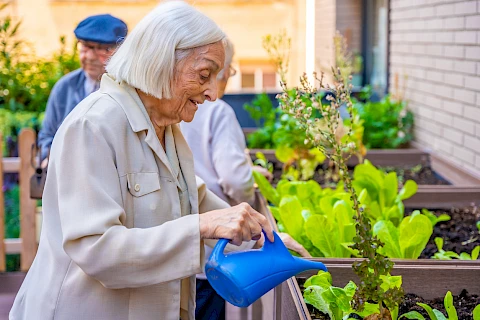
Gardening has a way of grounding people. The feel of soil, the satisfaction of watching something grow, the quiet rhythm of tending plants, these things offer real benefits: reduced stress, gentle physical movement, and a sense of purpose that doesn't diminish with age. But when a senior lives in an apartment without outdoor space, finding that experience takes a little more searching. The good news is that community gardens for seniors are more available than most families realize.
Why Gardening Matters for Older Adults
Research has found that gardening is associated with lower rates of depression and anxiety. It also promotes better physical functioning and improved quality of life in older adults. For seniors who live alone or spend long stretches indoors, community gardens offer something else too: a reason to get outside and interact with others.
The daily act of caring for plants also provides structure for the week and something pleasant to look forward to. For seniors living with early memory changes, familiar sensory experiences like the smell of tomato leaves or the texture of freshly turned earth can be particularly grounding.
Where to Look for Community Gardens for Seniors
Start local. Most cities and towns maintain community garden programs through their parks and recreation departments. A quick call or visit to the municipal parks office will tell you whether plots are available, what the cost is (often nominal or free for seniors), and whether there are accessibility features like raised beds.
Beyond city programs, several other sources are worth exploring:
- American Community Gardening Association. Their garden locator is a searchable database of community gardens across North America. You can search by zip code to find gardens near your senior loved one's home.
- Master Gardener Programs. Many county cooperative extensions run Master Gardener programs that include community plots or volunteer-led senior gardening initiatives. Search for your county's cooperative extension office online.
- Faith Communities and Nonprofits. Many churches, synagogues, and community organizations maintain gardens and welcome senior participants. These are worth a phone call, even if they aren't publicly advertised.
- Senior Centers and Assisted Living Communities. Some senior centers maintain their own raised-bed gardens. Even if your loved one doesn't use the center for other programs, it's worth asking whether the garden is open to community members.
- YMCA and Recreation Centers. Several YMCA branches and community recreation centers host therapeutic horticulture programs geared toward older adults. They also sometimes partner with local hospitals or health systems.
Making the Experience More Accessible
Once you've found the right community gardens for seniors, think through what will make the experience sustainable. Raised beds are easier on knees and backs than ground-level plots. Lightweight tools with padded grips reduce strain. A garden near public transportation or within walking distance of your senior loved one's home removes a major barrier to consistent participation.
Consider going together the first few times. Many caregivers find that gardening becomes a shared activity they look forward to as much as their loved one does. Some families set up a small container garden on a balcony as a supplement, since even a few pots of herbs or flowers can carry many of the same benefits.
Finding Support Wherever Your Senior Loved Ones Are
Whether your loved one is just beginning to explore gardening or is a lifelong gardener adjusting to apartment life, there are options worth finding. Senior Helpers supports seniors in building daily routines that are meaningful, active, and connected to what they love. Contact us to find a location near you and learn how our in-home care services can help your loved one live fully.