

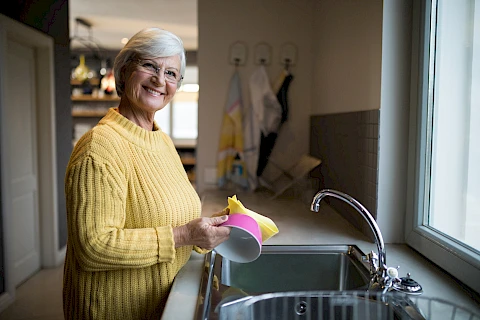
Living at home often means knowing where the good mug is and choosing how the morning goes. Asking for a hand can feel loaded.
Help at home can support senior independence by leaving more room for your own decisions, even when a few chores have become harder.
Keep the Decisions With You
Begin with the parts of the week that wear you out. Grocery trips, laundry, lunch, or a ride to an appointment may take more energy than they once did. Start there.
You can say what belongs on the list and what you would rather keep doing yourself. Take it slowly.
A first visit should feel like a conversation. A useful schedule depends on the pace you keep, the foods you enjoy, and the tasks that leave you tired by midafternoon
Speak plainly. A caregiver can follow your preferences for meals, errands, and the order of the day.
Make the House Easier to Manage
Stairs with a basket, a dark hallway, and a wet bathroom floor deserve attention. No rush. The National Institute on Aging has fall-prevention ideas for spotting hazards around the house. Go at your own peace.
Light housekeeping and a walk outside can also fit into a visit. A caregiver may remind you to take your medications as part of the routine you choose.
It’s your plan, and you can adjust it as needed. That can free up time for a book, a neighbor, or a Tuesday card game. Keep the routine manageable.
Keep Personal Routines Private
Bathing, dressing, and grooming are personal matters. Say what feels comfortable. You can choose the time, the clothes, and the amount of help you want. This supports senior independence while keeping your routine your own.
A person may want help only after a hospital stay or during a difficult stretch. Others prefer a weekly visit for errands. Both are reasonable. Review the schedule when your needs change.
Let Support Stay Flexible
Extra help should not hand your household over to someone else. You remain the person who decides what happens next. A caregiver might notice an empty fridge or a burned-out bulb, then bring it to your attention instead of taking over. Take your time.
Try one task first and talk about it afterward. Keep what works. Drop what does not. That kind of trial can make the arrangement feel more like your home again.
Keep track of the jobs that still feel like your own and the ones that leave you worn out. A few notes are enough. Over time, they can show a pattern that is easy to miss during a busy week, and they give you something specific to raise with family, a clinician, or a trusted helper.
Talk about the plan again after a short trial. Keep the parts that make the day easier. Change the rest. A routine should make room for the person’s voice, even when someone else is helping with the practical work.
Write down what worked. It makes the next conversation easier and gives the person a simple way to say what should stay the same.
Keep Your Home and Choices Close
For many people, a little practical help can support senior independence by making it easier to stay near familiar neighbors, stores, and routines.
Click here to find a location near you. Start there. Take it slow.