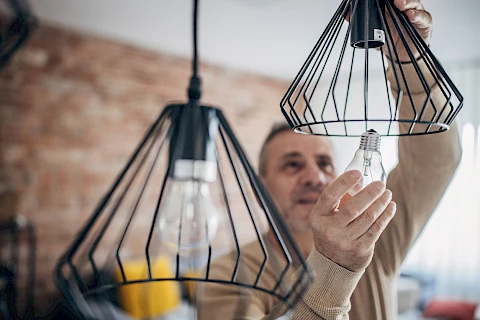
As the days get shorter, some areas of the home may not be as well lit in the evening. Poor lighting can make it harder to spot stairs, furniture, and other obstacles that could cause a fall. September is Fall Prevention Awareness Month, making it a good time to check the lighting throughout the home. From hallways and stairs to the bedroom and bathroom, the right lighting can make it easier to move around safely.
Why Lighting Matters More as You Age
Our eyes change as we get older. The lens becomes less clear, and the pupil does not open as wide in dim light. As a result, you may need more light to see things clearly, especially when reading or moving around the home.
Low light can make stairs, furniture, and other obstacles harder to see. This can be a concern at night, when you may get up to use the bathroom. The National Institute on Aging recommends keeping pathways well lit and using nightlights where needed to prevent falls.
Lighting Tips for Each Room
Different areas of the home need different types of lighting. Pay attention to areas that feel too dim in the evening or where it takes a moment for your eyes to adjust. The following rooms are good places to start.
- Hallways and stairs: Make sure both ends of a staircase have a light switch. For hallways, consider nightlights with light sensors that come on when the room gets dark. Keep the path evenly lit so there are no dark spots.
- Bathrooms: A low-level nightlight near the toilet can make nighttime trips easier without turning on bright overhead lights. Good lighting around the mirror also makes it easier to see while washing or getting ready.
- Bedrooms: Keep a lamp within easy reach of the bed. Choose one with a large switch or a touch control if that is easier to use. A small flashlight on the nightstand can also be useful during a power outage or if someone needs extra light.
- Kitchens: Under-cabinet lights can brighten work areas without creating shadows. Make sure the stove and sink have enough light as well. Consider adding a plug-in nightlight above the coffee maker for those early morning kitchen trips.
Choosing the Right Light Bulbs
Once you know where more light is needed, check the bulbs in those fixtures. Start with the fixture's maximum wattage and never exceed it.
LED bulbs use less energy than incandescent bulbs and can provide the same amount of light at a lower wattage. When shopping, check the lumens rather than wattage alone. For general lighting, 800 to 1,100 lumens can be a useful starting point, depending on the room and fixture.
Color temperature also affects how the light looks. Bulbs around 2700K to 3000K give off warmer light that works well in living areas and bedrooms. For task areas such as kitchen counters and bathroom mirrors, 3500K to 4000K provides a cooler, more neutral light.
Top-Notch In-Home Care You Can Rely on at Senior Helpers
Good lighting is one part of keeping seniors comfortable and safe at home. Ongoing support can also make daily routines easier. Senior Helpers Huntingdon Valley provides personalized in-home care for seniors in Jenkintown, Willow Grove, Philadelphia, Jamison, and Hatboro. If you could use some extra support at home, contact us to learn more about in-home care options.