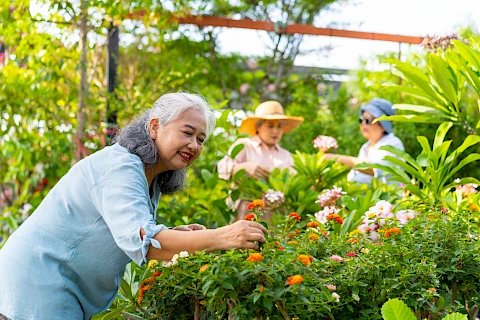
Gardening Safety: Helping Seniors Garden Safely
Gardening gives many older adults a sense of purpose, routine, and connection to the outdoors. Tending flowers, vegetables, herbs, or houseplants may encourage movement, stimulate the mind, and provide daily activity rooted in years of experience and personal tradition.
As physical abilities change with age, gardening may bring new challenges. Bending, kneeling, lifting, uneven ground, sun exposure, and repetitive motions may increase the risk of falls, strains, fatigue, or other injuries. Caregivers can help reduce those risks while keeping gardening accessible.
Adaptive techniques and home modifications, including raised beds, ergonomic tools, seating options, pacing techniques, and regular monitoring for overexertion, may help make gardening safer and more manageable. Seniors should also discuss any new physical activity or change in activity level with their physician before beginning.
Adaptive Tools That Make Gardening More Manageable
Adaptive gardening tools and modified setups can reduce strain on joints, balance, and mobility. Long-handled tools, ergonomic grips, and lightweight equipment make tasks easier. Raised beds, vertical gardens, and container planters reduce bending, while seating options and accessible layouts help seniors continue gardening with less fatigue and a lower risk of injury.
Preventing Injuries During Gardening
Common gardening injuries among seniors include back strain from bending, falls on uneven ground, and heat-related illness during warmer months. Short gardening sessions with regular breaks reduce strain, and a nearby bench for rest helps.
Uneven ground, hoses, and tools left in walkways create tripping hazards. Simple fall-prevention strategies, such as clearing walkways, securing hoses, improving visibility around garden paths, and wearing footwear with traction, may reduce fall risk.
Morning gardening before peak heat, along with shade hats, sunscreen, and regular hydration, helps reduce heat-related concerns and supports a safer time outdoors.
Signs a Senior May Need More Assistance in the Garden
Caregivers may notice signs that gardening has become more difficult, including frequent stumbling, balance issues, joint pain, fatigue, dizziness, or overheating. Repeated minor injuries, difficulty using tools, or changes in memory and attention may also increase risk. Adjusting tasks to lighter gardening activities helps seniors stay engaged while reducing the risk of injury.
Adapting Gardening Activities Over Time
Physical limitations do not end the enjoyment of gardening. Indoor herb gardens, container plants, and windowsill flowers offer low-effort options, while planning, seed selection, and garden design keep seniors involved. Sharing gardening knowledge and observing outdoor spaces also preserves a connection to plants, routines, and memories without requiring strenuous gardening tasks.
Helping Your Loved One Stay Active and Independent
Gardening often represents much more than a hobby. It may reflect years of routines, memories, accomplishments, and connection to the outdoors. While gardening may become more challenging with age, the right support, safety precautions, and adaptations can help many older adults continue participating in this meaningful activity. For seniors who need a little extra assistance to stay active and independent, Senior Helpers Huntingdon Valley assists families throughout Jenkintown, Willow Grove, Philadelphia, Jamison, and Warminster with Companion Care and Personal Care services that help older adults remain engaged in the activities they enjoy. Whether a senior needs assistance moving safely around the yard, help with outdoor tasks, transportation to a garden center, or companionship while tending plants, our caregivers can help make gardening a safer and more enjoyable experience. Contact us to learn how personalized in-home care can help your loved one continue enjoying life at home and the hobbies that matter most.