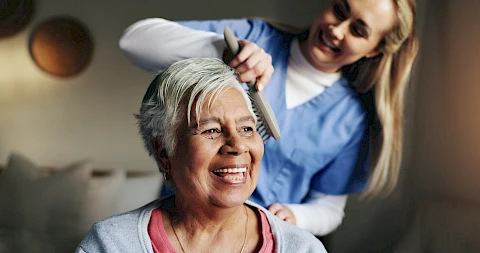
Grooming can become more difficult for seniors due to age-related changes in mobility, vision, strength, and coordination. Tasks such as bathing, shaving, brushing hair, or trimming nails may start to require extra time or support. A thoughtful approach can make it easier to talk to senior loved ones about grooming needs while keeping them involved in decisions about their personal care.
Starting the Conversation
Grooming can be a sensitive subject, particularly when your loved one has handled their personal care independently for many years. Choose a private, relaxed time to talk rather than bringing it up when they are already struggling with a task.
Be specific about what you have noticed without making the conversation sound like criticism. If their hair has become difficult to manage, ask whether they would like help scheduling a haircut. If bathing or getting dressed seems more difficult, ask what part of the routine is giving them trouble.
Give your loved one time to explain what they are experiencing. Arthritis, limited mobility, poor vision, fatigue, or balance problems can make familiar tasks harder. Understanding the reason for the change can help you find a solution that works for them.
Make Daily Grooming More Manageable
Grooming involves a range of daily tasks, from washing and styling hair to shaving, nail care, oral care, and getting dressed. Some tasks may become more difficult than others, so focus on the areas where your loved one needs support.
A little preparation can make the routine easier. Have grooming supplies ready, keep the bathroom floor dry, and offer a chair if standing for long periods is difficult. Keep the routine as familiar as possible. Use the products your loved one prefers and keep everyday supplies in one easy-to-reach place.
Most importantly, give them time to do what they can. If they are struggling with a task, offer help rather than taking over right away, and let them decide how much assistance they want.
Consider Professional and Community Resources
Family caregivers do not have to handle every grooming need themselves. Depending on the situation, a hairdresser or barber may be able to provide a haircut that is easier for your loved one to maintain. A dentist or dental hygienist can help with oral care concerns, while a podiatrist can provide guidance about foot and nail care.
For nail care, take extra care if your loved one has diabetes, circulation problems, pain, or another condition that could make cutting or treating the nails more complicated. Ask a healthcare professional what can safely be done at home. In-home personal care may also be an option when daily personal care tasks have become difficult to manage independently.
Talk with Their Healthcare Team About Changes
Some grooming changes may be more than a routine inconvenience. If your loved one is repeatedly skipping bathing, oral care, or changing clothes, consider why the change is happening. Pain, limited movement, fatigue, vision problems, or difficulty remembering steps can all affect personal care. Bring persistent or concerning changes to a healthcare professional's attention. They can help determine what needs attention and whether additional support or treatment may be appropriate.
Top-Notch Support for Everyday Personal Care and More
Changes in grooming can sometimes make daily routines harder for older adults. When extra support is needed, Senior Helpers Huntingdon Valley can provide personal care that fits your loved one’s routine while encouraging them to remain involved in decisions about their care. We serve families in Jenkintown, Willow Grove, Philadelphia, Jamison, and Hatboro. Contact us to learn more about personal care options for your loved one.