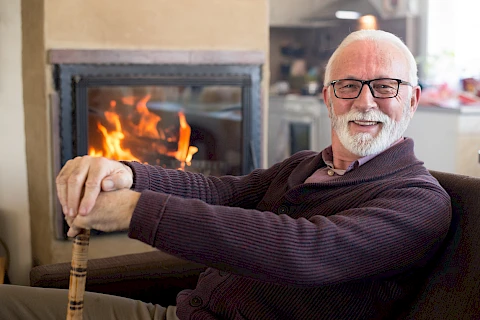
As temperatures drop, reliable heating becomes essential to senior comfort and safety throughout winter. Wood stoves and space heaters can help keep homes comfortable, but both carry fire and carbon monoxide risks. Following a few simple safety habits can help protect older adults, their homes, and visiting family members. Understanding safe home heating for seniors can make the colder months more comfortable and reduce potential hazards.
Space Heaters Need Room and Their Own Outlet
Keep at least three feet of clear space around every space heater. Curtains and other nearby fabrics can easily catch fire. Plug the heater directly into a wall outlet, as extension cords and power strips can overheat under the extra load.
Seniors should choose space heaters with tip-over shutoff features and turn them off whenever they leave the room or go to bed, even if they expect to be away for only a few minutes. These precautions are an important part of safe home heating for seniors. The National Fire Protection Association offers tips on using space heaters safely and explains why chimneys need annual inspections and cleaning.
Fireplaces and Wood Stoves
Safe home heating for seniors also includes regular chimney maintenance and proper use of wood-burning appliances. Homes that rely on wood heat during winter should have their chimneys inspected and cleaned every year before the first fire. As wood burns, creosote builds up inside the flue, and a professional chimney sweep can remove it.
Use a sturdy screen and burn only dry, seasoned wood. Keep kindling baskets and log racks well away from the stove opening, even if storing them nearby seems more convenient.
Ashes can remain hot for days, so place them in a metal container with a tight-fitting lid. Set the container outside on a bare surface, well away from the home and any woodpile.
Carbon Monoxide Is Invisible
Carbon monoxide is an odorless, colorless gas released when fuel burns. Common sources include furnaces, gas ranges, and vehicles running inside attached garages. Early signs of exposure, such as headaches and dizziness, can easily be confused with flu symptoms. Seniors should have working carbon monoxide alarms installed near sleeping areas, especially in homes that use fuel-burning appliances during the winter.
The Centers for Disease Control and Prevention explains how carbon monoxide poisoning happens and how to prevent it. Never operate a generator, grill, or camp stove indoors or in a garage, even with the door open. Have the furnace inspected every year to help keep it working safely. These precautions are an important part of safe home heating for seniors.
Test Alarms Regularly
Monthly alarm checks help seniors detect problems with smoke and carbon monoxide detectors before an emergency occurs. Place smoke alarms on every level of the home and outside sleeping areas, with carbon monoxide alarms near bedrooms.
Replace batteries whenever an alarm chirps, and replace the entire unit according to the manufacturer's recommended schedule, usually listed on the back. If an alarm is out of reach, a family member or neighbor can check it to prevent seniors from climbing onto a chair or ladder.
We Support Safe Home Heating for Seniors
Icy mornings can make pharmacy visits more difficult for seniors. Our caregivers at Senior Helpers Central Oregon can handle errands, light housekeeping, and companionship for older adults in Bend, Redmond, Sisters, Madras, and Powell Butte. Contact us, and we'll discuss home care options that can support seniors throughout the winter.