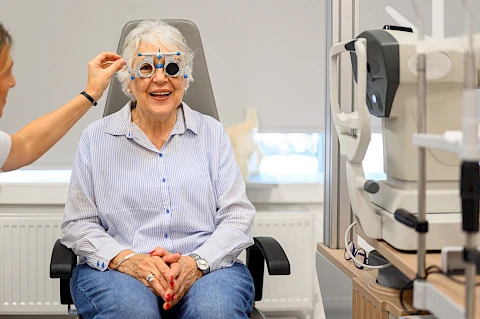
Vision often shifts slowly enough that a senior does not notice a problem until it starts to affect daily life. Missed steps, unreadable menus, dim road signs, and a growing avoidance of reading can all point to a change worth checking.
As people age, they have a higher risk of cataracts, macular degeneration, and glaucoma. Regular eye exams can help detect these conditions early, making senior eye health an important part of routine care.
Notice Changes Early
Vision can change slowly enough that a person adapts without noticing. Brighter lamps, moving closer to the television, or avoiding night driving may be early clues. Keep it simple.
Ask about daily tasks. Reading labels, seeing steps, finding items in a drawer, and recognizing faces all give useful information. Write down changes before an eye appointment.
Regular eye exams help identify problems that may have few obvious signs at first.
The Mayo Clinic explains common eye health steps for older adults, including the value of professional exams and eye protection. That can wait.
Know When to Seek Quick Care
Some symptoms need prompt medical attention. Sudden vision loss, flashing lights, a curtain-like shadow, severe eye pain, or a new injury should lead to a call for medical advice right away.
Do not wait. If symptoms are severe or follow an injury, seek urgent care.
Mention diabetes, blood pressure concerns, new medicines, headaches, and falls during an eye visit. These details can help the clinician assess senior eye health and determine what needs to be checked.
Make Home Easier to See
Good lighting can reduce strain around the home. Add lamps near favorite chairs, use bright bulbs in stairways, and put night lights between the bedroom and bathroom.
Cut down glare. Window shades, matte surfaces, and a lamp placed beside rather than behind a chair can make reading more comfortable. Try the change in the evening, when glare often feels stronger.
Keep walkways clear. In Brandywine, Clinton, and District Heights, families can check rugs, cords, low tables, and outside steps during a regular home visit. A clear route is easier to follow.
Support Everyday Choices
Large-print labels, high-contrast tape on stair edges, and a magnifying glass near the mail can help someone stay involved in daily tasks. Ask what they find useful before buying equipment.
For residents of Fort Washington, La Plata, Oxon Hill, Suitland, Waldorf, and White Plains, driving plans may need a fresh conversation if vision has changed. Family members should listen first.
Prepare for an Eye Appointment
Bring a list of medicines, current glasses, and notes about what has changed. Mention problems with glare, reading, depth perception, driving, or seeing faces, because each example gives the eye professional a better sense of daily life. Be specific. Slow and steady.
Ask when the next exam should happen and which symptoms should lead to an earlier call. Write the answer down before leaving the office. It is easy to forget later.
Keep Glasses Within Reach
Set aside one safe place for glasses at night, such as a tray beside the bed or a case on the kitchen counter. This cuts down on searching and lowers the chance of setting them on a chair or table edge. A case helps.
Clean lenses with the right cloth and replace scratched pairs when advised. If someone uses more than one pair, label the case in large print so reading glasses and distance glasses do not get mixed up. Take it slowly.
If a person says the room looks dim, the stairs seem uneven, or a familiar face is hard to recognize, share those examples at the appointment because they show how vision affects ordinary life. Bring details. Give it time.
Vision Support Around Southern Maryland
Senior Helpers Southern Maryland can help with routines, errands, and companionship that support senior eye health.
We serve families in Brandywine, Clinton, District Heights, Suitland, and White Plains. Contact us to discuss in-home senior care. We can listen.