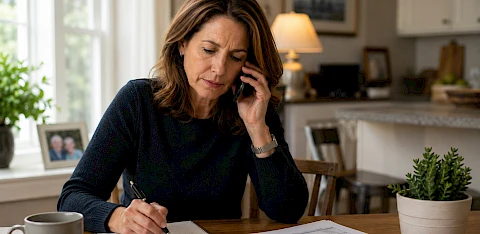
It is a blessing to be able to support my parents. In concert with my siblings, we fill the gaps as things get harder. Yet, when people ask what we do, we do not introduce ourselves as family caregivers. Most working family caregivers do not introduce themselves this way. We are executives, teachers, nurses, contractors, salespeople, office managers and small business owners. We are also daughters, sons, parents, spouses and siblings trying to keep an aging parent safe while keeping our own careers intact and on pace.
This has become one of the quietest workforce issues in America. AARP and the National Alliance for Caregiving estimate that 63 million American adults provided ongoing care to an adult or child with a medical condition or disability in 2025. Nearly 59 million were caring for an adult. This means almost one in four American adults is now a family caregiver.
The demands are more than occasional. It is often weekly, daily and unpredictable. We caregivers spend an average of 27 hours a week providing care, and 24 percent of us provide 40 or more hours a week. Nearly 30 percent have been caregiving for five years or longer.
This is the part most employers miss. Caregiving does not happen after work. It interrupts work.
A parent falls. A medication is missed. A doctor calls. A hospital discharge happens with little notice. You sit at work trying to concentrate on a critical project and wonder: Are your parents awake? Did they rest? Did they take their medications? Do they remember their 2pm appointment? The working caregiver is suddenly managing two jobs, one paid and one deeply personal.
Seven in ten working-age caregivers, ages 18 to 64, are employed while also providing care. Among all caregivers, 60 percent are employed. The impact shows up in the workday. In the 2025 AARP/NAC report, 56 percent of working caregivers reported going in late, leaving early or taking time off during the day to provide care. Eighteen percent reduced hours or moved from full-time to part-time work. Sixteen percent took a leave of absence. Nine percent received a warning about performance or attendance. Nine percent gave up working entirely.
That is absenteeism, presenteeism and career disruption wrapped into one family crisis.
A separate AARP and S&P Global workforce study found that 67 percent of family caregivers have difficulty balancing their jobs with caregiving duties. Twenty-seven percent shifted from full-time to part-time work or reduced hours. Sixteen percent turned down a promotion. Sixteen percent stopped working for a period of time, and 13 percent changed employers because of caregiving responsibilities.
These numbers explain what many families already know. Caregiving can quietly reshape a career. Some employees use vacation days for medical appointments instead of rest. Some decline advancement because travel or longer hours are no longer realistic. Some avoid telling a supervisor what is happening at home because they fear being seen as distracted, unreliable or less committed. That fear is not imagined. About half of employed caregivers who are not self-employed say their supervisor is aware of their caregiving responsibility.
Family caregiving is also becoming more complex. More than half of caregivers now perform medical or nursing tasks such as managing medications, injections, catheters or vital signs. Only 22 percent received training for those medical or nursing responsibilities.
That should stop us.
America is relying on unpaid family members to perform tasks that are increasingly clinical, emotional, financial and logistical. Many are doing it while trying to remain productive employees. The economic value is enormous. AARP’s 2026 Valuing the Invaluable report estimated that 59 million family caregivers caring for adults provided 49.5 billion hours of care in 2024. That work was valued at more than $1 trillion, the equivalent of 23.8 million full-time workers.
Yet most caregivers still experience this burden privately. They are not asking for special treatment. They are asking for reality to be recognized.
Employers need to understand that eldercare is no longer a fringe benefit issue. It is a retention issue, a productivity issue and a leadership issue. Flexible schedules, remote work options, caregiver navigation support, respite resources and manager training are becoming workforce necessities.
Families need the same recognition. Waiting for a crisis is not a plan. A fall, hospitalization or diagnosis can turn a manageable situation into an all-consuming one overnight. I remind the families that I work with that caregiving is a relationship that needs to be in balance - the need for support and the capability to provide support
The better path is preparation. Families need to identify risks early, clarify roles, understand what the older adult wants and determine what level of support is truly needed. That means looking honestly at safety, medical needs, independence, burden of care and life engagement.
Working caregivers are carrying more than tasks. They are carrying worry, responsibility and love.
America’s aging population will make this burden more visible. The question is whether families, employers and communities will respond before more caregivers are forced to choose between caring for someone they love and protecting the career they worked hard to build.
Solving the challenge of caregiving is a personal passion. Every day, my team at Senior Helpers Boston and South Shore supports families struggling with these challenges helping them find the balance between giving care and receiving care so both sides have stability and success. If we can help you or your family, do not hesitate to call us.