Bathrooms are the most common place for a fall at home. Wet floors, low toilets, and slippery tubs turn a normal room into a risky one, and a few small changes head off a serious injury before it happens. Start with the part of the room that feels least steady today.
See the Bathroom as It Is Used
Bathrooms ask a lot of the body. Wet floors, tight turns, bare feet, and a quick reach for a towel can create trouble in seconds.
Walk through the room at the time it is usually used. Notice where a person steps out of the tub, where they set glasses, and how far they reach for soap. A family in Canton may find that a morning shower feels very different from an evening one, when the room is dim and someone is tired. Remove loose rugs or fasten them with non-slip backing. Keep a dry mat just outside the shower, and wipe puddles before they spread.
Add Support Where Hands Need It
Grab bars belong in solid wall studs, near the toilet and inside or beside the bathing area. Towel bars cannot carry a person’s weight. A licensed installer can place grab bars at the right height for the person using them.
A shower chair can help someone sit while washing. So can a hand-held shower head and a long-handled sponge. These changes give people more time to move carefully instead of balancing on one foot. Check the toilet height. A raised seat or sturdy arms may make standing easier for someone with knee or hip stiffness.
Light the Route
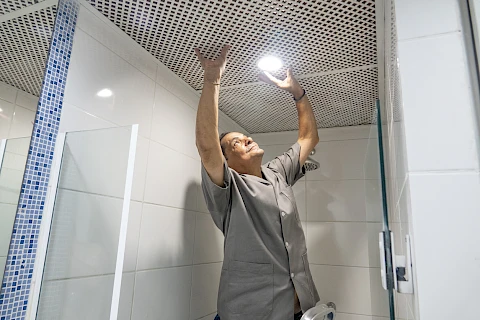
A clear path to the bathroom matters after dark. Put a night light near the bed and another near the bathroom door, then make sure light switches are easy to reach before the room is entered.
Replace burned-out bulbs promptly. Families can also ask an eye doctor about changes in vision that make glare or shadows harder to read. A bright bathroom does not need harsh light. Keep items close, like shampoo, towels, toilet paper, and medication reminders, so they sit where they can be reached without climbing, stretching, or twisting.
Build Safer Bathing Habits
Give bathing enough time. Rushing raises the chance of a slip, especially if someone feels dizzy after standing or has trouble with balance.
Test water temperature before a shower. Set the water heater to a safer level if needed, and consider an anti-scald device. CDC's older adult fall resources offer additional ways to lower fall risk at home.
Talk with a clinician after any fall, near fall, new dizziness, or sudden weakness. Bring a list of medicines and describe what happened.
Check the Setup Every Few Months
Bathroom safety can change after a new medication, an illness, or a change in mobility. Revisit the room after any of those events, and watch someone use it if they are comfortable with that. Keep the floor clear between visits. A laundry basket, a scale, or a spare stool can slowly creep into the walking path, then become a problem when someone is half awake. Put each item in its place.
After each change, have the person walk through the room at their usual pace while you watch from nearby, because the safest arrangement is the one that works when they are turning, reaching, and tired. Write it down.
A Safer Daily Start at Home
Bathroom changes work best when they match the person’s actual routine. Senior Helpers Canton-Rome-Cartersville can provide in-home support around bathing and daily tasks for families in Canton, Cartersville, Rome, Blairsville, and Chatsworth. Contact us to talk through your needs.