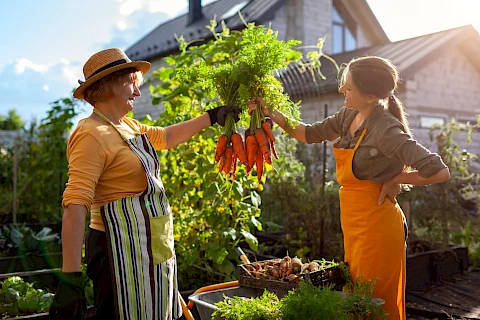
Late summer can be a rewarding time to garden with a senior loved one. Cooler mornings and ripening vegetables create opportunities to spend time outdoors without taking on a major project. With a few adjustments, you can adapt gardening to different ability levels while providing gentle activity, mental stimulation, and meaningful time together.
Choose Tasks That Match Their Abilities
Gardening does not always have to involve digging, bending, or lifting. Watering plants, picking vegetables, snipping herbs, removing a few weeds, or checking plants for ripe produce can all be enjoyable activities. Give your loved one choices whenever possible. They might prefer to pick tomatoes, arrange flowers, sort seeds, or sit nearby and direct the work. Keep the gardening session short enough that it does not become exhausting. Some days, simply sitting in the garden, looking at the plants, and talking may be the most appropriate activity.
Use Adaptive Tools to Make Gardening Easier
The right tools can make gardening more comfortable for seniors with limited strength, flexibility, or mobility. Raised beds and elevated containers can reduce the need to bend over. Lightweight tools can make tasks easier for someone with reduced strength, while long-handled tools can help reduce reaching and bending.
A kneeling pad or sturdy garden seat can provide additional support. If your loved one has difficulty standing for long periods, move container plants to a table or another comfortable height so they can garden while seated. Keep frequently used tools and supplies within easy reach.
Check the condition of gardening equipment before starting. Make sure tool handles are secure and dry, and keep hoses and other items out of walking paths. A simple setup can reduce unnecessary strain and help prevent trips or falls.
Keep Late-Summer Gardening Safe
Warm weather is an important consideration when gardening in late summer. Plan outdoor activities for cooler parts of the day, especially in areas where temperatures can rise quickly. Keep water nearby and encourage regular breaks in a shaded or cool area.
Your loved one should wear comfortable clothing that protects the skin without causing overheating. A wide-brimmed hat, sunscreen, well-fitting gloves, and closed-toe shoes with good traction can provide additional protection.
Pay attention to how your loved one feels throughout the activity. Stop gardening if they become unusually tired, dizzy, weak, or uncomfortable. After gardening, encourage handwashing and check for scratches, splinters, or insect bites. Keep basic first-aid supplies nearby so minor injuries can be addressed promptly.
The Therapeutic Benefits of Gardening
Gardening offers more than the satisfaction of caring for plants. Spending time outdoors provides a change of scenery and an opportunity for gentle activity. The sights, smells, and textures of plants can also engage the senses and make the experience enjoyable.
Gardening together creates natural opportunities for conversation. These conversations can bring back memories and encourage them to share stories. Gardening can also provide a sense of purpose. Caring for a small container of basil or flowers gives a senior something to check on and look forward to.
Senior Helpers Support Meaningful Activities at Home
Late summer gardening gives seniors a chance to enjoy the outdoors. With the right support, it can remain an enjoyable part of a senior’s routine while allowing them to participate at a comfortable pace. Senior Helpers Redlands offers companion care for families in Redlands, Loma Linda, Highland, San Bernardino, and Mentone. Contact us to learn more about our services.