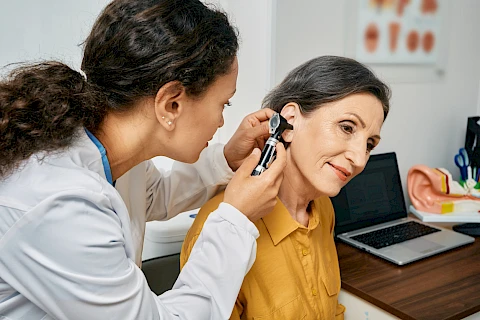
There's a particular kind of worry that comes from watching a parent turn the TV up louder and louder or from noticing they've stopped engaging in conversations they used to enjoy. Hearing loss in older adults is common, gradual, and easy to explain away on all sides. But leaving it unaddressed has real consequences. A hearing evaluation is often the first step toward a much better daily experience.
Signs That a Hearing Evaluation Is Overdue
Hearing loss doesn't usually arrive all at once. It tends to slip in quietly, which is part of why it often goes unaddressed for years. Across Oakland, San Leandro, and Alameda, families come to us with the same observations. A loved one who frequently asks to repeat things, who misses the beginnings of sentences, who struggles in background noise, or who has become quieter and more withdrawn in group settings.
Other signs include difficulty hearing on the phone, missing the doorbell or a ringing stove timer, and frequently mishearing words rather than simply not hearing them at all. A senior who seems confused or inattentive may, in some cases, simply be working hard to follow a conversation through diminished hearing. The National Institute on Deafness and Other Communication Disorders estimates that about one in three adults between 65 and 74 has hearing loss, and nearly half of those over 75 have hearing loss.
Why Hearing Loss Matters
The ripple effects of unaddressed hearing loss extend beyond communication. Mishearing a pharmacist's instructions, missing a car horn while crossing the street, or not hearing a smoke alarm clearly are real safety risks. Social withdrawal is another significant consequence. When conversation becomes exhausting or frustrating, many older adults stop participating, which can contribute to loneliness and depression over time.
Research has also linked untreated hearing loss to faster cognitive decline. While the mechanisms are still being studied, the connection is well-established enough that many physicians now consider hearing assessment part of a broader cognitive health conversation.
Overcoming Resistance to an Evaluation
Many seniors resist the idea of a hearing evaluation. Some don't want to acknowledge the change. Others associate hearing aids with a loss of independence or a visible marker of aging they're not ready to accept. In Castro Valley and surrounding communities, we often hear from family members who've tried to bring it up and been met with deflection.
The most effective approach tends to be gentle and non-confrontational. Frame it as a routine check rather than a response to a problem. Offer to attend the appointment together. Sometimes, modern hearing aids are small, discreet, and far more effective than older generations of devices. Focusing on the specific things a loved one is missing, such as time with grandchildren, enjoying a favorite film, or feeling confident in conversations, can make the conversation feel more personal and less clinical.
What to Expect From a Hearing Assessment
A standard hearing evaluation is painless and takes about an hour. An audiologist will conduct a series of tone and speech tests and explain the results clearly. If hearing aids are recommended, there will be a fitting and adjustment process that takes some time to get right. Encouraging a loved one to be patient through that process makes a difference.
Helping a senior loved one hear better is one of the most meaningful things a caregiver can do. Senior Helpers of Alameda supports families in Alameda, Castro Valley, San Leandro, and Oakland. We offer compassionate in-home care that attends to every dimension of a senior's well-being. Contact us today to learn how we can support your family.