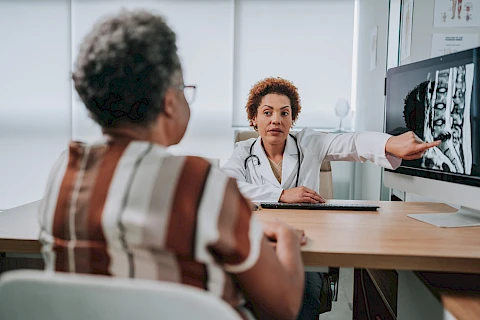
Doctor visits tend to fly by. Fifteen minutes in, the blood pressure check is done, the prescriptions are renewed, and your mother is putting her coat back on before anyone mentions her bones. Osteoporosis in seniors often develops without obvious symptoms, so bone health can be easy to overlook until a fracture happens. Senior Helpers can support families with transportation to appointments and meal preparation while they work through questions about testing, treatment, and fall prevention.
Why Bone Health Deserves Its Own Conversation
Osteoporosis weakens bones until they break more easily. The National Institute of Arthritis and Musculoskeletal and Skin Diseases calls it a silent disease because many people don't know they have it until a fracture happens. Sometimes that fracture comes from a minor fall, and sometimes from bending, lifting, or even coughing. A broken hip or spine can change daily life for a long time, which is reason enough to spend five minutes of the appointment on it.
Talking about osteoporosis in seniors before a fracture occurs gives the doctor a chance to review risk factors, decide whether testing is appropriate, and discuss ways to protect bone health.
Before the Appointment
A little preparation can make the conversation more useful. Sit down with your parent and gather:
- Medications and supplements - Include prescriptions, over-the-counter medicines, vitamins, and supplements.
- Falls or near-falls - Note anything from the past year, even if no injury occurred.
- Past fractures - Include when they happened and what caused them.
- Family history - A parent who had osteoporosis or a hip fracture may be relevant.
- Changes in height or posture - Mention noticeable height loss or a more stooped posture.
- Medical conditions - Certain health conditions and medications can contribute to bone loss.
Keep the list to one page so it is easy to review during the appointment.
Questions About Bone Density Testing
A DXA scan measures bone mineral density and is commonly used to screen for osteoporosis. The U.S. Preventive Services Task Force recommends osteoporosis screening for women age 65 and older. It also recommends screening postmenopausal women younger than 65 when risk assessment shows an increased fracture risk.
Useful questions include:
- Do I need a bone density test now?
- If I had one before, should it be repeated?
- What do my results mean for my fracture risk?
- Do any of my medications affect bone strength?
- Would another risk assessment be useful?
For Medicare beneficiaries, coverage for bone mass measurements depends on specific eligibility rules, so checking Medicare or the imaging center before the appointment can prevent surprises.
Questions About Prevention and Next Steps
esting is only one part of the conversation. Ask what your parent can do between visits to lower fracture risk and preserve strength.
Topics worth covering include:
- Calcium and vitamin D - Ask how much is appropriate and whether food or supplements are preferred.
- Exercise - Find out which weight-bearing, resistance, or balance activities are safe.
- Medication - If treatment is recommended, ask about benefits, side effects, and how long it may be needed.
- Fall prevention - Review vision, balance, footwear, home hazards, and anything that may cause dizziness.
- Follow-up - Ask when the next appointment, test, or medication review should happen.
If your parent wants to keep gardening, walking, or managing household tasks independently, mention those goals. They can help the doctor tailor recommendations to daily life.
Carrying the Doctor's Advice Into Daily Life
Osteoporosis in seniors is easier to manage when the recommendations from the appointment do not stop at the clinic door. Senior Helpers Kanawha Valley supports older adults and their families in Charleston, Dunbar, East Bank, South Charleston, and Winfield. Our caregivers can provide rides to medical appointments, medication reminders, help with bone-friendly meals, and a safer home setup. Contact us to ask how we can support osteoporosis appointments and safer daily routines.