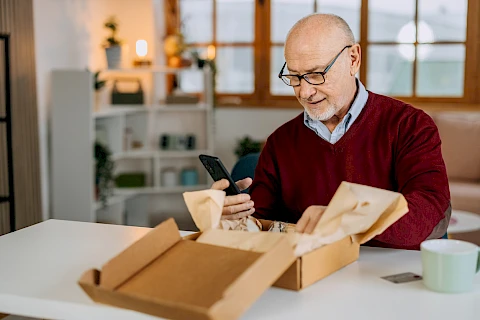
Between now and New Year's, more boxes land on porches in Oconomowoc and Watertown than at almost any other time of year. Scammers know that. A text about a missed delivery or a caller demanding gift cards can fool anyone, from a college student to a retired banker. Holiday scams targeting seniors often work because they create urgency before there's time to stop and check the story. Senior Helpers offers a few practical reminders that can help older adults and their families feel more confident when something suspicious comes through.
How the Fake Delivery Message Works
These usually come by text. The message says a package couldn't be delivered, that postage is unpaid, or that a small redelivery fee is due, and it includes a link. That link is the trap. It may open a page designed to look like a shipping company's website, then ask for payment or personal information.
Don't use the link in an unexpected delivery message. If you're waiting for a package, go directly to the retailer or shipping company's official website and check the tracking information there. USPS also advises against clicking links in unsolicited package texts you did not request.
Why Gift Cards Are the Scammer's Favorite Payment
Gift card requests come in plenty of disguises. A caller might say he's from a utility company in Fort Atkinson and threaten to shut off the heat, or claim to be from a government office or tech support. Sometimes it's a voice pretending to be a grandchild in trouble, begging you to keep the call secret. The story changes from call to call, while the request to pay with a card off the drugstore checkout rack stays the same.
No legitimate business or government agency will tell you to buy a gift card and give them the card number or PIN as payment. Once those numbers are shared, scammers can quickly take the funds. Real agencies never want gift cards, so anyone who insists on them and pushes you to hurry is running a scam.
Slow Everything Down
Scammers depend on speed and pressure. Holiday scams targeting seniors are often designed to make people act before they have time to question the request. Hanging up costs you nothing. When a call worries you, end it, find the company's number on a bill or its official website, and call back yourself.
A quick call to someone you trust helps, too. An adult child, a neighbor, or a friend from church in Columbus can often see the red flag you'd catch yourself on a calmer day. Some families agree on a code word so a genuine emergency call can be confirmed fast.
For alerts on current schemes and tips for avoiding them, AARP keeps a library of scam and fraud information.
What to Do If You've Already Responded
Even sharp, careful people can also get caught. If you shared a card number, call your bank or card company right away. If you bought gift cards and gave someone the numbers, contact the gift card company immediately, report the scam, and ask whether any funds can be recovered. Keep the card and receipt if you still have them.
Change any passwords you shared, starting with email and banking. Jot down the date and time of the call, along with any phone number, website, or message the scammer used.
Then report what happened. The Federal Trade Commission collects reports at ReportFraud.ftc.gov, which helps investigators track patterns. Where to report other kinds of fraud is listed on the federal government's USA.gov scams page.
A Second Set of Eyes in Lake Country
Avoiding holiday scams targeting seniors can be easier when there is someone nearby to notice an unusual message, questionable request, or sudden sense of urgency. A second opinion before sending money or sharing information can make a real difference.
Senior Helpers Lake Country offers companionship and everyday support for older adults in Oconomowoc, Fort Atkinson, Beaver Dam, and Waupun. That regular presence can also give families another trusted person in an older loved one's routine. Contact us to learn more.