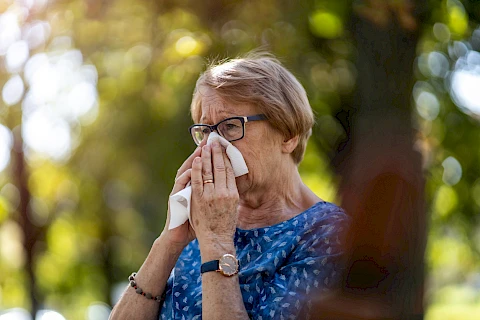
Late summer can bring more than warm weather and outdoor activities. Ragweed pollen, mold spores, dust, and other allergens can trigger uncomfortable symptoms, and older adults may be more affected by them. Understanding common triggers, managing symptoms safely, and knowing when to contact a doctor can help seniors stay comfortable throughout allergy season.
Common Late-Summer Allergens
Ragweed is a common late-summer allergen. Its pollen can cause sneezing, a runny or stuffy nose, itchy or watery eyes, coughing, and a scratchy throat. Mold can also become a problem when warm, damp conditions allow spores to grow indoors or outdoors. Dust and dust mites may trigger symptoms inside the home, particularly when windows are open or air circulation is poor.
How Allergies May Affect Seniors
Allergy symptoms can be especially disruptive for older adults. Nasal congestion and coughing may make it harder to sleep, while fatigue can make everyday activities more tiring. Poor sleep and feeling unwell may also affect concentration and balance.
Seniors with asthma or other breathing conditions should take allergy symptoms seriously. Increased coughing, wheezing, or shortness of breath may indicate that an existing condition is becoming harder to control. If symptoms are unusual, severe, or persistent, contact a health care provider rather than assuming they are simply seasonal allergies.
Reduce Allergen Exposure at Home
Simple changes around the home can reduce exposure to common allergens. Keep windows closed when pollen counts are high and use air conditioning when available. Changing clothes and washing hands after spending time outdoors can prevent pollen from spreading throughout the home.
Cleaning regularly can also make a difference. Use a damp cloth to remove dust, as dry dusting can send particles into the air. Vacuum regularly, using a vacuum with a filter designed to capture fine particles when possible. Keep bathrooms well ventilated and address leaks or damp areas promptly to reduce the chance of mold growth. Pets can also bring outdoor allergens inside. Wiping their paws after outdoor activities and keeping frequently used areas clean may help limit pollen around the home.
Manage Symptoms Safely
Always check with a doctor or pharmacist before starting a new allergy medication. Some antihistamines can cause drowsiness, dry mouth, dizziness, or confusion, which may increase the risk of falls or other problems in older adults. A health care professional can also determine the appropriate treatment, particularly when you’re taking other medications.
Saline nasal rinses, cool compresses, adequate fluids, and rest may provide additional comfort for some people. Remember to follow medication directions carefully, and avoid driving if a new medicine causes sleepiness or dizziness.
Know When to Call the Doctor
Contact a health care provider if allergy symptoms are severe, persistent, or interfering with sleep and daily activities. Shortness of breath, wheezing, chest pain, facial swelling, or significant difficulty breathing requires prompt medical attention. Severe breathing problems may even require emergency care.
Get Support During Allergy Season
Managing allergies does not have to mean giving up favorite activities. With thoughtful prevention and appropriate support, seniors can continue enjoying late summer while limiting exposure to common allergens. Contact Senior Helpers Smoky Mountains to discuss support with errands and household tasks when allergy symptoms leave you with less energy. We serve Strawberry Plains, Talbott, Walland, White Pine, and East Knoxville.