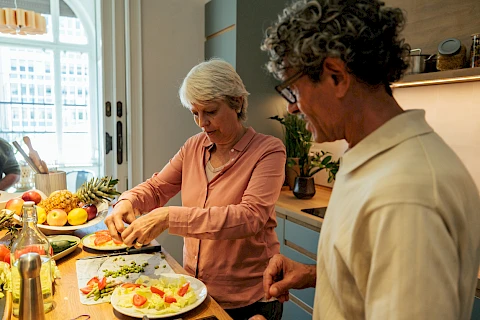
If you have been eating the same way you did at 50, your body has changed while your habits stayed the same. Appetite shrinks. Taste dulls a little. Muscle no longer holds onto protein the way it used to.
What worked when you were shopping for a household in Riverdale in the 1980s does not quite fit the person cooking dinner for one in 2026. The good news is the fixes are small.
Protein Deserves the Top of Your List
After 65, the body becomes less efficient at turning protein into muscle. Older adults may need more protein to support muscle health.
Including protein in your meals is one of the practical nutrition tips for healthy aging. Aim to include a source of protein at every meal, not just dinner.
Practical looks like this: a couple of eggs and a piece of whole-grain toast in the morning. At lunch, have canned tuna or leftover chicken with beans, followed by six ounces of fish, poultry, or a cup of lentils at dinner. Greek yogurt at snack time. Cottage cheese with fruit. A handful of walnuts.
The National Institute on Aging's healthy eating guide recommends getting enough protein throughout the day to help maintain muscle. Research also suggests that adequate protein intake can support muscle health in older adults.
Water Sneaks Up on You
Thirst signals fade with age. By the time you feel thirsty, you are already down a cup. Dehydration in older adults shows up as fatigue, confusion, dizziness, or a bad afternoon that gets blamed on the weather.
Keep water within arm's reach of wherever you sit. A glass by the recliner. A bottle in the car. Water first thing in the morning, before coffee.
If plain water is boring, try warm water with a lemon slice or seltzer with a splash of juice. Herbal tea counts. Coffee counts too, contrary to what people say, though limit it after two if sleep is fragile.
Bone-Friendly Choices That Are Cheap and Easy
Calcium and vitamin D become more important with age. Choosing foods rich in these nutrients is one of the practical nutrition tips for healthy aging.
Fortified dairy or plant-based milk, canned salmon or sardines with soft bones, kale, collard greens, and tofu are good sources of calcium. Egg yolks and fatty fish provide vitamin D. Short walks in the morning sun along the Van Cortlandt Greenway can also help your body produce vitamin D.
The Bone Health and Osteoporosis Foundation has a straightforward chart of daily targets by age. Bring it to your next doctor visit and ask whether a supplement makes sense for your specific situation.
Fiber, Salt, and Cooking for One
Fiber supports healthy digestion and helps regulate blood sugar levels. Beans, oats, berries, whole-grain bread, and pears are easy wins. Add fiber slowly with plenty of water, or your stomach will protest.
On salt: most older adults get too much of it from bread, deli meat, canned soups, and takeout, rarely from the shaker. Read labels once, learn which brands run high, then stop reading.
Cooking for one is its own puzzle. Batch-cook a big pot of soup on Sunday and freeze single servings in yogurt containers.
If cooking has become tiring, the Bronx Senior Centers on Boston Road and in Wakefield serve hot lunches for a suggested donation.
Better Meals Across the Northern Bronx
At Senior Helpers Northern Bronx, our caregivers help older adults across Riverdale, Baychester, Co-op City, Woodlawn Heights, Wakefield, and Edenwald. We support nutrition tips for healthy aging through grocery runs, meal preparation, and simple daily routines that keep eating enjoyable.
If you would like help creating a nutrition routine that fits your parent's lifestyle, contact us to schedule a first visit.