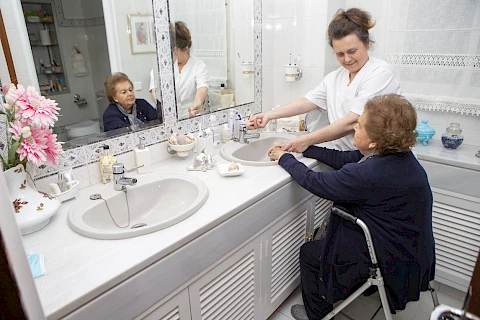
Personal care becomes easier when the tools fit the person, not the other way around. A grab bar, shower chair, long-handled sponge, or wide-handled toothbrush can make senior personal care tasks more manageable.
Match each tool to the specific task that has become difficult. An occupational therapist can help identify suitable options when it is not clear where to start.
Start With the Task That Is Hardest
Personal care tools should solve a real problem, not fill a drawer. Start there. Ask which part of bathing, dressing, grooming, or using the toilet feels unsteady, painful, or tiring.
The National Institute on Aging has a useful home-safety checklist for spotting risks around the house. A clear counter beside the sink creates a safer spot to keep useful tools within reach each day. Take your time.
Watch the routine without hovering. A person may have trouble reaching their feet, gripping a toothbrush, stepping into the tub, or standing long enough to shave. The detail matters. It points toward a tool that may help, instead of a purchase based on a catalogue photo.
Ask before buying. A therapist, clinician, or trusted mobility supplier may help you compare sizes and features, which can prevent an expensive tool from sitting unused.
Look at Bathroom Safety First
A shower chair, hand-held showerhead, non-slip mat, grab bars installed by a qualified professional, or raised toilet seat may make the bathroom easier to use. Test placement.
The person needs to reach the item without twisting or stretching, and the floor should stay clear of extra baskets or cords. Go step by step.
Do not treat a tool as a cure for every safety concern. A new device can take practice, and a physical or occupational therapist may suggest the right fit for someone with balance, strength, or joint concerns. Follow the manufacturer’s directions and check the equipment regularly for loose parts. Keep it simple.
Keep the route open. Equipment works poorly in a cramped room, so remove loose items and make sure there is room to turn, sit, and stand safely.
Small Aids Can Protect Routine
Long-handled sponges, reachers, button hooks, sock aids, and easy-grip grooming tools can reduce strain during everyday tasks. Try one at a time.
Keep the packaging until you know the person can use the tool comfortably and safely. If it makes the task harder, return it and look for another option.
In Riverdale, Spuyten Duyvil, and Baychester, a family member can set up a new item and then let the person practice privately. Give them time. A tool works best when it fits their habits, their space, and what they want to do on their own.
Practice when rested. A Saturday morning test run can show whether the grip feels comfortable. Trying a new aid during a calm part of the day gives the person time to learn the steps without feeling rushed.
A Safer Routine in the Northern Bronx
Keep the bathroom layout simple, check lighting, and remove loose mats that slide. These basic changes can make senior personal care safer and easier.
In Co-op City, Woodlawn Heights, Wakefield, Norwood, Pelham Gardens, East Bronx, Marble Hill, Van Cortlandt Village, and Edenwald, a few adjustments can make the daily routine feel less demanding.
Listen to the person. They can tell you if a handle hurts, a seat feels too low, or the tool does not suit your usual routine. Senior Helpers Northern Bronx supports families in Riverdale, Spuyten Duyvil, Baychester, Woodlawn Heights, Van Cortlandt Village, and Edenwald with in-home senior care. Contact us to discuss support at home.