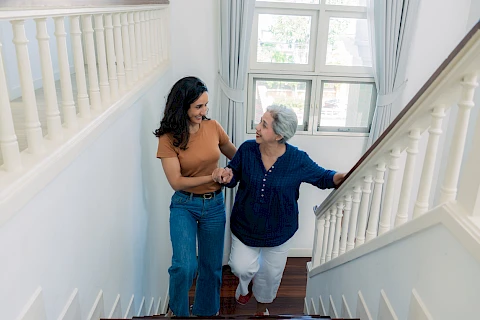
A loose rug. A dim hallway. Small things like these can turn familiar rooms into fall hazards. Falls are the leading cause of injury among older adults, and many happen at home. The good news is that a simple fall prevention home assessment can uncover hazards that are easy to overlook during the day-to-day routine. Bring coffee. Bring the checklist below.
Start at the Front Door
Look at the entry the way your parent uses it. Is there a handrail on both sides of the stoop? Are the outside lights bright enough at 6 p.m. in October? A loose stair tread or a worn welcome mat can end a good afternoon fast.
Inside the door, note where shoes, bags, and mail pile up. Clear a landing zone so nothing sits in the walking path. The Centers for Disease Control and Prevention has home fall prevention resources for older adults and caregivers that are worth looking through as you go.
Living Room and Hallways
These are easy places for everyday clutter to creep into walking paths. Look down. Are throw rugs curling at the edges? Cords running under furniture and back out again? Have chairs, tables, or other belongings started narrowing the usual route through the room? Pathways less than three feet wide?
Fixes are usually small. Roll up the rug or tape it down with double-sided rug tape. Move the phone charger so the cord no longer crosses the walkway. Add a nightlight in each hallway. If your parent walks with a cane or walker, measure the widest tight spot and rearrange furniture until every path is clear.
Chairs matter too. A firm chair with arms is easier to stand from than a low, soft one. If the recliner has been swallowing them, consider a chair riser or a replacement.
Bathroom, the Highest-Risk Room
Water, smooth surfaces, and getting in and out of a tub or shower can make the bathroom especially important during a fall prevention home assessment. Grab bars beside the toilet and inside the shower can add support, but they need to be properly installed. A towel bar is not a substitute.
A shower bench and a hand-held showerhead take a lot of stress off the legs. Non-slip mats belong inside and outside the tub. Raise the toilet seat if standing up has become a struggle. Keep a nightlight on so the 3 a.m. trip is not a guess.
Kitchen and Bedroom
In the kitchen, move the everyday plates and glasses down to waist-level shelves. Nothing important should live above the shoulder or below the knee. If a step stool is still in use, replace it with one that has a handrail, and make sure it is on level flooring.
The bedroom needs a clear path from bed to bathroom. A motion-activated nightlight helps a lot. Sit on the edge of the bed and check whether your parent can put their feet down securely and get up without struggling. If the bed itself makes standing difficult, that is another item for the list.
The Follow-Through
Do the walkthrough with your parent, not at them. Ask what feels harder than it used to. Write down the fixes, then group them: do this weekend, order online, call handyman. A short list beats a long one.
Senior Helpers Central Queens supports caregivers and older adults across Arvene, Bellerose, Breezy Point, Cambria Heights, Far Rockaway and nearby communities. When a home assessment reveals more than you can tackle alone, contact us to discuss where a little extra support could make the home easier to navigate.