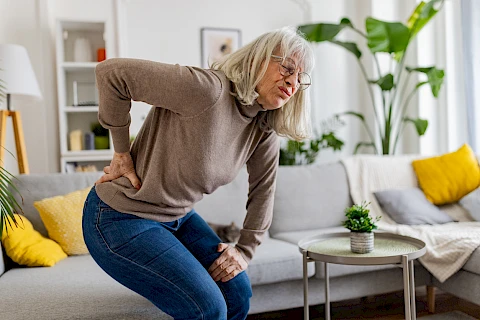
Falls can happen at any time, but they can be especially serious for older adults with osteoporosis. The condition weakens bones, making fractures more likely even after a minor fall. Through our work in senior home care, Senior Helpers understands how everyday safety concerns can affect an older adult’s independence. A few changes around the home can reduce fall risks and make daily activities safer.
How Bone Health Affects Fall Risk
Osteoporosis weakens bones and makes them more likely to break. The condition often goes unnoticed until a fracture occurs. Spinal fractures can be particularly difficult to recognize. They may cause back pain, a stooped posture, or gradual height loss that people sometimes dismiss as a normal part of aging.
A fall can also leave someone afraid of falling again. That fear may lead to less physical activity, which can weaken the muscles and balance needed to stay steady. Maintaining bone health and reducing fall hazards can help address both concerns.
Talk With Your Doctor About Osteoporosis
Even if you feel fine, ask your doctor whether a bone density test is appropriate for you. You can also discuss how often you may need screening, what your results mean, and whether your diet or medications could affect your bone health. Mention any medications that make you dizzy or sleepy, too, as these side effects can increase your risk of falling.
Check Your Home for Fall Hazards
Changes in daylight and wet weather can make everyday hazards harder to spot. Walk through your home and yard regularly, paying particular attention to these areas:
- Outdoor steps: Clear leaves and other debris from walkways, and make sure stairs have sturdy handrails.
- Lighting: Replace burned-out bulbs and add night lights between the bedroom and bathroom. Motion-sensor lights can also make outdoor paths easier to see.
- Floors: Remove rugs, move clutter out of walking paths, and keep electrical cords away from areas where you walk.
- Bathroom: Consider installing grab bars and using a shower chair if standing for long periods is difficult.
- Kitchen: Store frequently used dishes, pots, and pantry items at a comfortable height to avoid climbing or reaching overhead.
These adjustments can make daily tasks safer without requiring major renovations.
Stay Active Without Taking Unnecessary Risks
Regular physical activity can support strength and balance, both of which matter for fall prevention. Walking on even surfaces, chair exercises, and tai chi may be suitable options, depending on your abilities and health.
Ask your doctor or physical therapist which activities are appropriate for you. Some bending or twisting movements may increase fracture risk for people with fragile bones. Supportive, nonslip shoes can also improve stability, especially on wet or uneven surfaces.
Stay Safer at Home with Senior Helpers
For older adults with osteoporosis, a safer home can reduce the risk of falls and help protect their independence. Senior Helpers Holly Springs provides in-home support tailored to the senior's unique preferences and needs. If you or a loved one could use extra support with everyday safety, contact us to discuss care options in Clayton, Fuquay-Varina, Garner, Apex, and Holly Springs.