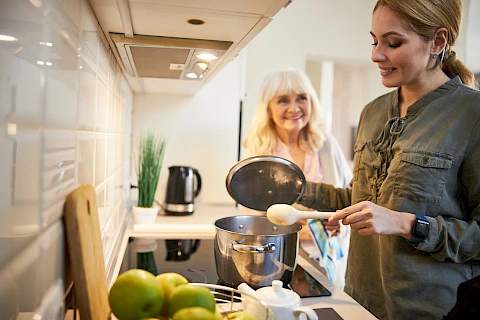
Fall weekends in Silver Spring have a rhythm caregivers know well. Groceries on Saturday morning, cooking that stretches into a busy Sunday, and a scramble on Wednesday when nothing is ready for dinner. A slow cooker fixes a lot of that. Fifteen minutes of prep in the morning, and a warm meal is ready by five. For a parent on a fixed schedule and a caregiver with a full plate, that trade is hard to beat.
Why the Slow Cooker Works for Senior Meals
Long cooking at low heat does two things that matter here. It makes tough cuts of meat tender enough for older teeth, and it holds moisture in vegetables so that nothing dries out. You throw everything in, walk away, and come back to a real meal.
The Academy of Nutrition and Dietetics has a short guide to food safety with slow cookers. The basics: thaw meat before it goes in, don't lift the lid to peek, and get food into the fridge within two hours of cooking finishing.
Three Reliable Recipes for the Week
Start with a chicken thigh and vegetable dinner: boneless thighs on the bottom, carrots and potatoes around them, chopped onion and garlic on top, a cup of low-sodium broth, dried thyme, and pepper. Eight hours on low. Serves four generously.
A classic beef and barley stew is next: stew meat browned in a pan, transferred to the cooker with barley, diced tomatoes, carrots, celery, onion, and broth. Eight hours on low. The barley thickens as it cooks, and the beef falls apart with a spoon. Reheats beautifully in single portions.
Third, a lentil and vegetable soup that requires almost no prep: a bag of green lentils, a can of diced tomatoes, chopped carrots, celery, onion, garlic, cumin, and low-sodium broth to cover. Six hours on low. Add a squeeze of lemon at the table and a drizzle of olive oil. High in fiber and protein, gentle on digestion, and freezes for months.
Adapting Meals for Common Restrictions
For low-sodium diets, skip the canned broth and use water plus fresh herbs, garlic, onion, and a splash of vinegar or lemon. Rosemary and bay leaves carry a stew without any salt at all. Diabetes calls for steadier carbohydrates: swap potatoes for barley or wild rice and add extra vegetables.
Softer textures come easily with slow cooking. Cook a little longer than the recipe suggests. Puree part of a soup for smoother consistency. If chewing has become a challenge, shred meats with a fork before serving. For heart-friendly meals, choose lean cuts, trim visible fat, and skim any pooled fat off the top before portioning.
Portioning for the Week Ahead
Cool the finished pot for thirty minutes before ladling into containers, and get them into the fridge quickly. Single-serving glass containers with tight lids work best. Label the top with masking tape and a marker: what's inside and the date it was cooked.
The fridge holds these meals safely for three to four days. The freezer is good for two months at proper temperature. Reheat gently in the microwave with a splash of broth or water added, or on the stove for stews and soups. A serving of Greek yogurt or a piece of fruit turns a portion into a full meal without extra cooking.
Steady Kitchens Across the Silver Spring Area
At Senior Helpers Silver Spring, our caregivers cook alongside families in Silver Spring, Bethesda, Chevy Chase, Garrett Park, Hyattsville, and Takoma Park. If a caregiver preparing a week of slow-cooker meals for your parent would help take pressure off your schedule, contact us, and we'll walk through the options.