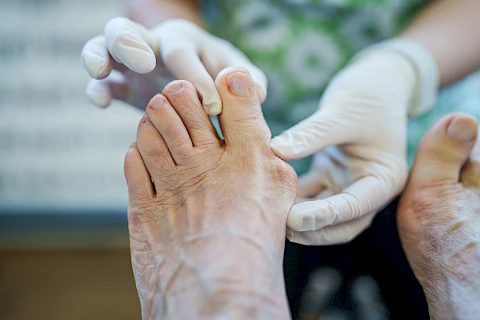
As we age, our feet become more vulnerable and require special attention. For seniors, foot health is crucial not only for mobility but also for overall well-being. Supporting proper foot care in senior loved ones prevents complications, like infections, falls, or discomfort, that could limit their independence. It's a step in the right direction in ensuring their comfort, mobility, and overall health in their later years.
Daily Foot Care Routine
A simple, daily foot care routine can significantly impact a senior’s health and comfort. Start with a daily inspection and cleaning of the feet. Identifying issues, such as cuts, blisters, or unusual signs, early prevents them from becoming a more serious concern.
Moisturizing is key in preventing dryness and cracking. Use a mild, fragrance-free lotion to keep the skin supple. Be cautious not to apply moisturizer between the toes, as excess moisture can lead to fungal growth.
Nail care is another crucial aspect. Regular trimming is essential but should be done carefully to avoid cutting the nails too short or causing ingrown toenails. Use a nail clipper designed for toenails and gently file the edges to keep them smooth.
Choosing Appropriate Footwear for Summer
Seniors should wear shoes that provide adequate support while also allowing their feet to breathe during the hot summer months. Look for shoes with a supportive arch, a cushioned sole, and a wide-toe box. Avoid flip-flops or flat sandals with little to no support, as they can increase the risk of slips, falls, or joint discomfort.
Proper fit is necessary to prevent blisters and other foot problems, so always ensure that the shoes fit well at the time of purchase. Materials like canvas or leather are breathable and comfortable, making them ideal choices for summer wear. They help keep the feet cool and dry, minimizing the risk of fungal infections.
Recognizing When to Seek Professional Care
Certain foot problems require immediate medical attention, including persistent pain, swelling, wounds that won't heal, or signs of infection, like redness or pus. Regular check-ups with a podiatrist can help keep track of any underlying conditions that may require treatment. Caregivers should facilitate these medical appointments and ensure that seniors have access to professional care when necessary.
Special Considerations for Seniors With Diabetes or Circulation Issues
Seniors with diabetes or circulation issues face additional risks that demand extra care and attention. Poor circulation can slow healing and increase the risk of infections. Diabetes can make seniors more prone to foot ulcers and neuropathy, which can lead to severe complications.
Pay attention to the senior’s foot health and monitor their blood sugar level. Check for any wounds, ulcers, or signs of infection daily. Always opt for shoes that provide ample room and avoid tight-fitting socks that can compromise circulation. Regular visits to a healthcare professional, such as a podiatrist, can prevent potential complications.
Senior Helpers Can Provide Reliable Senior In-Home Care
Proactive foot care is a fundamental aspect of senior health, supporting mobility and contributing to overall confidence and independence in the golden years. If you’d like more support in caring for a senior loved one at home to give you more time to focus on their foot health, Senior Helpers Northwest Indiana can help. Our personalized senior home care solutions cover everything from assistance with daily living tasks to routine reminders. Contact us to learn more about our services in Crown Point, Gary, Hammond, Lake County, and East Chicago!