How to Fall-Proof Your Home in 5 Steps: A Room-by-Room Safety Guide
As September arrives, many families are settling into new routines after summer. It is also a smart time to take a fresh look at home safety. Shorter days, wet leaves, changing weather, and more time indoors can make everyday fall hazards easier to overlook.
For an older adult aging in place, fall-proofing does not always require a major renovation. Small, affordable changes: such as improving lighting, clearing walkways, securing rugs, and installing properly anchored grab bars: can make a meaningful difference.
Use this five-step guide to walk through your loved one’s home room by room.
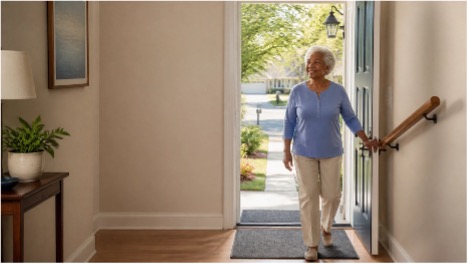
Step 1: Make the entryway easy to enter and exit
The entryway is the first place to check because it connects the home to outdoor walkways, driveways, and steps. A rushed transition over a threshold or a dim porch can create an unnecessary risk.
Start with this checklist:
- Improve outdoor lighting. Replace burned-out bulbs and consider a motion-sensor light near the front, side, or garage door.
- Clear the landing. Remove packages, shoes, garden tools, and other objects from the porch and the area just inside the door.
- Secure the doormat. Lightweight mats can slide or curl at the edges. Remove them or use a flat, non-slip mat that stays firmly in place.
- Check thresholds. A raised threshold can catch the tip of a cane, walker, or shoe. A beveled transi-tion strip or threshold ramp may help create a smoother surface.
- Add support near steps. Outdoor stairs should have sturdy handrails. If a rail moves when pulled, it needs to be repaired.
- Watch for seasonal hazards. In early fall, wet leaves and rain can make outdoor surfaces slick. Keep a broom nearby and clear walkways regularly.
Ask your loved one to walk through the doorway using the mobility aid they normally use. Watch for places where they hesitate, reach for furniture, or lift their feet unusually high. Those observations can reveal problems a visual inspection may miss.
Step 2: Secure stairs, hallways, and walking paths
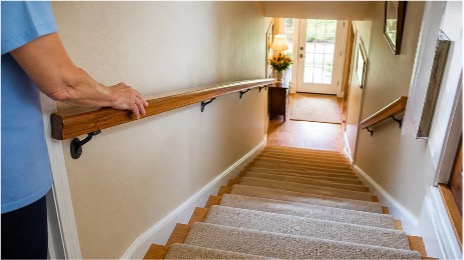
Stairs and hallways should provide a clear, well-lit route between rooms. According to the CDC’s home fall-prevention checklist, stairs should remain free of objects, have secure handrails, and include lighting controls at both the top and bottom whenever possible.
Use these practical improvements:
- Remove everything from the steps. Shoes, laundry baskets, books, and mail do not belong on stairs, even temporarily.
- Install or repair handrails. Handrails on both sides offer additional support, particularly when car-rying something or managing a balance issue.
- Add lighting at both ends. Motion-activated lights, plug-in nightlights, or illuminated switches can improve visibility without requiring a person to search for a switch in the dark.
- Secure carpeting and treads. Loose carpet, curled edges, or worn non-slip treads should be re-paired or replaced.
- Mark step edges if needed. A contrasting strip can make each step easier to see for someone with reduced vision.
- Create wide walking paths. Rearrange furniture so your loved one does not need to squeeze be-tween a coffee table, sofa, and wall.
- Manage cords. Route lamp, phone, and extension cords along walls instead of across walking ar-eas.
If stairs are becoming difficult, do not wait for a fall to make a change. A family may consider moving frequently used activities to the main floor, consulting an occupational therapist, or exploring equipment such as a stair lift.
Step 3: Reduce reaching, bending, and slipping in the kitchen
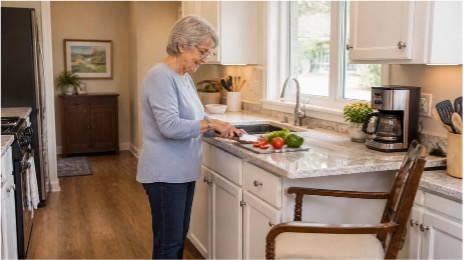
Kitchens contain several fall risks at once: spills, hard-to-reach cabinets, hot appliances, and step stools. The goal is to make daily tasks possible without climbing, overreaching, or rushing.
Try these low-cost modifications:
- Move commonly used items to waist-to-shoulder height. Store dishes, pans, coffee supplies, and frequently used foods where they can be reached comfortably.
- Keep heavy items low. Large pots, appliances, and bottles are safer in lower cabinets or drawers.
- Avoid using a chair as a step stool. If a step stool is absolutely necessary, choose one with a wide, stable base and a handhold. Family members or caregivers can help retrieve items from high shelves.
- Clean spills right away. Even a small amount of water or oil can make tile or vinyl flooring slippery.
- Keep appliance cords organized. Cords should not cross the floor or hang where they can be caught by a hand or mobility aid.
- Use stable seating. A sturdy chair can allow someone to sit while preparing vegetables or completing other tasks.
- Improve contrast. Bright lighting and contrasting cutting boards or dishware may help someone with vision changes identify surfaces more easily.
In early September, check whether seasonal items: such as canning supplies, large bags of garden produce, or fall decorations: are crowding counters and walkways. Store them safely before they be-come obstacles.
Step 4: Make the bathroom safer for wet transfers
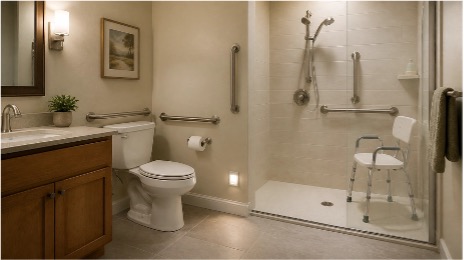
Bathrooms are among the most important rooms to address because they combine hard surfaces, water, and frequent sit-to-stand movements. A person may be especially vulnerable when stepping into a tub, getting up from the toilet, or bathing while tired.
Consider the following updates:
- Install grab bars correctly. Place grab bars near the toilet and inside and outside the tub or shower. They should be anchored securely into wall studs or installed with appropriate reinforcement: not simply attached with suction cups.
- Add non-slip flooring. Use non-slip strips or a properly fitted mat inside the tub or shower, along with a non-slip mat on the bathroom floor.
- Consider a shower chair or bench. Sitting while bathing can reduce fatigue and make transfers more controlled.
- Use a handheld showerhead. This can make seated bathing easier and reduce awkward reaching.
- Improve toilet support. A raised toilet seat or properly positioned grab bar may make sitting and standing safer.
- Add night lighting. A low-level nightlight can help illuminate the path without creating glare.
- Keep the floor dry. Wipe up splashes promptly and address leaks or condensation.
A grab bar is only helpful if it is installed in the right location and can support the person’s weight. If you are unsure where supports should go, ask a qualified professional for guidance.
For more information about the value of supports such as grab bars and handrails, read Senior Helpers’ guide to rails and bars in senior care.
Step 5: Create a safe route through the bedroom
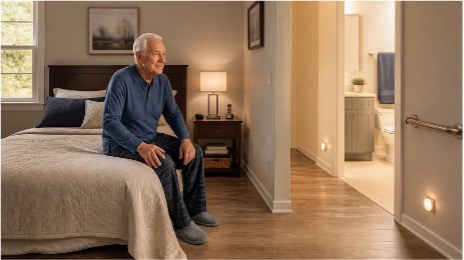
Many falls occur when someone gets up quickly during the night. Dizziness, darkness, loose rugs, and a cluttered path can all make the trip to the bathroom more dangerous.
Make the bedroom safer by:
- Keeping a lamp within reach. Your loved one should be able to turn on a light before standing.
- Adding nightlights or motion-sensor lights. Place them between the bed and bathroom, especially along corners or changes in flooring.
- Clearing the route. Remove shoes, charging cords, baskets, and small furniture from the path.
- Removing loose rugs. If a rug is necessary, make sure it lies completely flat and has a secure non-slip backing.
- Checking bed height. When sitting on the edge of the bed, both feet should rest comfortably on the floor.
- Keeping a phone nearby. A mobile phone, landline, or emergency call device should be within arm’s reach.
- Encouraging slow transitions. Sit on the edge of the bed for a moment before standing, especially after sleeping or resting.
When is it time to call in professional in-home care?
Home modifications can reduce hazards, but they cannot address every fall risk. Consider professional support if your loved one:
- Has experienced a fall or several near-falls
- Needs help getting in or out of bed, a chair, or the shower
- Frequently forgets to use a walker or cane
- Becomes confused about household routines
- Has difficulty preparing meals or managing medications safely
- Is leaving appliances on or wandering at night
- Is recovering from an injury, illness, or hospital stay
- Cannot safely remain alone for long periods
Families looking for in-home care may begin with a conversation about daily routines and areas where support is most needed. Depending on the situation, care may include companionship, assistance with personal routines, meal preparation, mobility support, and supervision.
Some families may also be researching 24-hour home care after a fall, a significant health change, or increasing nighttime needs. Around-the-clock support is not the right fit for every household, but a professional care team can help families understand available options and create a plan that matches the senior’s needs.
Senior Helpers provides personalized in-home care. A helpful first step is the free LIFE Profile assess-ment, which offers personalized insight into a senior’s abilities, preferences, and care needs.
Fall-proofing is not about taking independence away. It is about making the home easier and safer to navigate so an older adult can continue living with greater confidence. Start with one room this September, complete the checklist together, and address the highest-risk areas first.