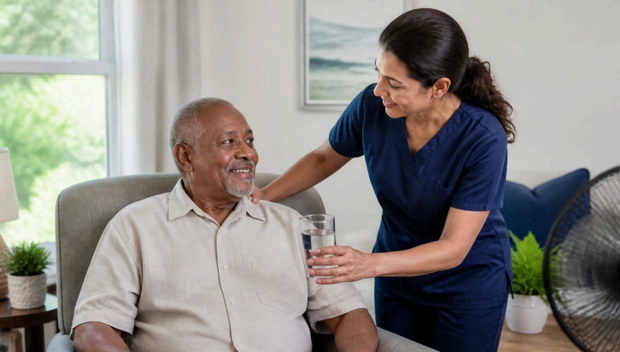
August heat can be especially challenging for older adults. High temperatures, humidity, reduced thirst, mobility limitations, and certain health conditions can make it harder for seniors to stay cool and hydrated at home.
For families in Bolingbrook and surrounding Suburbs, a simple summer safety routine can help an older loved one remain comfortable and independent. Regular drinks, a cooler home environment, and frequent check-ins are all important. It is also essential to understand that hydration needs are not the same for everyone.
The following tips can help families plan for hot days while knowing when to contact a healthcare professional.
Why Older Adults Face a Higher Risk of Dehydration
As people age, the body may become less efficient at regulating temperature. Older adults may also experience a reduced sense of thirst, meaning they may not realize they need fluids until dehydration has already begun.
Certain health conditions can increase risk during hot weather, including:
- Heart disease or heart failure
- Kidney disease
- Diabetes
- High blood pressure
- Mobility limitations
- Memory loss or dementia
- Conditions that make it difficult to prepare meals or get drinks independently
Medications can also affect the way the body manages heat and fluids. Diuretics, sometimes called "water pills," increase urination. Some blood pressure medications and other prescriptions may affect sweating, blood pressure, or the body's response to high temperatures.
This does not mean a senior should stop taking medication or dramatically increase fluids. Instead, families should ask the healthcare provider for an individualized summer plan.
- Create a Simple Hydration Routine
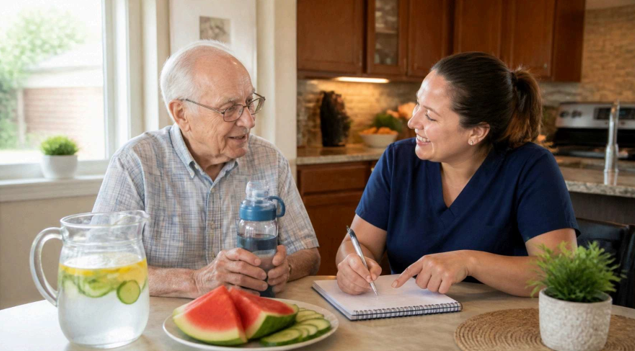
Older adults often do better with regular reminders than with a large glass of water offered only once or twice a day. Make fluids part of the daily routine:
-
- Offer a drink with breakfast, lunch, and dinner.
- Keep a filled water bottle or cup within easy reach.
- Offer small amounts regularly throughout the day.
- Bring fluids along for appointments, errands, or outdoor activities.
- Pair drinks with familiar routines, such as medication times, television programs, or afternoon vis-its.
- Use a cup that is lightweight, easy to hold, and easy to identify.
Plain water is a good everyday choice for many people. Other options may include milk, low-sugar beverages, broth, or diluted fruit and vegetable juices, depending on the person's dietary needs.
Foods with high water content can also contribute to fluid intake. Watermelon, berries, oranges, cu-cumbers, tomatoes, and soups may be appealing during hot weather. However, food choices should still fit any diabetes, kidney, heart, or sodium-related recommendations from the healthcare provider.
- Ask About Medications and Fluid Restrictions
A common mistake is assuming that everyone should drink the same amount of water. Some seniors have been instructed to limit fluids because of heart failure, kidney disease, or another medical condi-tion. Others may take medications that affect hydration or blood pressure.
Before hot weather arrives, ask the doctor, nurse, or pharmacist:
-
- How much fluid should the senior have each day?
- Should the fluid goal change during a heat wave?
- Does the person's medication increase the risk of dehydration?
- Are electrolyte drinks appropriate?
- What symptoms should prompt a call to the healthcare provider?
- Should daily weight, blood pressure, swelling, or urine output be monitored?
Do not change a prescribed fluid restriction without medical guidance. Similarly, do not stop, skip, or adjust medication because of hot weather unless the prescribing provider gives specific instructions.
Families should also watch for signs that may suggest either dehydration or too much fluid, such as sudden weight changes, swelling, unusual shortness of breath, dizziness, or a significant change in urination. Report concerns promptly.
- Keep the Home Cool
Hydration is only one part of summer safety. A cool indoor environment helps the body avoid exces-sive fluid loss and reduces the risk of heat exhaustion.
On hot or humid days:
-
- Use air conditioning when available.
- Close blinds or curtains during the sunniest part of the day.
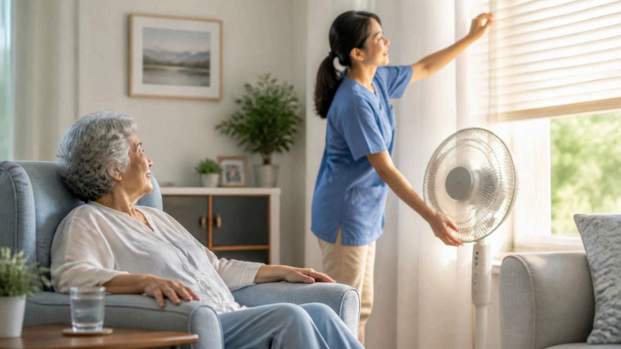
- Use fans to improve comfort, but remember that fans may not be enough during extreme heat.
-
- Encourage lightweight, loose-fitting clothing.
- Move frequently used chairs and supplies away from direct sunlight.
- Avoid using the oven or stove for long periods when the home is already hot.
- Check that the senior can reach the thermostat, phone, water, and emergency contacts.
- Consider a community cooling center if the home cannot be kept at a safe temperature.
Older adults who live alone may not recognize how warm their home has become. A family member, neighbor, or professional caregiver can check the indoor temperature and make sure cooling equip-ment is operating properly.
- Plan Outdoor Activities Carefully
Summer walks, gardening, and errands can still be enjoyable, but timing matters. Encourage outdoor activities in the early morning or later evening, when temperatures are generally more manageable.
Before leaving home:
-
- Check the heat and humidity forecast.
- Bring water or another approved beverage.
- Wear a hat and light-colored clothing.
- Take breaks in the shade or an air-conditioned location.
- Avoid prolonged activity during the hottest part of the afternoon.
- Make sure someone knows where the senior is going and when they expect to return.
A senior who has memory loss, balance concerns, or difficulty recognizing physical symptoms may need additional supervision outdoors. For someone with dementia, a familiar person can help notice changes in behavior or alertness that might otherwise be missed.
- Know the Warning Signs of Dehydration
Possible signs of dehydration include:
-
- Dry mouth
- Dark-colored urine
- Urinating less often than usual
- Fatigue or unusual weakness
- Headache
- Dizziness or lightheadedness
- Muscle cramps
- Rapid heartbeat
- Confusion or a noticeable change in alertness
If a senior seems mildly dehydrated, move them to a cool place and follow their healthcare provider's instructions regarding fluids. Do not give anything by mouth if the person is confused, unconscious, vomiting repeatedly, or unable to swallow safely.
If symptoms do not improve, or if the senior has heart disease, kidney disease, or a fluid restriction, contact the healthcare provider promptly. When in doubt, it is safer to seek medical advice.
- Recognize Heat Exhaustion and Heat Stroke
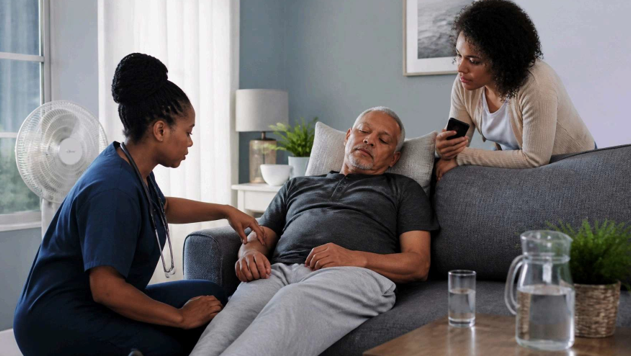
Heat exhaustion can cause heavy sweating, pale or clammy skin, weakness, nausea, headache, dizzi-ness, and a fast, weak pulse. Move the person to an air-conditioned or shaded location, loosen un-necessary clothing, and apply cool, damp cloths. If they are alert and able to swallow safely, offer flu-ids according to their medical plan.
Heat stroke is a medical emergency. Call 911 immediately if a person has:
-
- Confusion, disorientation, or unusual behavior
- Loss of consciousness
- Seizures
- Very hot skin
- A body temperature of 104 degrees Fahrenheit or higher
- Severe worsening symptoms
Do not force fluids if the person is confused or cannot swallow safely. While waiting for emergency responders, move them to a cooler location and use cool cloths to help lower body temperature.
For additional public-health guidance, families can review the CDC's information about heat and o d-er adu ts and the National Institute on Aging's heat-re ated heath guidance.
How In-Home Senior Care Can Help During Summer
Hydration and heat safety can become difficult when a senior has limited mobility, memory changes, or lives alone. An in-home caregiver can provide practical support without taking away the older adult's independence.
Depending on the individual care plan, support may include:
-
- Preparing water, approved beverages, and water-rich snacks
- Providing friendly reminders to drink
- Assisting with meals and daily routines
- Helping with errands during cooler hours
- Observing changes in mood, energy, balance, or alertness
- Making sure the home environment remains comfortable
- Providing companionship during a heat wave
- Communicating concerns to family members
Senior Helpers of Bolingbrook and Southwest Suburbs of Chicago offers personalized in-home care services for seniors and families throughout Bolingbrook and surrounding Suburbs. Care can be tai-lored to changing needs, including companion care and specialized support for Alzheimer's, demen-tia, Parkinson's disease, and chronic conditions.
Families can also learn more about care options through a free in-home care consultation. A conver-sation about daily routines, safety concerns, and support needs can help identify practical ways to make summer at home safer and more comfortable.
A Small Routine Can Make a Big Difference
A filled water bottle, a cool room, and a scheduled check-in may seem simple, but these steps can help prevent serious summer health problems. Review your loved one's hydration plan with their
healthcare provider, pay attention to changes in behavior or physical condition, and make sure help is available during the hottest days of August.
With thoughtful planning and dependable support, seniors can stay safer, more comfortable, and more confident in their