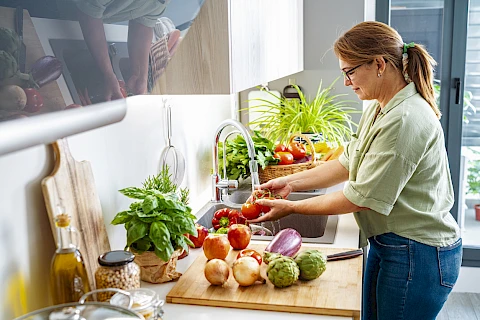
A kitchen that looks spotless can still hide the bacteria that send an older adult to the hospital, and families along the Georgia coast have a natural opening right now to give the kitchen a second look. Older immune systems don't bounce back from foodborne bugs the way younger ones do, and Savannah's warm, humid stretch runs later into fall than most people expect. A little extra care now goes a long way toward keeping your parent out of the emergency room.
Why Older Adults Tend to Get Sick
The CDC's older adult food safety page explains it plainly: adults 65 and older are more likely to be hospitalized and to have serious outcomes from salmonella, listeria, and E. coli. Immune response slows. Stomach acid drops. Chronic conditions and their medications can further reduce the body's ability to fight infection.
So the same leftover chicken your teenager eats without a second thought can send an 82-year-old to the hospital. That's the reason all the little kitchen habits matter so much more with age.
The High-Risk Foods to Watch
A handful of foods carry more risk for seniors. Learn them, and you've done most of the job.
Raw or undercooked eggs, including runny yolks and homemade Caesar dressing. Raw or rare meat. Unpasteurized milk and soft cheeses like brie, feta, and blue cheese unless clearly labeled pasteurized. Raw sprouts. Deli meats and hot dogs, unless heated until steaming. Raw oysters and other raw shellfish, which is worth mentioning on the coast, where a plate of them at Tybee Island is easy to say yes to.
Cook to the right temperatures, use a food thermometer, and treat the "sniff test" as unreliable. Listeria has no smell.
Storage, Prep, and the Four-Hour Rule
Warm kitchens and slow cleanups create trouble. The FoodSafety.gov cold storage chart has clear numbers to follow.
Refrigerator at 40 degrees or below. Freezer at zero. Leave leftovers in the fridge within two hours of cooking, or one hour if the room is above 90 degrees. Cooked food stays best quality in the fridge for three to four days. When in doubt, throw it out.
Wash hands for 20 seconds before starting any prep. Separate raw meat from produce with different cutting boards. Rinse fresh fruits and vegetables even when the skin gets peeled off. Sanitize the sink and counters after handling raw poultry.
Signs Your Parent May Need a Hand in the Kitchen
You know the routine has slipped when the same expired jar of mayo lives on the top shelf for months, or when you notice pot handles turning up in odd places. Other signs worth watching: forgotten burners, scorched cookware, deep freezer burn on items that should have been eaten weeks ago, or a shrinking list of foods your parent actually prepares.
Bring it up gently and offer help with the highest-risk tasks first. Cutting raw chicken. Cleaning the sink after. Loading the dishwasher on a hot cycle. Cooking together also keeps your parent involved and confident at their own counter.
In-Kitchen Support Across the Savannah Area
Every family finds its own balance between independence and help, and there's no rush to get it perfect on the first try. If you're caring for a parent in Savannah, Pooler, Tybee Island, or Port Wentworth, our Senior Helpers Chatham County caregivers assist with meal prep, safe storage habits, and light kitchen cleanup so your relative eats well without shouldering the whole load. To talk about a schedule that fits your week, contact us for a short conversation.