For years, women were taught to do a formal breast self-exam on the same day each month, following a strict pattern of circles and lines. Guidance has shifted since then. Major cancer organizations now emphasize breast self-awareness, which means knowing what is normal for your body and telling a doctor when something changes. This approach helps older women understand breast self-exams for seniors without following a strict monthly routine.
For women in the Space Coast area, Senior Helpers Melbourne provides companionship and practical support, including transportation to medical appointments and screenings.
From Monthly Routine to Everyday Awareness
The American Cancer Society's early detection recommendations explain that women should know how their breasts normally look and feel. They should report any changes to a health care provider right away. You may notice changes during everyday activities, such as bathing or dressing.
Breast self-awareness complements recommended screening, including mammograms. It does not require a specific technique or schedule. It also does not replace medical appointments or screening tests.
Breast Self-Exams for Seniors
Breasts change over the years. After menopause, they often feel softer and less lumpy than they did years ago. However, some areas may still feel firmer than others. Scars from past surgeries or biopsies have their own texture, and so do the ribs underneath.
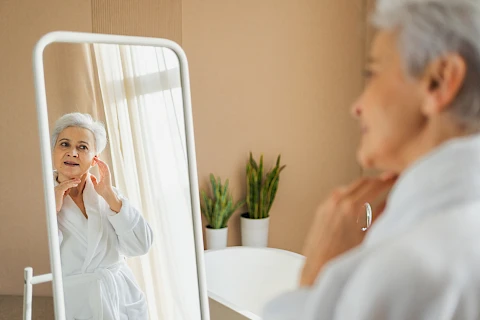
Learning what is normal for you is an important part of breast self-exams for seniors. Check the mirror now and then. Stand with arms at your sides, then raised.
When you're lying down or in the shower, notice how each breast usually feels. Pay attention to the area that extends toward the armpit, without turning it into a formal exam.
Changes to Report to Your Doctor
Many things can cause breast changes other than cancer. However, contact your doctor if you notice any of the following:
1. A new lump or thickening in the breast or underarm.
2. Swelling, warmth, or redness that doesn't go away.
3. Skin that dimples, puckers, or looks like an orange peel.
4. A nipple that turns inward when it didn't before, or a sore or scaly patch on it.
5. Fluid from the nipple, especially if it's bloody or comes from one side.
6. A change in the size or shape of one breast.
7. Pain in one spot that doesn't go away.
Do not wait for a routine screening appointment to report a new or unusual change. A health care provider can assess the symptom and determine whether further testing is needed. The National Cancer Institute provides additional information about breast cancer and its diagnosis.
Pairing Awareness With Regular Care
Breast awareness works alongside recommended screening and regular medical care. Ask your doctor whether continuing mammograms is appropriate for you. For women over 74, recommendations vary because the benefits of screening depend on factors such as overall health, medical history, and life expectancy.
If you notice a change, write down what you observed, when it started, and whether it has changed over time. Bring these details to your appointment. Keeping notes can help you explain your concerns clearly and remember important details during the conversation.
Support for Women Along the Space Coast
Knowing what is normal for your breasts, reporting changes, and discussing screening with your doctor can help you stay informed. Learning about breast self-exams for seniors can help you recognize changes and know when to seek medical advice. Support with appointments and daily tasks can also make routines easier.
Senior Helpers Melbourne provides in-home support and companionship for older adults in Melbourne, Palm Bay, Grant, Malabar, Melbourne Beach, and Sebastian. Caregivers can help with transportation to screenings and doctor visits, appointment reminders, companionship, and household tasks. Contact us to learn more about care close to home.