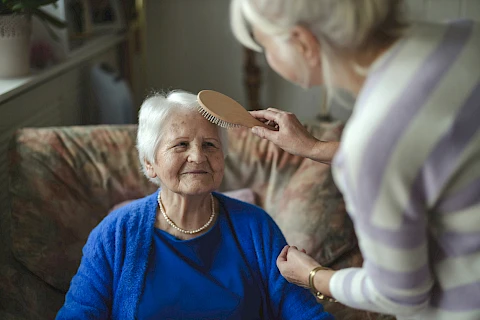
Personal hygiene is often the first place a family caregiver sees a real shift. Missed showers, unwashed hair, and stained clothes may point to pain, low mood, memory changes, or fear of falling in the bathroom. Note what has changed and how long it has been going on. Look for the pattern and plan accordingly. Senior Helpers share tips on assessing our elderly loved one’s changing needs.
Look for Changes in Routine
Everyone can skip a shower or wear the same shirt twice. The concern grows when grooming, clothing, or daily routines change for weeks. You may notice persistent body odor, unchanged clothes, unwashed hair, or dental care that has fallen away. Write these observations down for easier and more accurate monitoring.
Pause before deciding why. Arthritis can make buttons hard to manage, poor balance can make the tub feel risky, memory changes can interrupt a familiar order, and low mood can make a basic task feel much larger than it is.
The National Institute on Aging discusses depression in older adults as a factor that can affect their interest in doing usual activities. Any notable change in self-care is worth mentioning to a health professional, because mood and physical ability can both affect the routine.
Begin With Privacy and Respect
Choose a calm and private time to open a discussion. Point to a specific change you have seen, such as trouble getting dressed, and ask if something would make the routine easier. Patiently wait for the answer and remember to keep the pace light and easy.
Listen closely. Your parent may say they are afraid of falling, embarrassed by a skin problem, worn out, or unable to reach something. The reason for this is to identify the appropriate step that you must undertake.
Avoid a takeover without getting your elderly family member’s consent or hearing them out. Buying many products or reorganizing the bathroom without asking can make a person feel less in control of a very private part of life.
Remove Any Obstacles
Put towels, soap, and clean clothes within easy reach. Good lighting, a shower chair, grab bars installed by a qualified professional, a hand-held shower head, and nonslip surfaces may help a person feel steadier. A small pause helps.
Make laundry easier. In Avon or Windsor Locks, set a regular day to sort clothes and place fresh outfits where they can be reached without bending or climbing. In Enfield, a family member might add personal care items to a grocery delivery.
Keep things familiar. Using the same soap or keeping a robe on the back of the usual door can make the next step easier to start (one less decision before breakfast).
Know When to Call a Provider
Call a health care provider for sudden confusion, a fast change in self-care, new skin problems, or a major shift in mood. Those changes may need medical attention. Do not assume they are simply part of aging.
Personal care support can also help with bathing, dressing, grooming, and the daily routine. Caregivers should explain each step, respect privacy, and follow the person’s preferences.
Ask one question. “What activity feels most challenging?” and you will find out if the problem is a cold shower, a high tub wall, painful movement, or a loss of interest in daily life. If your parent accepts help with part of the routine, agree on what they want to do alone and what they want assistance with. That plan can change as comfort, strength, or the bathroom setup changes.
Senior Helpers Can Assist With Personal Care in Northwest Hartford
Proper hygiene can have vast emotional benefits, which is why our elderly’s care must always be prioritized. Make sure to include them before implementing changes to their routine, and remember to ask them about their preferences. Our personal care services can help your senior loved one stay clean, comfortable, and in control at home. Contact us for professional support in Avon, Windsor, Canton, Simsbury, and Suffield.