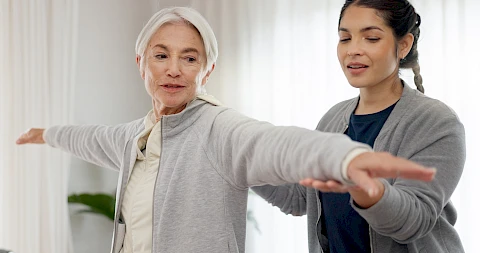
Autumn arrives quickly in the Farmington Valley. Suddenly the leaves start turning above the Simsbury greenway and the mornings need a jacket. September is Fall Prevention Awareness Month, and it is also a nice moment to exercise alongside your senior loved one instead of just reminding them to do it. Working out together makes it more of an enjoyable visit and not a chore, with both of you becoming healthier together.
Why Exercising Together Actually Works
The National Institute on Aging states that one in four people 65 years and above risks suffering from a fall each year. You can prevent these falls by making your home safer, managing medication and vision-related problems, and exercising.
Older adults with a workout buddy stick with exercise about three times longer than those going solo. The reason is easy to see. The company makes the habit sustainable, the form gets safer when someone is watching, and a shared appointment on the calendar is harder to skip than a solo one. You do not need to match your parent's pace or ability. You simply need to be in the room. That is the whole trick.
Five Exercises That Work for Two Ability Levels
Taking care of our elderly loved one’s overall health may lower their risks of falls. Balance and strength training exercises can help. Here are a few exercises that you can do with senior family members. Remember to consult with a physician before starting any new fitness regimen.
Sit-to-stands. From a sturdy chair, both of you stand up and sit back down slowly. Do ten repetitions. If your parent needs to push off the armrests, that is fine. You go slower on your reps to match theirs.
Heel-toe walk. Along a hallway, one foot directly in front of the other, arms out for balance. Your parent can rest a hand on your shoulder. Twelve steps down, twelve back.
Weight shifts. Stand next to each other, holding a counter or chair back. Shift weight fully to the right leg, hold three seconds, then to the left. Ten each side. Simple. Effective.
Wall push-ups. Both of you should stand facing the wall with your hands flat against it, then lean in and press back. Do eight reps. This is great for the shoulders and arms that catch you during a stumble.
Marching in place. Lift the knee toward the chest, or as high as feels safe, alternating sides. Sixty seconds. Add music if it helps.
Modifications That Keep Exercising Safe
If your parent has arthritis, joint replacement, or has fallen in the last year, check with their doctor before starting. Skip any movement that produces sharp pain. Aches the next day are fine; sharp pain during is not.
Set up near a wall or counter. Wear flat shoes. Put a chair behind your parent for any standing exercise so they can sit if they need to. Keep the room cool and have water within reach. If they seem more tired than usual, cut the session short. There is always tomorrow.
For someone in a wheelchair, the same principles apply. Seated marches, arm reaches, shoulder rolls, and gentle leg extensions work well. The point is movement together, not any particular pose.
Make It a Standing Date
Pick two days each week and schedule them at the same time of the day. You can start with fifteen minutes each session. Put it on both calendars. Tuesday and Friday at nine, right after coffee, works well for most Connecticut families.
Track it on the fridge with a check mark. Simple. Old-school. Effective. After a month, you will notice your parent standing up straighter and moving more confidently around the house.
Steady Steps Together Across the Farmington Valley
A regular workout you do side by side is one of the most valuable things you can give an elderly parent, and it doubles as time you will both remember. Our team at Senior Helpers Northwest Hartford supports caregivers across Avon, Enfield, Windsor, Windsor Locks, Canton, and nearby areas with fall-risk assessments, exercise support, and companion visits that keep parents active. Contact us whenever a hand with the routine would help.