Grocery bags on the counter in Santa Clarita in September can heat up faster than you'd expect. Even with the mornings finally cooling, midday in the car park still runs into the high 90s. September is Food Safety Education Month, and the basics of storing, handling, and reheating food matter more as we age. The immune system takes longer to fight off the same bug it once shrugged off in a day.
Why Food Safety Gets More Important With Age
The body's defenses shift over time. Stomach acid drops, which lets more bacteria through. The gut lining changes. Chronic conditions like diabetes make infections harder to clear. Medications like proton pump inhibitors and steroids can add another layer.
The Food and Drug Administration lists adults aged 65 and older as a high-risk group for foodborne illness. That doesn't mean cooking gets scary. It means the margin for shortcuts gets thin.
Salmonella from undercooked eggs. Listeria from cold cuts left out too long. E. coli from raw sprouts or leafy greens. None of these are exotic. All of them turn up in home kitchens.
The Four Rules Most Home Kitchens Break
The four rules everyone hears, and few follow, are these:
1. Clean
Wash hands for twenty seconds with soap before and after handling raw meat. Wash cutting boards, knives, and counters the same way. Rinse produce under running water, even the items you're going to peel.
2. Separate
Raw meat gets its own cutting board or its own clean-up. Never let raw chicken juice drip on a salad tomato. Store raw meat on the bottom shelf of the fridge so nothing below it gets contaminated.
3. Cook
Use a food thermometer, not the look of the meat. Ground beef to 160°F. Chicken and turkey to 165°F. Fish to 145°F. Cook eggs until the yolk and white are firm, or use pasteurized eggs in recipes that call for them raw.
4. Chill
Get leftovers into the fridge within 2 hours of cooking, or within 1 hour on a very hot day. Fridge at 40°F or below, freezer at 0°F or below. A cheap fridge thermometer settles a lot of arguments.
Storing Food the Right Way
Cooked meats last three to four days in the fridge. Cooked rice and pasta the same. Deli meats and hot dogs, once opened, one week. Soft cheeses like brie, one week. Hard cheeses like cheddar, three to four weeks.
Freezer storage is about quality, not safety. Cooked poultry and beef stay tasty for two to three months. Ground meat for three to four months. After that, they're safe if kept frozen, but the texture goes downhill.
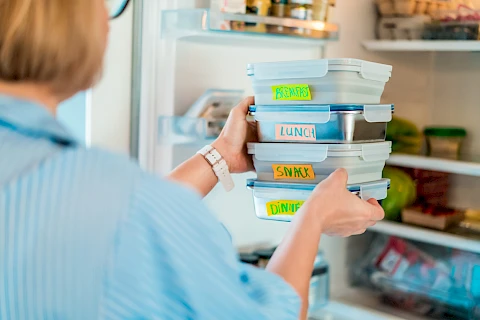
Label everything. Masking tape and a marker do the job. Write what it is and the date you froze it. A container labeled "meatloaf 9/12" in Newhall in early October is easy to decide on.
Signs That Something Should Go
Off smell. Slimy or sticky texture on cooked meat. Mold anywhere. A can that's dented at the seam or bulging. A jar whose vacuum-seal button has popped up. Milk that tastes wrong on the first sip.
Don't rely on the sniff test alone; some pathogens don't smell. Trust the calendar and the storage rules first.
Keeping Kitchens Safe Across the Antelope and Santa Clarita Valleys
Senior Helpers Santa Clarita - Lancaster works with families in Santa Clarita, Valencia, Newhall, Canyon Country, Palmdale, and Lancaster on the practical parts of daily life, including unpacking groceries, food safety, meal prep, and going through the fridge before things drift. If a caregiver in the kitchen for a few hours a week would help, contact us, and we'll figure out a fit.