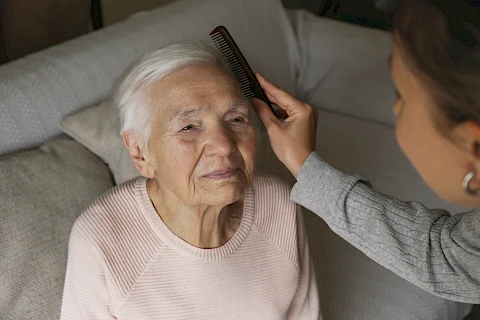
A shower, fresh shirt, trimmed beard, or favorite lipstick can affect how a senior feels in the mirror. Grooming does not solve depression, anxiety, grief, or memory loss. It can offer one steady part of the day. That matters when other routines have changed.
Give the Day a Familiar Start
Washing up after breakfast, choosing clothes, combing hair, or using hand lotion can signal that the day has begun. These steps may feel helpful after an illness, move, or loss of mobility has changed other routines.
The National Institute of Mental Health includes self-care activities among the ways people can support mental health. Personal care is one example, and the right routine will look different from person to person.
Notice Changes Without Blame
A person who once cared about appearance may stop bathing or changing clothes when they feel low, have pain, or struggle with balance. Start with curiosity. Ask if the shower feels tiring or if products are hard to open. A senior may need a safer bathroom set-up after a fall, and some may avoid the salon because getting there has become difficult. A shower chair, easier-to-hold brush, or ride to an appointment may solve the problem.
Let Personal Taste Lead
Grooming should reflect the person, not someone else’s standard. Offer a choice between two shirts or ask if they prefer a clean shave or a trimmed beard. Keep favorite products around if familiar scents and textures feel good.
Turn grooming into low-pressure time together. Paint nails while discussing a television show, sort jewellery, or play music from earlier years as you get ready for lunch. A visit to the barber can become a welcome outing, even if the first stop afterward is simply for iced tea (with time to talk).
Get Help for Lasting Mood Changes
A change in grooming can be one of many signs. Pay attention if it comes with withdrawal, sleep or appetite changes, hopeless remarks, or loss of interest in usual activities. Encourage a conversation with a health professional or mental health provider.
Avoid shaming language. Set up a seated grooming spot, a hand-held mirror, or arrange supplies in order if the task has become frustrating. A quick wash, clean shirt, and brushed hair may be enough on a low-energy day. Put a clean towel where it is easy to reach, choose clothes the night before, or keep a favourite brush by the mirror. One small cue can help. The goal is to reduce friction, not to turn getting ready into another demanding item on the list.
If your senior loved one wants help, offer choices without taking over. Ask if they want you nearby, help with one item, or simply a ride to the salon. Let them answer because choices can make an awkward conversation feel much less intrusive. When circumstances change, it helps to pause and review the plan together, because what felt manageable a month ago may feel different now, and the person receiving support should be part of the conversation.
Care That Respects the Person
We can support personal routines in ways that respect seniors’ preferences, privacy, and pace. Senior Helpers Santa Clarita - Lancaster provides in-home senior care, including help with grooming and daily routines. Contact us to learn about assistance in Santa Clarita, Valencia, Newhall, Canyon Country, Palmdale, and nearby areas.