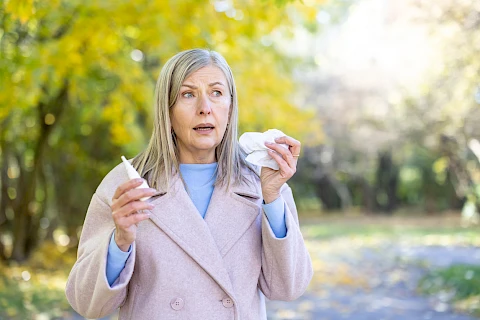
Late summer can bring sneezing, watery eyes, a scratchy throat, and lingering tiredness. For an older adult, allergies can also make sleep and outings harder.
Symptoms after time outdoors or on dry, windy days may point toward seasonal allergies. A few home changes may reduce exposure to common triggers.
Common Allergens
Pollen from weeds and grasses can linger late into summer. Mold spores can rise around damp leaves, gardens, and poorly ventilated spaces. Smoke and pollution may also irritate the nose and lungs. Dust mites and indoor mold may also be common indoor triggers.
Some people feel better outside after rain or later in the day, when pollen may be lower. Check local pollen and air-quality reports before a longer outing. Sunglasses and a hat can help. On rough days, choose an indoor plan. Call a friend, work on a puzzle, or visit a museum rather than forcing a walk.
Recognizing Symptoms
Sneezing, itchy eyes, clear nasal drainage, and a stuffy nose are common. Stay alert. Fever, chest pain, wheezing, shortness of breath, or sudden confusion need prompt medical attention.
If you have asthma, heart disease, or another lung condition, speak with your health care team about a plan for flare-ups. A short note about symptoms, timing, and possible triggers can be useful at an appointment. An allergic reaction occurs when the immune system responds to a usually harmless substance. A clinician can distinguish allergies from a cold and other concerns.
Useful Home Modifications
Keep windows closed on high-pollen days and run air conditioning if available. Change clothes after gardening or a longer walk. Shower before bed. It may keep pollen out of bedding.
Wash sheets in hot water following the fabric label. Use a damp cloth for dusting. Check bathrooms and laundry areas for damp spots that could encourage mold.
When to Consult a Doctor
Consult a doctor if your loved one experiences trouble breathing, wheezing, or symptoms that do not improve. Get medical advice before taking any new medicines. Review medicines with a professional. Some non-prescription allergy medicines can cause drowsiness or interact with current prescriptions. Do not change a prescribed medicine without medical advice.
Keep a small symptom note for a week if the cause is unclear, including where the person was, what the weather was like, and how long the symptoms lasted. Details help. Bring that note to a clinician or pharmacist. Because an older adult may have several health conditions and take several medicines, a clinician or pharmacist can help sort out which symptoms need attention and which steps are safe to try at home.
We Can Help Manage Summer Allergies
Senior Helpers can provide companionship and practical help with routines when allergies make the day harder for your senior loved ones. Contact us at Senior Helpers Marin County to discuss support in San Rafael, Belvedere Tiburon, Mill Valley, and Sausalito.